assert(), __FILE__, Path and other cool GNU gcc Tricks to be aware of

It is always good to have a close look what ends up in a microcontroller FLASH memory. For example using EHEP Eclipse plugin to inspect the binary file:

Source File Name in Binary Image

Source File Name in Binary Image

Obviously it has path and source file information in it. Why is that? And is this really needed?

What about:

  • Privacy: the path or file name might expose information (secret project name?) or might be used for reverse engineering?
  • Size: The strings add up to the final data/FLASH size, so this increases the need for ROM space?

So let’s have a look what is the reason for this and how it could be avoided or at least reduced.
Continue reading

MCUXpresso IDE V11.3.0 for 2021

I’m in the middle of the university exam season: means writing exams and do grading. The same time the new semester is approaching too and I need to prepare the new course material. For the classes using NXP parts I’m using the Eclipse based MCUXpresso IDE, and I just received the announcement that a new version V11.3.0 is available: time to check out what is new.

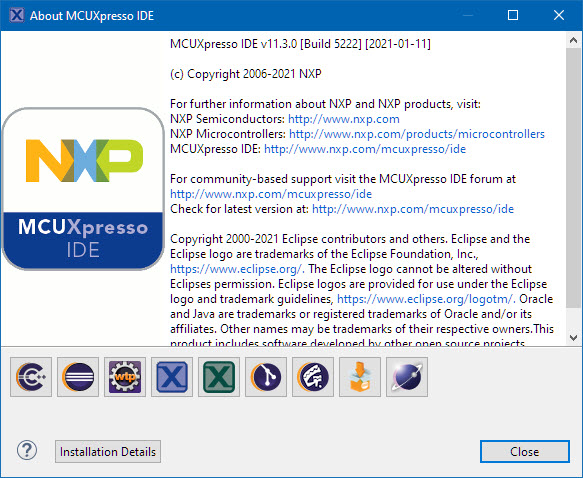
MCUXpresso IDE v11.3.0 (Build 5222)

MCUXpresso IDE v11.3.0 (Build 5222)

Continue reading

MetaClockClock V4 for the Year 2021

I had a few of PCBs left over from the V3 MetaClockClock, and originally I planned to finish a build with them by the end of 2020. But as always: things took a bit longer than expected, so I finally finished it today on the first day of the year 2021.

The build uses the same hardware as in the previous V3, but instead of an ‘artistic’ canvas background I decided for a more natural and wood design:

V4 with Walnut Veneer

V4 with Walnut Veneer

Continue reading

Eclipse CODAN (Static Code Analysis) for C/C++

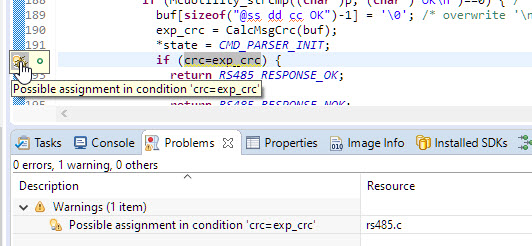
The Eclipse CODAN (Code Analysis) plugin is part of CDT and is a powerful static analysis tool finding all kind of possible bugs and issues. Still to my surprise not many C/C++ developers take advantage of it maybe because they are not aware that it exists?

ups! Programming error catched by CODAN

ups! Programming error detected by CODAN

In this article I show a few tips how to effectively use it, especially with the NXP MCUXpresso SDK.

Continue reading

New MetaClockClock V3 finished with 60 Clocks

The holiday break at the end of the year is always a good time to finish projects started during the year. This one is about my ‘MetaClockClock’ Version 3.

Red Hands on Blue

2020 with Red Hands on Blue

Continue reading

Getting a 96bit Unique ID for each Kinetis Device using MCUXpresso SDK

The NXP Kinetis devices implement a UID (Unique ID) for each device, using the ‘Unique Identification Register) which is part of the SIM (System Integration Module):

SIM Unique ID

SIM Unique ID (NXP K22P144M120SF5RM.pdf Reference Manual)

While this number should be unique, I was wondering last week why students in the labs reported the same UID for multiple robots in the lab. So maybe this number is not so unique as it should be?
Continue reading

RTOS Trace: TraceX with Microsoft Azure RTOS (aka ThreadX)

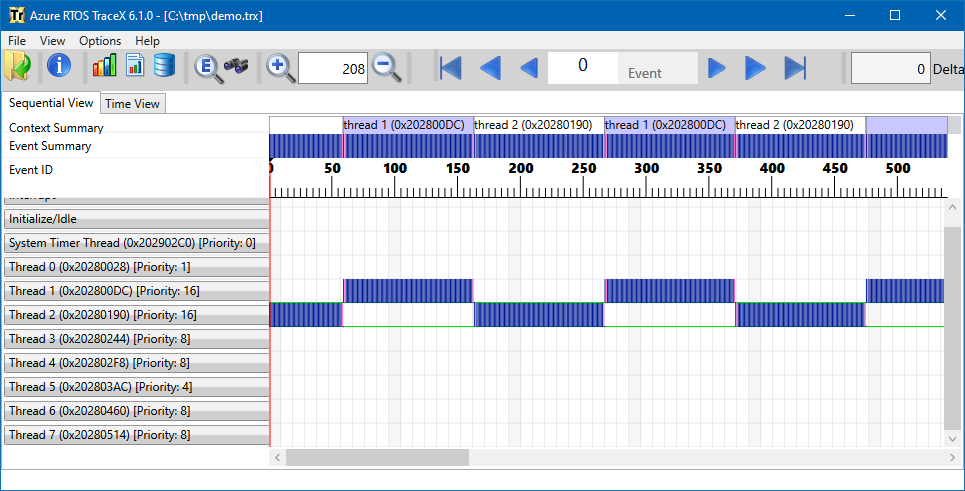
Having visibility and insights into a running system is highly valuable or critical: not only for optimizations but as well to verify the system design and behavior. In Getting Started with Microsoft Azure RTOS (aka ThreadX) I showed how to quickly run Azure RTOS. This article is about getting trace out of an ThreadX application and show it in TraceX.

Azure RTOS TraceX

Azure RTOS TraceX

Continue reading

Steps to use FreeRTOS with newlib reentrant Memory Allocation

Reentrancy is an attribute of a piece of code and basically means it can re-entered by another execution flow, for example by an interrupt or by another task or thread. This is an important concept and still a lot of code ‘in the wild’ does violate reentrancy. As a result the application crashes immediately in the best case. Worse it crashes randomly or even worse it behaves incorrectly 😦 .

Reentrancy is always a concern if using standard library functions, including printf() or malloc(). FreeRTOS offers a reentrant wrapper to the standard malloc() and free() (Memory Scheme 3)

Running FreeRTOS with reentrant newlib

Running FreeRTOS with reentrant newlib

Continue reading

Getting Started with Microsoft Azure RTOS (aka ThreadX)

If you are a regular reader of my articles, you probably know that I’m using FreeRTOS in most of my applications, for obvious reasons. But clearly this is not the only RTOS out there. After Microsoft had acquired Express Logic back in April 2019 things kept quite for a while. To me the crown jewel of Express Logic is the ThreadX RTOS. But recently Microsoft is pushing more and more the ‘Azure Sphere’ and trying to monetize the ‘IoT’ (I apologize for mentioning that overused acronym) application space and providing it now free for devices from selected partners which includes NXP now.

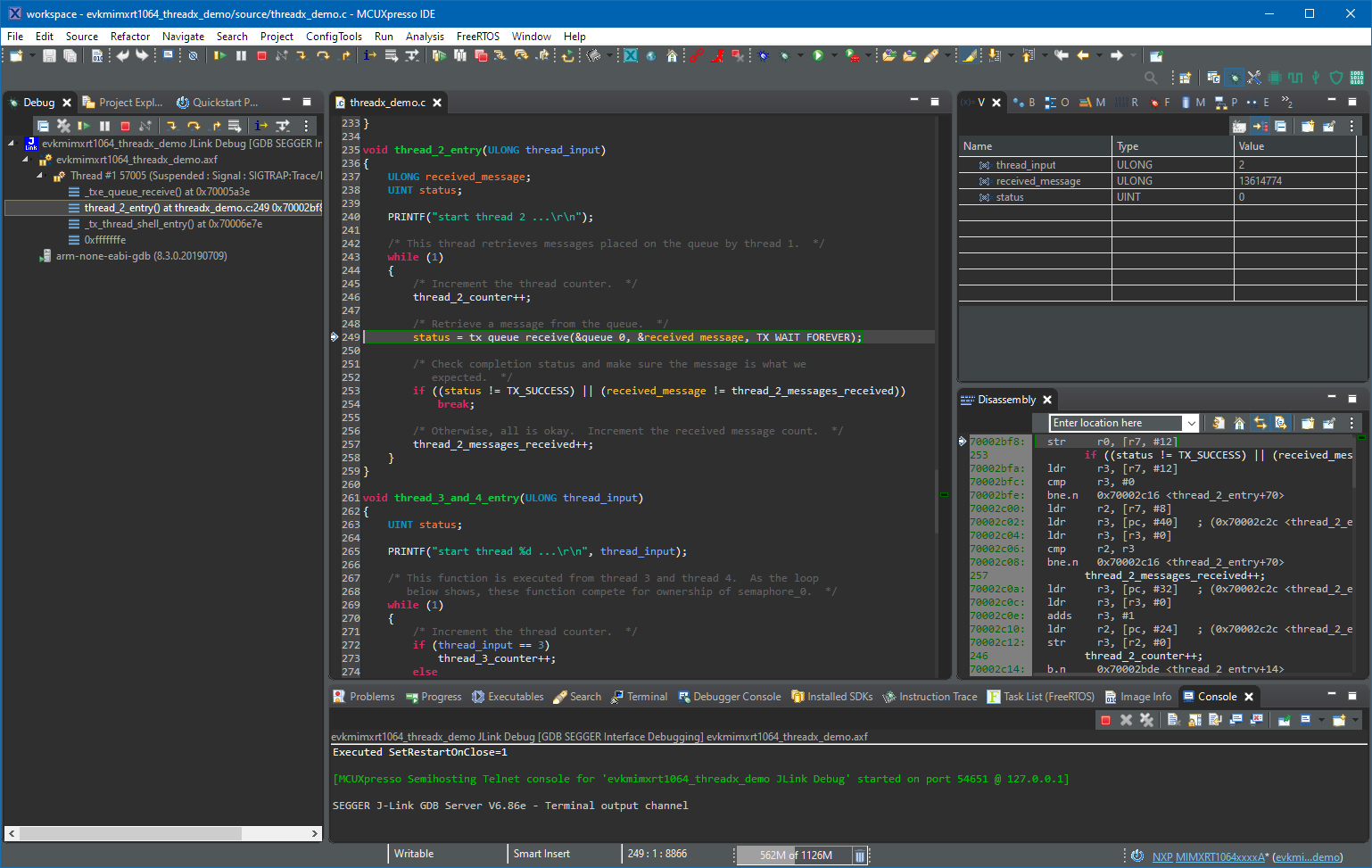
Debugging with ThreadX in MCUXpresso IDE

Debugging with ThreadX in MCUXpresso IDE

Continue reading