FreeRTOS: how to End and Restart the Scheduler

Most host or desktop systems (say Linux, Mac or Windows) have a normal use case where you start the operating system say in the morning and shut it down in the evening, and then you leave the machine. Embedded Systems are different: they are not attended, and they are supposed to run ‘forever’. Not every embedded system needs to run an OS (or in that world: Real-Time Operating System or RTOS), but the same applies here: after the RTOS is started, it is not intended that it will shutdown and restart. To the extend that you won’t they support the ‘shutdown’ and ‘restart’ functionality at all. In case of gathering coverage information this would be really useful:

coverage information from freertos application

coverage information from FreeRTOS application

In the case of FreeRTOS: what if I really need to shutdown the RTOS and restart it again, as by default this is not supported. This is what this article is about …

Continue reading

GDB All-Stop and Non-Stop Mode with LinkServer

GDB supports a mode which allows the GDB debug client to read memory while the target is running. This allows features like ‘live variables’: that way I can see the variables refreshed and changing over time without halting the target. Another functionality which comes with that feature is to check stopped threads or to see all threads in the system.

multiple freertos threads in debug view

multiple FreeRTOS threads in debug view

Continue reading

Regaining Debug Access to NXP i.MX RT1064-EVK executing WFI

Working with low power modes can be challenging. It can severely affect debugging capabilities of a microprocessor or microcontroller. I ported a FreeRTOS application using the Tickless Idle Mode to the NXP i.MX RT1064 board, and all of a sudden, the board was unresponsive to any debugger connection. Luckily the board was not really bricked, but it took me while to find a way to recover it. So for when you end up in a situation with a ‘bricked’ i.MX RT1064 board, this article might be helpful for you to recover it.

i.MX RT1064-EVK Board

i.MX RT1064-EVK Board

Continue reading

Freelink LPC4322JET100 based Debug Circuit on NXP i.MX RT1064-EVK Board

As noticed in “First Steps with the NXP i.MX RT1064-EVK Board” there is a new LPC4322 based debug interface on the RT1064-EVK board.

LPC4322JET100 based Debug Interface

LPC4322JET100 based Debug Interface

Continue reading

Using Camera Modules with NXP i.MX RT10xx EVK

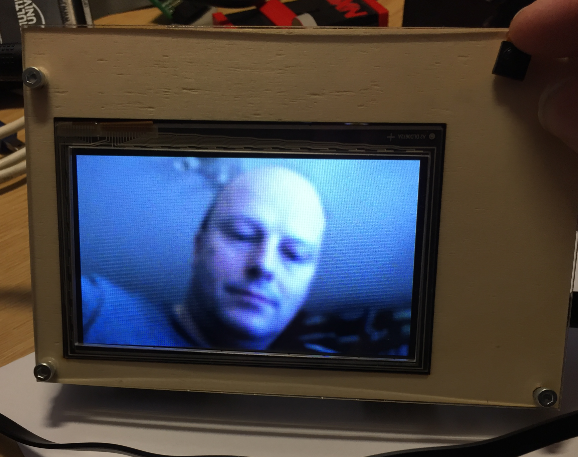
In “First Steps with the NXP i.MX RT1064-EVK Board” I mentioned that the board kit came with a camera module, but it was unclear to me which module was included in the kit. I know it now: it is the ON Semiconductor MT9M114 :-).

Image from the MT9M114

Image from the MT9M114

Continue reading

Variable Width Character Encoding in Eclipse Editor

Dealing with variable width character encoding as with UTF-8 is pretty much a standard these days, at least in the Desktop programming world. This is not so much true when programming embedded devices and microcontroller. In any case, Eclipse has you covered. This is especially helpful dealing with non-ASCII character codes in comments:

Comment with UTF-8 in Eclipse

Comment with UTF-8 in Eclipse

Continue reading

Playing Zork with FreeRTOS on ARM in three different Ways

You might wonder what ‘Zork‘ is? Zork is one of the first and earlist fictive computer games, written around 1977 and 1979, written in MDL on a DEC PDP-10 by members of the MIT Dynamic Modelling group (see https://en.wikipedia.org/wiki/Zork). I believe the first time I have played Zork was around 1984 on a Commodore 64.

Zork

Zork

Continue reading

Using GDB Server Monitor Commands from Eclipse GDB Console

With Eclipse as IDE it is very easy to debug an application on a board. Still sometimes it is useful to get one level down and control the GDB server directly.

Monitor Flash Download

Monitor Flash Download

Continue reading

Replacing a cheap Chinese CO2 Laser Tube

What is the life span of a cheap Chinese CO2 laser tube? I mean: how long can I use one these (aka K40) laser engraver/cutter tubes as used in that 50W machine I have? I have used my machine for over a year for now, and I don’t have hour meter, but I estimate it have used it for about 500 hours. I don’t have a data sheet of the tube used inside my machine. Discussions on the internet estimate the live span from DOA (Dead On Arrival) to ‘a few months with moderate usage’ up to 3000-5000h’. Well, whatever it would be: my laser cutter stopped working two weeks ago. Here is how I got it back operating again….

New Laser Tube on the Bench

New Laser Tube on the Bench

Continue reading

Lasercut Plywood Board for Raspberry Pi

Need a quick way how to attach a LED, a push button and two resistors to the Raspberry Pi header? One way is to use some ‘flying’ wires. Or to use three pieces of lasercut plywood for a nice looking Raspy extension board:

Wood Board on Raspberry Pi

Wood Circuit Board on Raspberry Pi

Continue reading