BBQ Smoker Monitoring Robot

I have to admit: I’m not a vegetarian. I love BBQ, and no offense to vegetarians! Today is perfect day for another BBQ session, and this time I plan to enhance it with electronics. No, not eating electronics, but doing BBQ with a little DIY electronic helper. There are different ways to cook meat on an open fire pit, and each region of the world has its own way to do it. Traditionally, in my area we are ‘grilling’ the meat: high temperature, for a few minutes, done! I like that ‘fast food way’ too, but there is an even better version: Slow food smoking!

I’m gifted that I had the opportunity to experience the Texas BBQ culture: slowly cooking the meat, at low temperature, and ‘smoking’ it: Cooking the meat around 80°C prevents that it gets dry (because the water does not vaporize, see this article on Wikipedia). There are different ways how to do this, but I love the way how it is done at the Salt Lick in Austin/TX with an open fire pit:

BBQ Pit in Austin Texas

BBQ Pit in Austin Texas

Continue reading

Updated Eclipse EmbSysReg Viewer with extra Freescale SVD Files

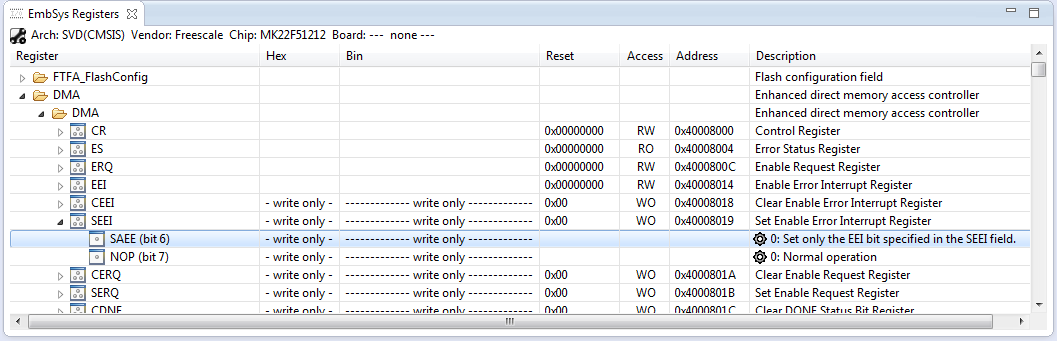
The EmbSysReg Viewer (http://embsysregview.sourceforge.net/) has been updated with even more Freescale SVD (System View Description) files, with a current count of 96 devices.

EmbSysRegViewer

Eclipse EmbSysRegViewer

Continue reading

Sensor and Communication Shield for Sumo Robot

The semester started last week. Ideally I wanted to have the boards for the new S robot (see “Zumo Robot with WiFi and GPS“) ready in the first week. But our manufacturer was not able to get the four-layer boards with parts populated and delivered in that time frame. Until the new boards arrive, we have anyway plenty of things to cover. One thing is to build a prototype shield to host several distance sensors, nRF24L01+ and Bluetooth transceiver:

Sumo Robot with Sensor Shield and Sensors

Sumo Robot with Sensor Shield and Sensors

Continue reading

Executing Multiple Commands as Post-Build Steps in Eclipse

The GNU ARM Eclipse plugins from Liviu already offer several built-in actions which can be performed at the end of a build: creating flash image, create listing file and printing the code and data size:

GNU ARM Eclipse Extra Post Build Steps

GNU ARM Eclipse Extra Post Build Steps

But what if I need different things, or even more things?

Continue reading

How to Add Existing Files to Eclipse Projects

This Tip sounds very basic, but still: I get asked about this about once a week. So it must be something non-obvious in Eclipse then ;-): how to add existing files to an Eclipse project. As with many things in Eclipse, there is not a single way to do something. There are two basic ways to do this:

  1. Import
  2. Drag & Drop
  3. Copy & Paste

The first is the ‘official’ way in Eclipse, the other two are much faster and easier :-).

1. Import

To import one or multiple files, select the folder/project where I want to add the files, then use the menu File > Import:

Menu File Import

Menu File Import

Continue reading

Building Projects with Eclipse from the Command Line

Eclipse has a great user interface (UI). But what if I want to do things from the command line, without the GUI? For example to build one or more projects in the workspace without using the Eclipse UI? With this, I can do automated check-outs and do automated builds.

Performed a command line project build with Eclipse

Performed a command line project build with Eclipse

Continue reading

Semihosting with GNU ARM Embedded (LaunchPad) and GNU ARM Eclipse Debug Plugins

In “Semihosting with Kinetis Design Studio” I used printf() to exchange text and data between the target board and the host using the debug connection. Kinetis Design Studio (KDS) has that semihosting baked into its libraries. What about if using the GNU ARM Embedded (launchpad) tools and libraries (see “Switching ARM GNU Tool Chain and Libraries in Kinetis Design Studio“)? Actually it requires two more steps, but is very easy too.

Semihosting Output

Semihosting Output

Continue reading

P&E Eclipse Update Site for GNU ARM Eclipse Plugins

P&E has just released a new version of their Eclipse plugins for the set of GNU ARM Eclipse debug plugins. The GNU ARM Eclipse plugins from Liviu support OpenOCD and Segger J-link, so with this update or extension it adds P&E support to it. With this, I can use the P&E debug devices (P&E Multilink, Tracelink) or as well the Freescale OpenSDA with it.

PnE Debug Interfaces

PnE Debug Interfaces

Continue reading