I’m attending the Freescale Technology Forum (FTF) in Dallas this year: As they say here: “everything is bigger in Texas”, that’s the motto of this conference ;-). The conference is packed, and I have a hard time to keep up with all the things going on. My focus is obviously everything around Eclipse and ARM microcontroller. The conference started yesterday afternoon with hands-on labs, and I was in the one were Freescale presented the new ‘Kinetis Design Studio’: a free of charge/unlimited Eclipse tool chain based on Eclipse Kepler, GCC and GDB. Freescale presented their new software library ‘Kinetis SDK’. And: There is a new Freedom board which gets handed out to the attendees: the FRDM-K64F :-).
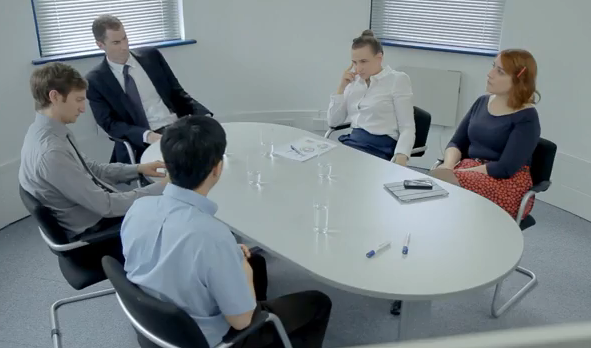
What Meetings feel like for Engineers
My students and everyone in my office know me: I’m a HUGE fan of Dilbert. There is rarely a lecture for which I do not have a Dilbert cartoon which shows the daily life of an engineer in as few as 3 cartoons. Humor is a good way to reflect behaviour and to have a laugh, so usually I tell every week a fun story to the class. I collect fun stories from students, from my family, my peers, or from my life as teacher, researcher and engineer.
And here I share my newest fun story (a video this time): An engineer as ‘expert’ in a business/requirement meeting. The task is simple: create seven red lines. But the twist is that these lines must be perpendicular…
Zumo Robots in Bucharest
Freescale opened its doors for students in Bucharest on March 28th. At the event there were more than 80 students and professors from Bucharest and across Romania with participation of the universities from Cluj, Constanta, Craiova, Iasi and Pitesti.
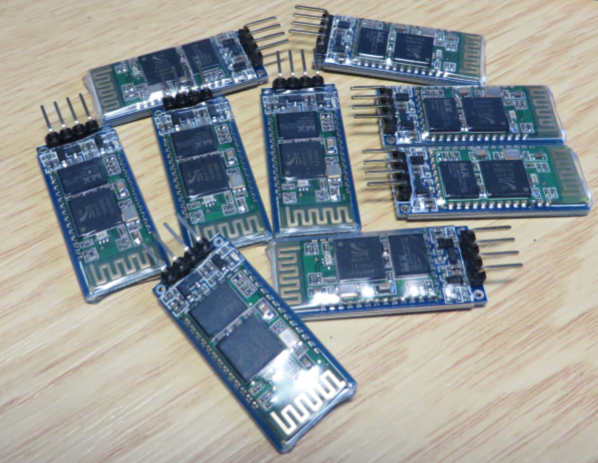
Getting Bluetooth Working with JY-MCU BT_BOARD V1.06
For my embedded course at the University of Lucerne of Applied Sciences and Arts I needed more Bluetooth modules for the Zumo/Sumo robots. I run out of stock as the modules are getting popular and are used in many student projects. So I ordered a handful more from DX/DealExtreme of the same HC-06 type/part number I already ordered a while back. I expected that they will work as the modules I had ordered from DX half a year ago. Was that naïve? Probably. Because they did *not* work, and caused me to reverse engineer the modules and to apply a hardware fix to get them working….
Serial Terminal View with Eclipse Kepler
Nearly all of my projects have built-in command line support: using a serial connection, I can send commands or inspect the system status. For this I have my command line Shell which works over serial-to-Bluetooth, serial-to-USB, USB CDC or with a physical serial (COM) port. But what I need on the host system is a Terminal program: I can use either an external program. There are many ones available (Tera Term, PuTTY, …) where Termite is my favorite one. But it is possible to extend Eclipse so it has its own Terminal view too :-).
Winter Strikes Back…
Gallery
This gallery contains 4 photos.
It was a perfect start with blooming Crokus – and now this: With a cold front coming from the north, everything gets snow-covered again. Not that much for now, but it is supposed to snow all day long. So a … Continue reading
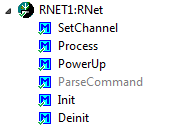
RNet Stack as Component, nRF24L01+ with Software SPI
The great thing with Processor Expert is: it writes the code for me :-). I’m using now the RNet wireless stack in more than 10 different projects, and keeping the projects up-to-date with the RNet stack sources in a traditional way gets harder and harder: I need to make sure the paths are pointing to the right place, and if I pass the project to somebody else, I have to make sure all the sources are packaged with that project. Processor Expert makes things simpler: it can generate the source files into my project, and I can easily configure it.
So instead to copy and support files by hand, I decided to package the RNet stack files into a Processor Expert component: all still normal C files, but easier to configure and distribute.
FreeRTOS, malloc() and SP check with GNU Tools
FreeRTOS has many memory allocation options (see Memory Management) with four ‘schemes’. One of it is the a simple wrapper over the library malloc() and free() routines. I admit, I have not used them, as usually I avoid to include such kind of libraries, as they have their own problems. Anyway, a discussion in the FreeRTOS forum raised my interest: obviously some malloc() implementation (as in the EWL library of CodeWarrior) are making a safety check against the current stack pointer.
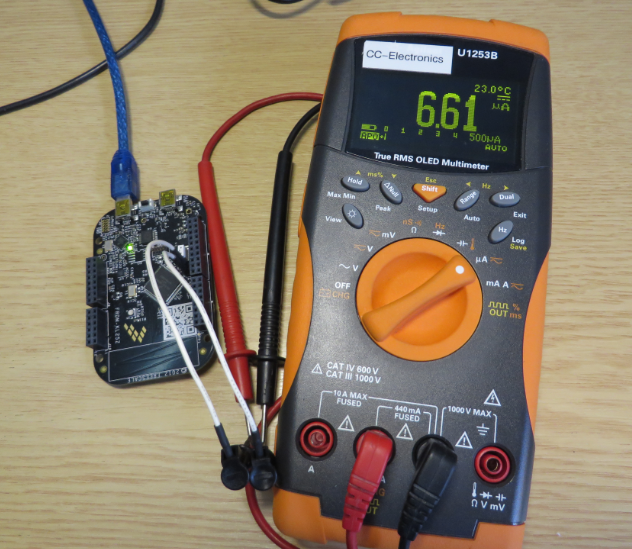
Starting Point for Kinetis Low Power LLS Mode
In “IoT: FreeRTOS Down to the Micro Amps” I’m using an application with FreeRTOS to get down in micro amps low power mode. Well, nearly all or my applications are using FreeRTOS because it makes the application scalable and extensible. Still, for anyone not used to an RTOS, that might be a hard start. So here we go: how to get into the Kinetis Low Power LLS Mode *without* an RTOS.
Variable Debugging with Eclipse Kepler
The current Eclipse Kepler version comes with changes for debugging variables. I have students coming from the earlier Eclipse versions, so here are a few tips for dealing with variables in Eclipse Kepler.