In many of my applications I use a CRC/checksum to verify that the code/flash on the target is not modified. For this, not only the code/data in flash counts, but as well all the unused gaps in the memory map. Instead to leave it up to the flasher/debugger (which usually erases it to 0xFF), I want to fill it with my pattern. The GNU linker is using the pattern 0x00 for unused bytes inside sections. So this post is about to use the GNU linker to ‘fill’ the uninitalized FLASH memory with a pattern.
Category Archives: Embedded
Preventing Reverse Engineering: Enabling Flash Security
Now I have invested a lot of time into my application, ready to be flashed on the devices and shipped. But wait: I don’t want that someone can read out the code from my device and have it reverse engineered. For this, I can ‘secure’ the device.
Tutorial: DIY Kinetis SDK Project with Eclipse – Board Configuration
In “Tutorial: DIY Kinetis SDK Project with Eclipse – Startup” I showed how to create a Kinetis SDK project from scratch. In this post it is about adding the board initialization files. With the board initialization the peripheral clocks and pin muxing is configured.
Formula Student Electric “grimsel” Testing in Alpnach
Here is another featured student project of this semester: Formula Student Electric (FSE). After the outstanding racing season with “Julier” in 2013, the students have designed and built a new and improved Formula Student Electric car “grimsel”, named after the Grimsel Mountain Pass.
Team Video:
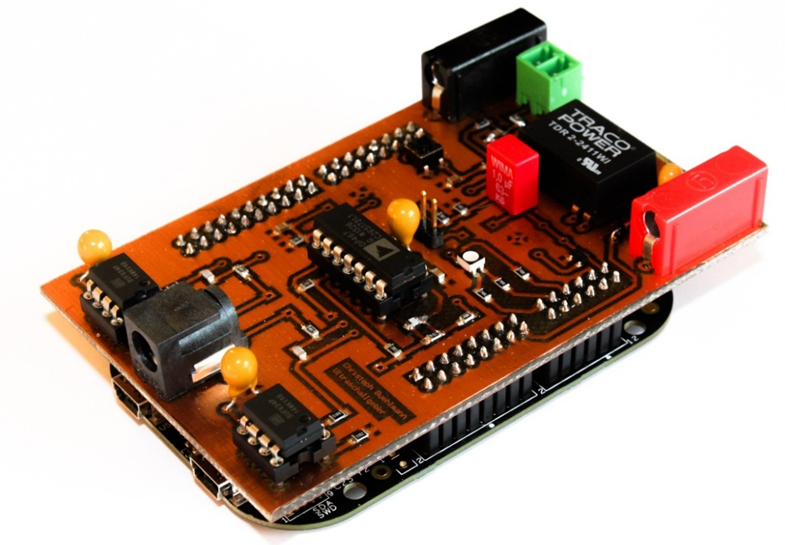
Programmable Ultrasonic Sensor Shield for FRDM Board
“Note to myself: post articles about what students have done this semester…”
Students have turned in their semester project work. I have set for myself a goal to briefly describe to the ‘outside’ world what they did, as an inspirational source :-). So here is a first article about the project completed by Christoph Bühlmann who developed a shield for the FRDM-KL25Z board: a programmable ultrasonic shield:
Tutorial: DIY Kinetis SDK Project with Eclipse – Startup
This is the start of a multi-post tutorial about the Freescale Kinetis SDK, released back in April as beta version. The SDK a set of peripheral drivers, and will become the standard software foundation and drivers provided by Freescale for their ARM Cortex based devices. Similar what other vendors already do. While this is a good step, it is the same time very disruptive for my university projects with new Freescale Cortex-M devices. And with everything new (and beta), it needs time to learn. So this post is about creating a Do-It-Yourself Kinetis SDK project from scratch for Eclipse. This part is about the startup code: about everything to get the application started.
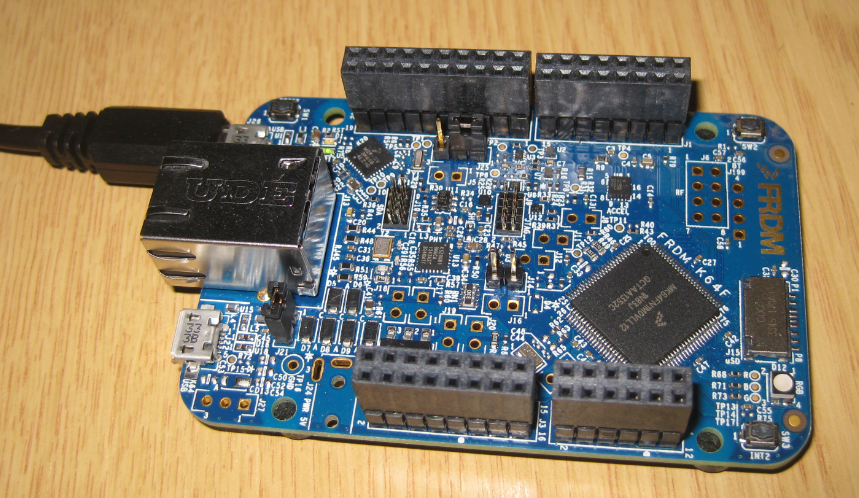
FRDM-K64F at Maximum Speed of 120 MHz
The ARM Cortex-M4F on the Freescale FRDM-K64F board can run up to 120 MHz. Here is how to get it running with maximum speed:
EmbSys Registers View with CMSIS-SVD dimElementGroup
As outlined in “How to Add Register Details View in Eclipse“, I have a nice register detail level viewer for Eclipse and GDB. But one problem showed up: there were entries showing with %s:
The reason is that the parser is not handling the dimElementGroup of CMSIS-SVD.
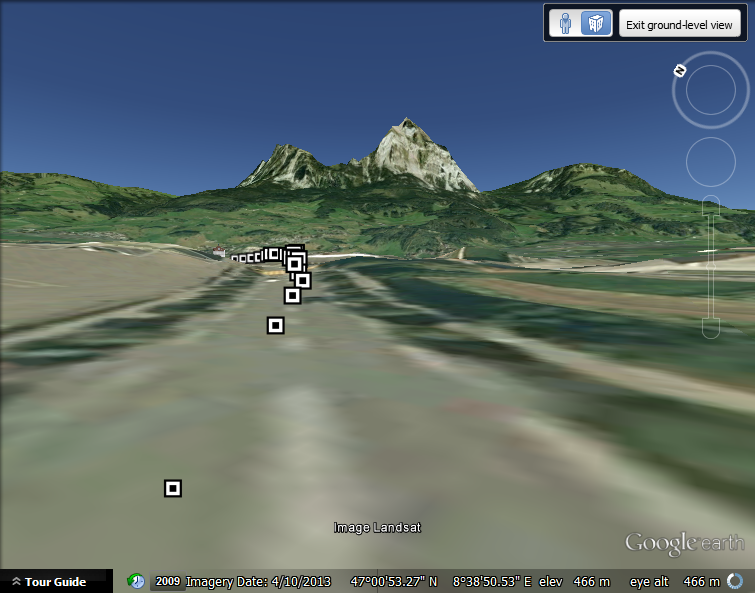
Combining GPS Data Logger with Google Earth
So I have now a portable GPS data logger (see “Tutorial: Freedom Board with Adafruit Ultimate GPS Data Logger Shield“). What to do with it? It would be cool to see the data and tracks in Google Earth? Yes, that’s doable in a few steps…
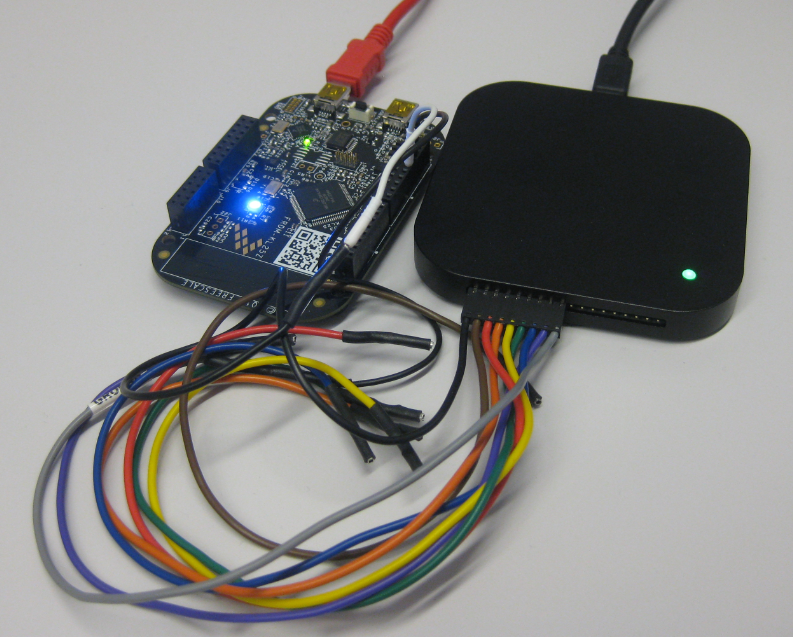
Tutorial: PWM with DMA on ARM/Kinetis
For a project I need to change the PWM duty cycle after a PWM period is over. One way to do this is to have an interrupt at the end of the PWM period, and then set the new PWM duty (compare) register value in the interrupt. That works fine for ‘slow’ PWM frequencies, but if the PWM frequency is high, the CPU load is massively increasing. A better way is to use DMA (Direct Memory Access).