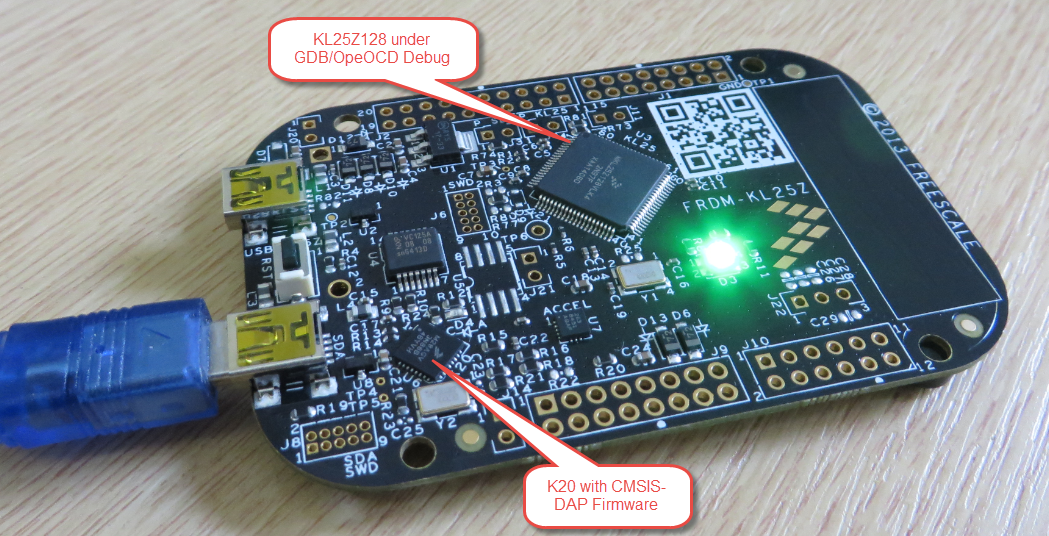
OpenOCD is an open source and free-of-charge debugging solution, which is a great option here at the University of Lucerne, as students do not need to buy an expensive debugging probe. Still, I recommend to buy professional probes like the P&E or Segger ones, as they are worth every (Euro) cent. But for a ‘zero’ budget, OpenOCD with CMSIS-DAP is something to consider. And with Kinetis Design Studio using the GNU ARM Eclipse Plugins, OpenOCD is not that hard to be used. And because both Freescale and GNU ARM Eclipse offer OpenOCD Windows binaries, that connection method is in the reach of Windows users too.
Category Archives: CPU’s
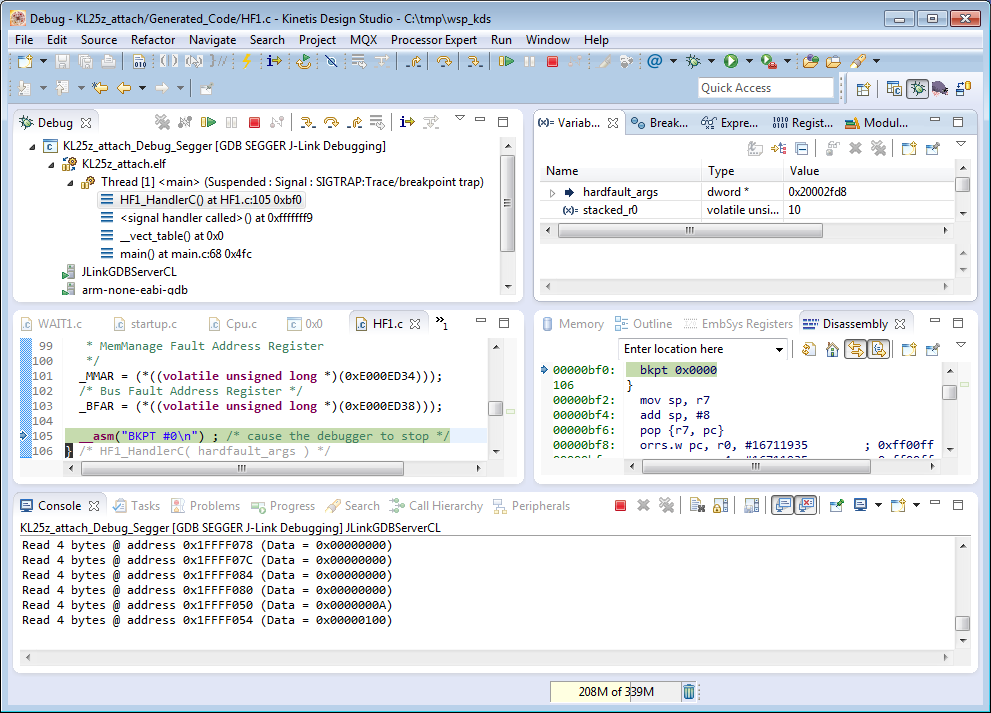
Attaching to a Running Target with Segger J-Link, GDB and Eclipse
This happens several times for me: I have a board running for a while (even for days), and then it crashes or is stuck somewhere. Yes, I usually use a watchdog do recover from that situation. But it would be good to know and debug the problem. With CodeWarrior I had the functionality in the debugger to ‘attach’ or ‘connect’ to a running (stuck/crashed) board. However, with Eclipse/Kinetis Design Studio/GDB this is a different debugger, and not possible. At connection time with the debugger the target does a reset, so I don’t know any more where the application crashed. But now I have a solution, at least with the Segger GDB :-).
Using Kinetis Design Studio with IAR Embedded Workbench IDE
For everyone who wants to combine the power of Eclipse and Processor Expert with the IAR Embedded Workbench IDE, here is how to get them working side by side:
Continue reading
eWheel Velo Bling-Bling Freescale Project
So here is a really, really cool project: eWheel Velo Bling-Bling:
Updated Percepio Tracealyzer and Trace Library to Version V2.7.0
Percepio has recently released the v2.7 version of Tracealyzer. This is a major upgrade from the v2.6 version which I have used so far: time to upgrade my Trace component for FreeRTOS to the latest and greatest v2.7!
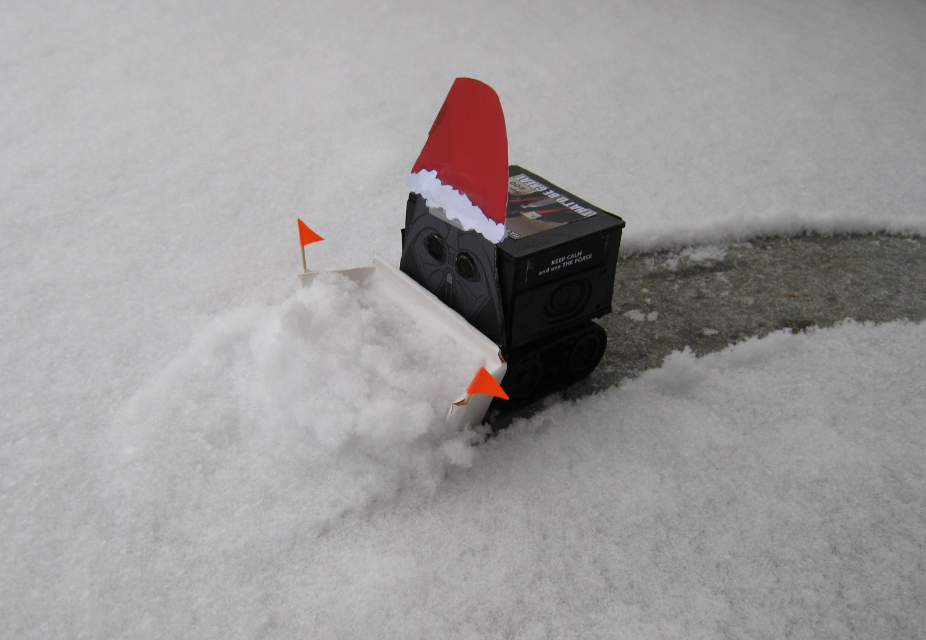
Snow Plowing (Darth Vader) Sumo Bot
Finally, winter with lots of snow arrived in Switzerland. Getting up at 5am this morning to free up my front yard from the 25 cm snow which came down overnight, so I can drive my wife to work. She does not like driving in snow conditions, but it is fun for me :-). But lots of snow, I thought I could use a little helper bot:
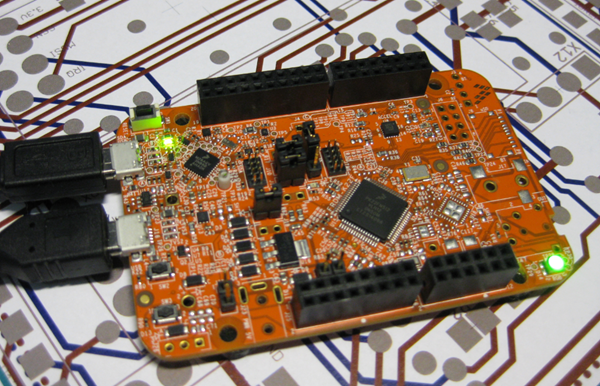
USB with the Freescale FRDM-K22F Board
The FRDM-K22F is one of the latest members of the Freedom board families: 512 KByte Flash, 128 KB RAM and the usual Freedom board components on it. Unfortunately, Freescale decided not to populate the micro-SD card connector on the board, so from this perspective the FRDM-K64F is more value for the money. But the board has USB, so this makes it still interesting. And this is what this post is about: Adding USB to the FRDM-K22F board in a few minutes…
Darth Vader Santa Claus Sumo Bot
As I have received multiple questions about that Darth Vader Santa Claus/Christmas robot in the Mini-Sumo competition last week, here are the details in case you want to build your own :-)…
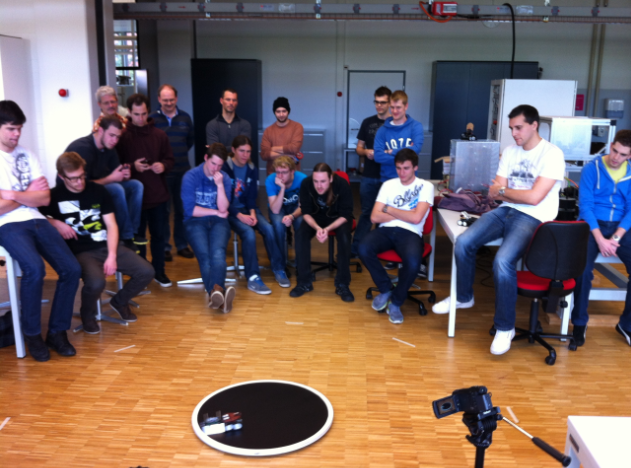
Sumo with GoPro, and other Sumo Videos
Here are the videos and results of the Mini-Sumo competition held on 19-Dec-2014 in Horw, Switzerland:
- Winner full-autonomous tournament: “The:Flash”
- Winner semi-autonomous tournament: “Banana-Rob”
See “Infotronic WS2014 Sumo Robots are Ready!” for all the robot portraits.
Tutorial: IoT Datalogger with ESP8266 WiFi Module and FRDM-KL25Z
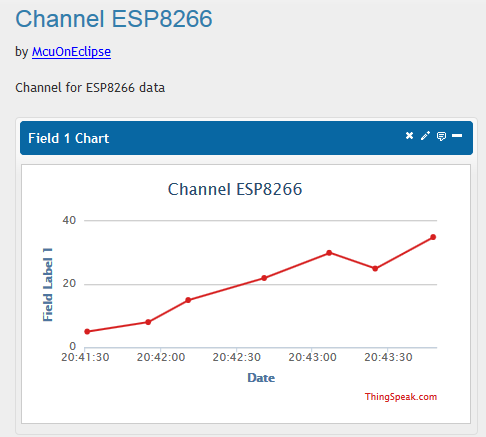
In my earlier post “Tutorial: Web Server with the ESP8266 WiFi Module” I used the ESP8266 WiFi module to run a local web server. This is a cool way to control devices inside my network. But to use that web page from the internet, I would need to open up my router which I don’t want to do for obvious reasons. Why not going the other way: host the web page in the internet, and have my board communicating with that internet page? This is exactly what this hype around IoT (Internet of Things) is all about :-).