CriticalSection Component

I have created and published on GitHub a new component ‘CriticalSection’:
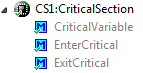
Critical Section Component Methods

Critical Section Component Methods

This component is a wrapper between my components and the problematic current implementation in Processor Expert (see EnterCritical() and ExitCritical(): Why Things are Failing Badly). It uses a flexible approach and uses macros to either use my modified version of EnterCritical() and ExitCritical(), or simply defaults to the original implementation.

Continue reading

FRDM with Arduino Ethernet Shield R3, Part 3: Embedded Web Server

This is Part 3 of an ongoing tutorial to use the Arduino Ethernet Shield R3 with a Freescale FRDM-KL25Z board (or any other board you like).

In Part 1 I worked on the SD card, in Part 2 I have added basic network connection. Now time to run a web server with my FRDM-KL25Z :-). With this, I can get access to my board through the network, and the board will host a web page where I can do pretty much everything: showing status, or adding functions to turn on things like an LED 🙂

Web Server with W5100 on FRDM-KL25Z

Web Server with W5100 on FRDM-KL25Z

Continue reading

USB for the TWR-K21F120M

Finally my Freescale TWR-K21F120M board arrived 🙂

TWR-K21F120M on the bench

TWR-K21F120M on the bench

For the next generation of INTRO Zumo robots I’m evaluating a new ‘brain’: more processing power, more FLASH, more RAM, more of everything 😉

Continue reading

DIY: Changing Processor Expert Components

I’m maintaining and hosting now more than 100 different Processor Expert components on GitHub. Instead to deal with CDE (Component Development Environment, that’s the SDK to create your own components), most users simply download and install the PEupd files. If you deal with normal source files, and if spot something you want (or need to change), then you can easily do this. But what if you want or need to change something in that code which comes with the PEupd file(s)?

Components in the Components Library

Components in the Components Library

Continue reading

FRDM with Arduino Ethernet Shield R3, Part 2: Ping

In Part 1 of this series I have covered the SD card on the Arduino Ethernet shield. In Part 2 I’m hooking up the board to the network and will be able to ping it 🙂

Arduino Ethernet Shield with FRDM-KL25Z

Arduino Ethernet Shield with FRDM-KL25Z

Continue reading

FRDM with Arduino Ethernet Shield R3, Part 1: SD Card

Sometimes it takes a very long time to realize a project. Adding the Arduino Ethernet Shield R3 to one of my Freescale FRDM boards is one of it: it took me a year until I have found a few days to work on using the Ethernet Shield with my FRDM-KL25Z.

FRDM-KL25Z with Ethernet Shield

FRDM-KL25Z with Ethernet Shield

I have not everything in place yet, so I decided to publish things in parts. So this is about part one: using the Micro SD Card on the Shield.

Continue reading

Character LCD with 4 Lines and up to 64 Characters per Line

Character based LCD displays are great: they are inexpensive, and it is rather simple to use them compared to graphical displays. Yes, they only can display text and custom symbols, but this is usually what I need. And pretty much all character displays are using the Hitachi HD44780 protocol, so it is a de-facto industry standard.

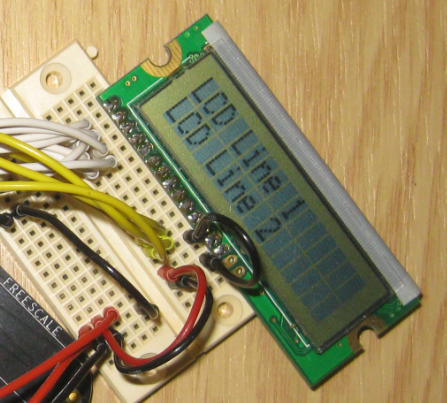
Dual Line Character Display

HD44780 compatible Dual Line Character Display

These displays have one big disadvantage: they need to be compatible with the original Hitachi interface and protocol. First display were mostly one line only, and had only few characters, typically up to 16. The protocol worked either with one or two lines on the display. Today’s display have usually two lines, with 16 characters. But what if I need more?

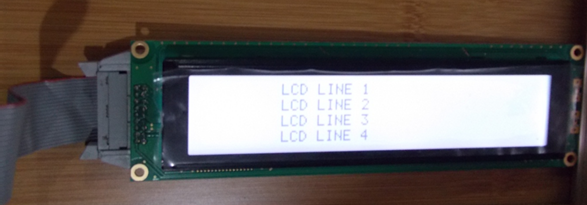
4-Line LCD (Source: Daniela Solorzano)

4-Line LCD (Source: Daniela Solorzano)

Continue reading

Review: New FRDM-KL26Z Board

I probably would have missed the fact that Freescale has released a new Freedom board, if I would not have visited my local distributor site to order a replacement for one of my first FRDM-KL25Z boards. So surprise, surprise: there is a new Freedom board: the FRDM-KL26Z!

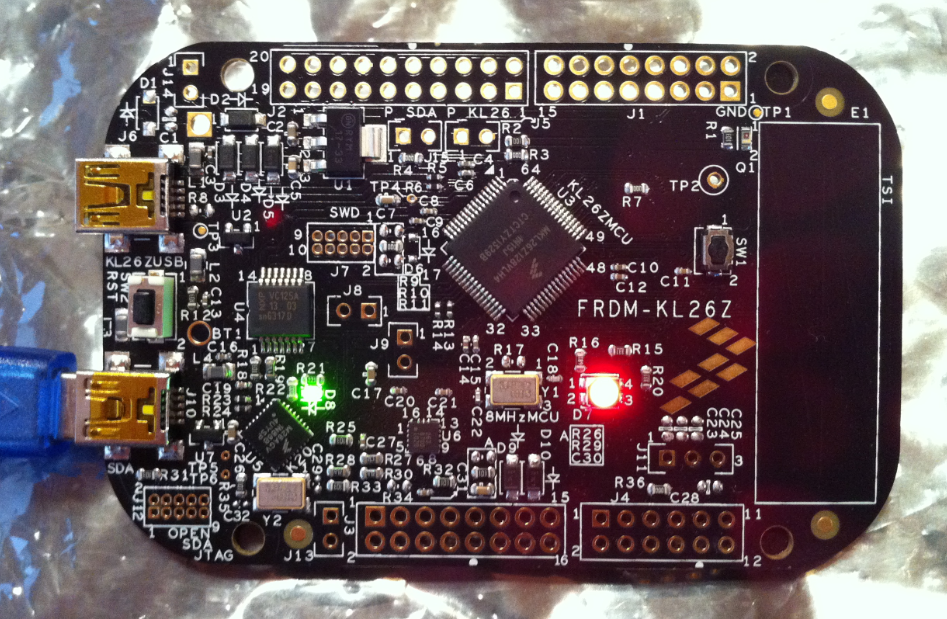
FRDM-KL26Z Board

FRDM-KL26Z Board

So instead ordering again a FRDM-KL25Z, I decided to order that new FRDM-KL26Z instead. And it arrived right before Christmas, and now I had time to check it out. Nope, I did *not* use it as a blinking gadget on a Christmas tree, even if that would have been a nice idea ;-).

Continue reading

RNet Stack for 8bit MC9S08QE128 Microcontroller and MC13201 Transceiver

I admit: I have used ARM Cortex cores a lot in the recent months. Yes, I think with the ‘ARM domination of the world’ over time the ARM core will blast away probably all other cores, except for niche players? Still, there are reasons to use non-ARM cores, and even if it is just that I have a board at hand :-).

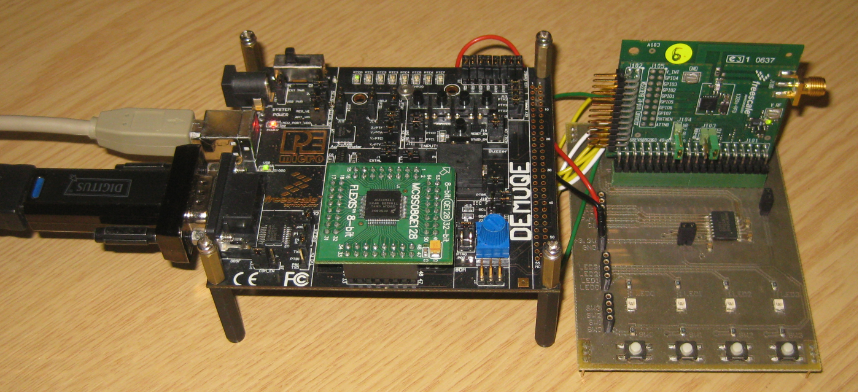
DEMOQE with MC9S08QE128 and MC13201 Transceiver Card

DEMOQE with MC9S08QE128 and MC13201 Transceiver Card

Continue reading

RNet: optional ACK, Dynamic Payload and Extended nRF24L01+ Driver

Time to write an update about the RNet Wireless Stack. The stack has been successfully used for the Sumo Robots as wireless controller. In the last week, there has been a lot smaller and larger extensions for it. And because the nRF24L01+ modules are so inexpensive, I bunkered more than 50, with 20 still left to be deployed:

nRF24L01+ Transceiver Modules

nRF24L01+ Transceiver Modules

Continue reading