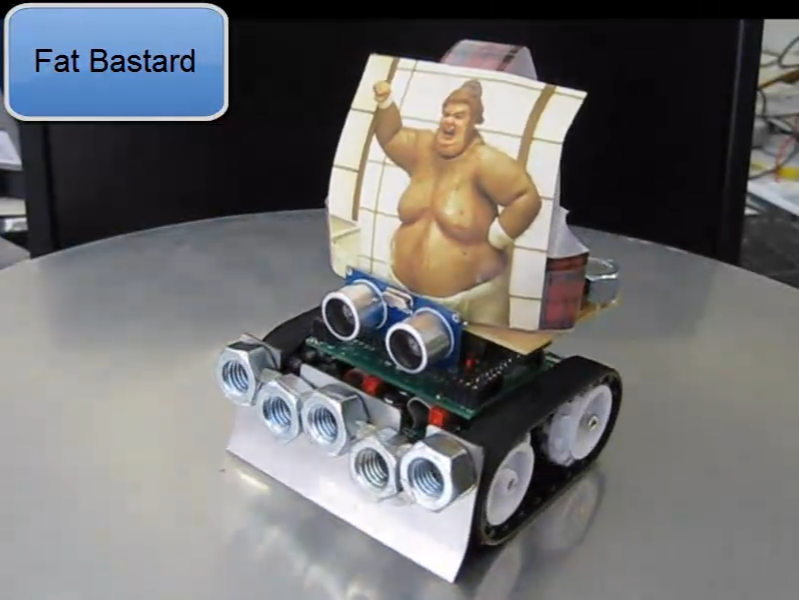
Impressions from Freescale Technology Forum 2015

With Freescale merged into NXP, I guess this was the last FTF (Freescale Technology Forum) after a history of 10 years. Maybe it will transform into a ‘NTF’, at least I hope that such an energizing event and conference will continue in the new NXP area. I was busy with delivering my own sessions, but had time to meet and greet and see a lot of interesting stuff. After visiting the TechLab several times and after all the discussions with other embedded enthusiasts I have now many cool projects in mind :-).

So what I do here is to share some impressions with pictures and videos. It will take me weeks to absorb everything. Not to talk about the huge email backlog I have now ;-). So enjoy:

Willie Nelson at ACL (Austin City Limit)

Willie Nelson at ACL (Austin City Limit)

Continue reading

tinyK20: New Board with micro-SD Card

Thanks for all the feedback and suggestions so far on the tinyK20 project! I’m proud to present the next iteration of the universal microcontroller & debugger board based on the Freescale Kinetis K20 USB microcontroller:

tinyK20 Board

tinyK20 Board

Continue reading

Eclipse Project ‘Refresh Policy’: Broken Incremental Build with External Make?

So here is a problem I have observed for a while, and several users have reported that to me: the problem is that for some reasons and only for some projects, when I do a ‘build’ in Eclipse CDT, it does a ‘full’ build. It does not only build the changed files, it builds all or many files in the project.

Building

Building

I expect that only the changed files will be rebuild. Instead, it compiles many files it should not compile/build, with the result that a build takes a very long time. That’s clearly wrong, and not what I expect. So what is causing this problem?

Continue reading

Code Coverage with gcov, launchpad tools and Eclipse Kinetis Design Studio V3.0.0

What makes Eclipse great: using open source tools there are a lot of tools and techniques available which usually are only provided for desktop development.

A while back I described how to do code coverage with Eclipse Kepler and the GNU ARM Embedded (launchpad) tools (see “Code Coverage for Embedded Target with Eclipse, gcc and gcov“). With Kinetis Design Studio out, time to do the same with that Eclipse distribution, especially as Freescale is now using the stock GNU ARM Embedded tools too.

Coverage with multiple Files

Coverage with multiple Files

Continue reading

Problem: undefined reference to ‘__end__’ if using Semihosting

In case you are running into the following GNU linker error about a missing __end__:

'Building target: MyProject.elf'
'Invoking: Cross ARM C++ Linker'
...
toolchain/bin/../lib/gcc/arm-none-eabi/4.8.4/../../../../arm-none-eabi/lib/armv6-m/rdimon-crt0.o: In function `_start':
(.text+0xdc): undefined reference to `__end__'
collect2.exe: error: ld returned 1 exit status
make: *** [MyProject.elf] Error 1
Failed link because missing __end__

Failed link because missing __end__

The GNU linker complains that rdimon-crt0.o needs the symbol __end__.  This symbol marks the end of the user data/RAM section, and is needed by the rdimon library specs which is used with semihosting.

Continue reading

Semihosting for Kinetis Design Studio V3.0.0 and GNU ARM Embedded (launchpad)

Freescale has released the v3.0.0 version of the Kinetis Design Studio: this one comes with a great positive change: instead of a custom toolchain, it is coming with the standard GNU ARM Embedded (launchpad) toolchain from ARM. Beside of better code density and less RAM needed, there is one change which affects semihosting. Previously, semihosting was enabled by default in the V2.0.0 libraries. Now semihosting needs to be turned on. This post is how to do this.

Semihosting Console with Output in Eclipse

Semihosting Console with Output in Eclipse

Continue reading

Solving “The connected emulator does not support serial wire output (SWO)” for Segger J-Link

SWO (Serial Wire Output) is a cool feature defined by ARM as part of the CoreSight debug block. However, not every debug connection supports SWO, as it requries extra pins routed from the microcontroller to the debug JTAG/SWD header.

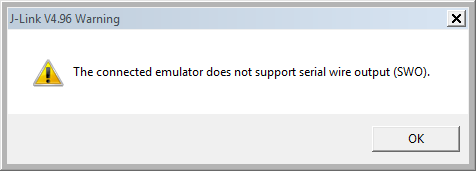
If I’m using the Segger J-Link, and if my hardware does not support SWO, I will get a dialog telling me “The connected emulator does not support serial wire output (SWO).”

The connected emulator does not support serial wire output (SWO)

The connected emulator does not support serial wire output (SWO)

Continue reading