Cold and humid air are forming beautiful sculptures these days. The image shows the leaves of a Japanese Umbrella-Pine (Sciadopitys):

Frosted Sciadopitys Leaves
Happy Frosting 🙂

Cold and humid air are forming beautiful sculptures these days. The image shows the leaves of a Japanese Umbrella-Pine (Sciadopitys):
Frosted Sciadopitys Leaves
Happy Frosting 🙂
A benefit getting up early on a Sunday morning is the chance to watch a beautiful sunrise:
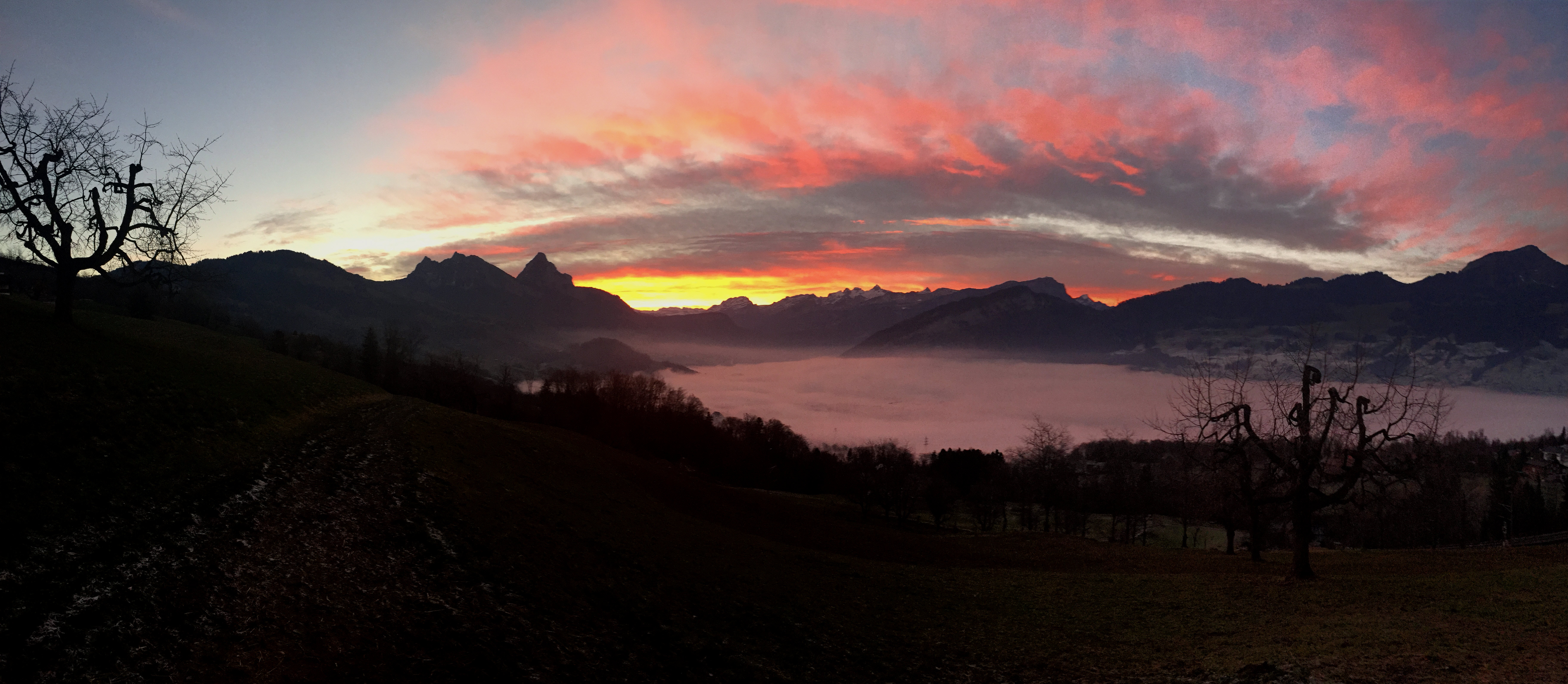
Red Morning
Happy Sunday 🙂
A sunrise which reminds me that nature creates the most beautiful pictures:
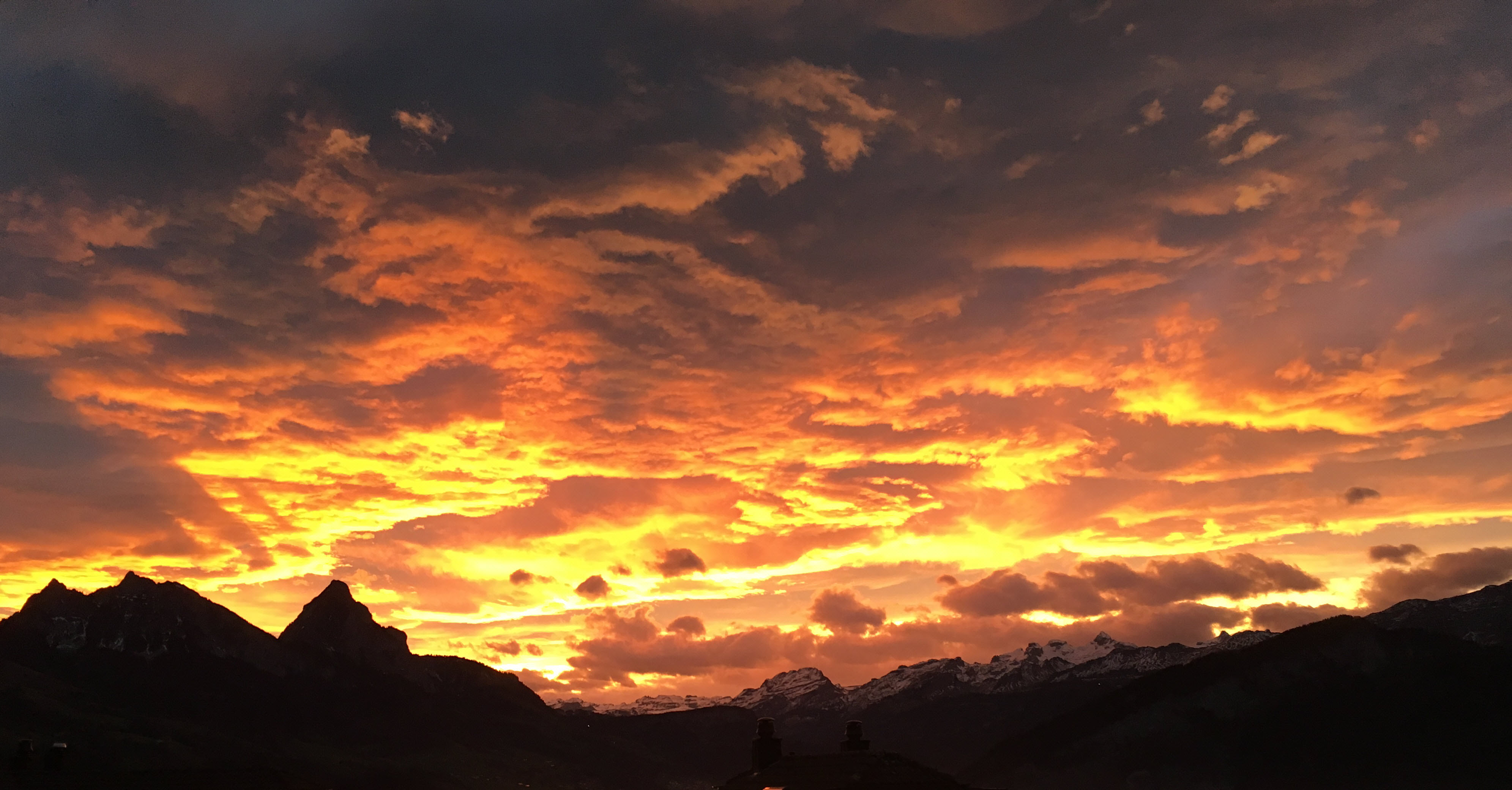
Mythen Sunrise
Scene created by the Föhn wind moving clouds over the Swiss Alps, and the sun rising behind the Mythen mountains.
Happy Sunrising 🙂
Mother nature offered an interesting puzzle this morning: a sunrise with beautiful light sculptures. But where is the sun?
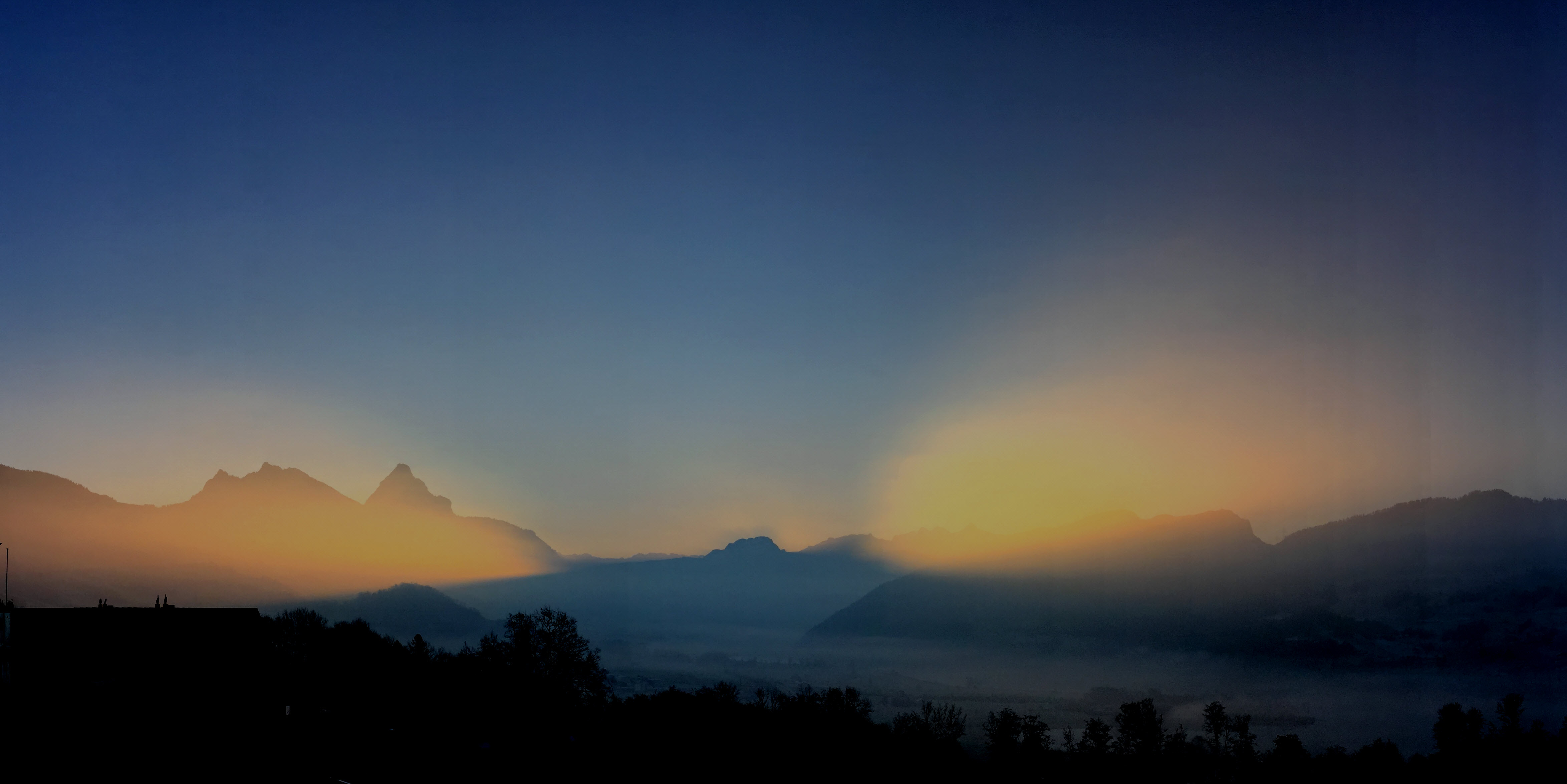
Morning sunlight without the Sun?
‘Inversion‘ is an interesting meteorology phenomena: normally the air temperature gets colder the higher you get up in the mountains. With the inversion situation it is the other way round: cold air in the lower areas building a sea of fog, and warmer air and sunshine up above. Perfect for a hike, so sharing pictures from last weekend.
The first one is from the Haggenegg in Canton Schwyz, with the view to the South:

Inversion, view from Haggenegg (click to enlarge)
The Carlina Aucalis (we call it locally the “Silberdistel”) is native to alpine regions in central Europe. When all the other flowers disappear in fall time, the Silberdistel is worth a stop while hiking in higher alpine regions.
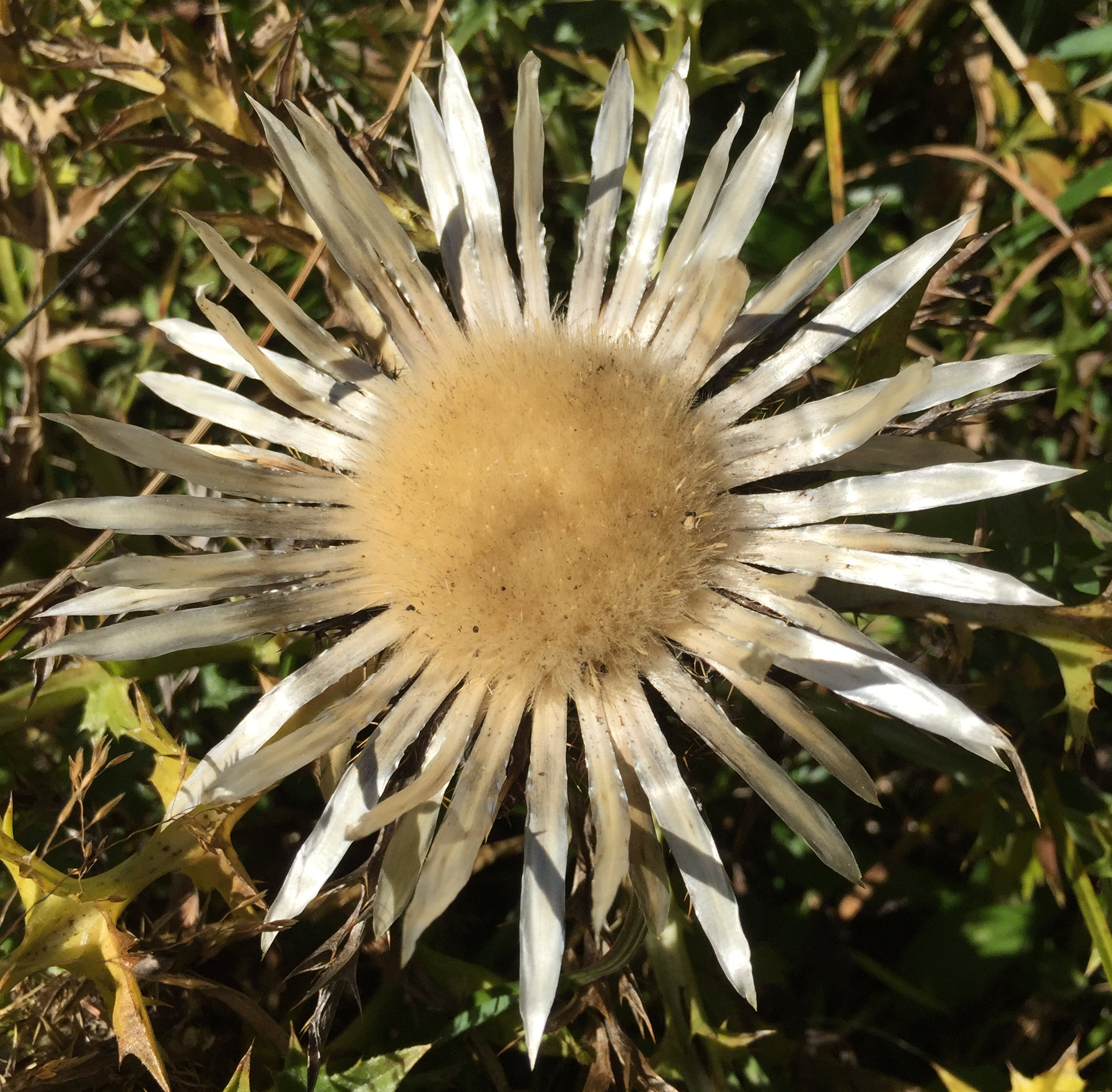
White Silberdistel
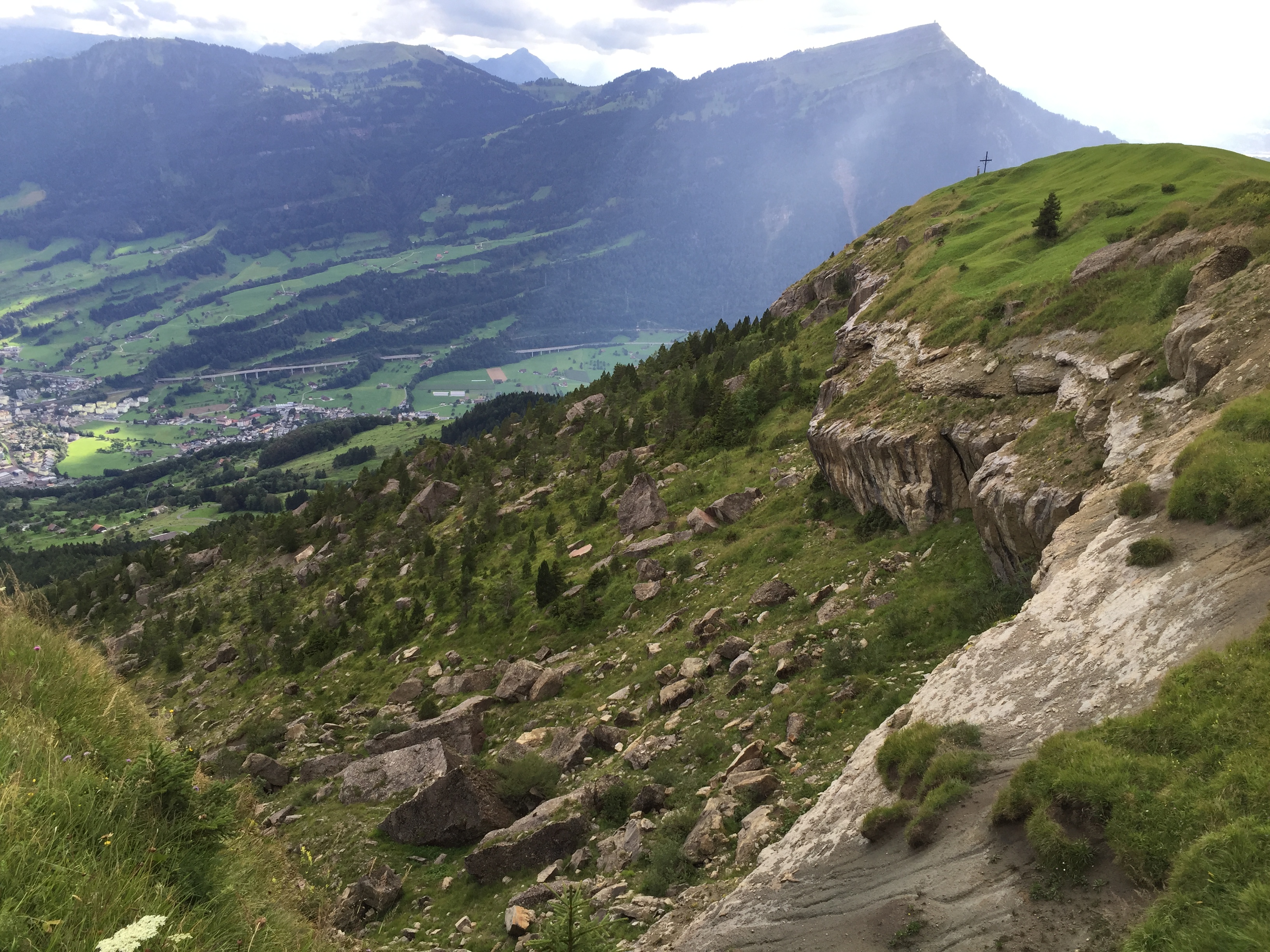
Gnipen
On Sept. 2nd 1806, after a period with lots of rain, an estimated volume of 40 millions m3 of conglomerate rock slid down from the Gnipen, killing 457 people.
Achenkirch is a municipality in the Schwaz district in the Austrian state of Tyrol. Located nearby on a hill is the “Annakirchl”:
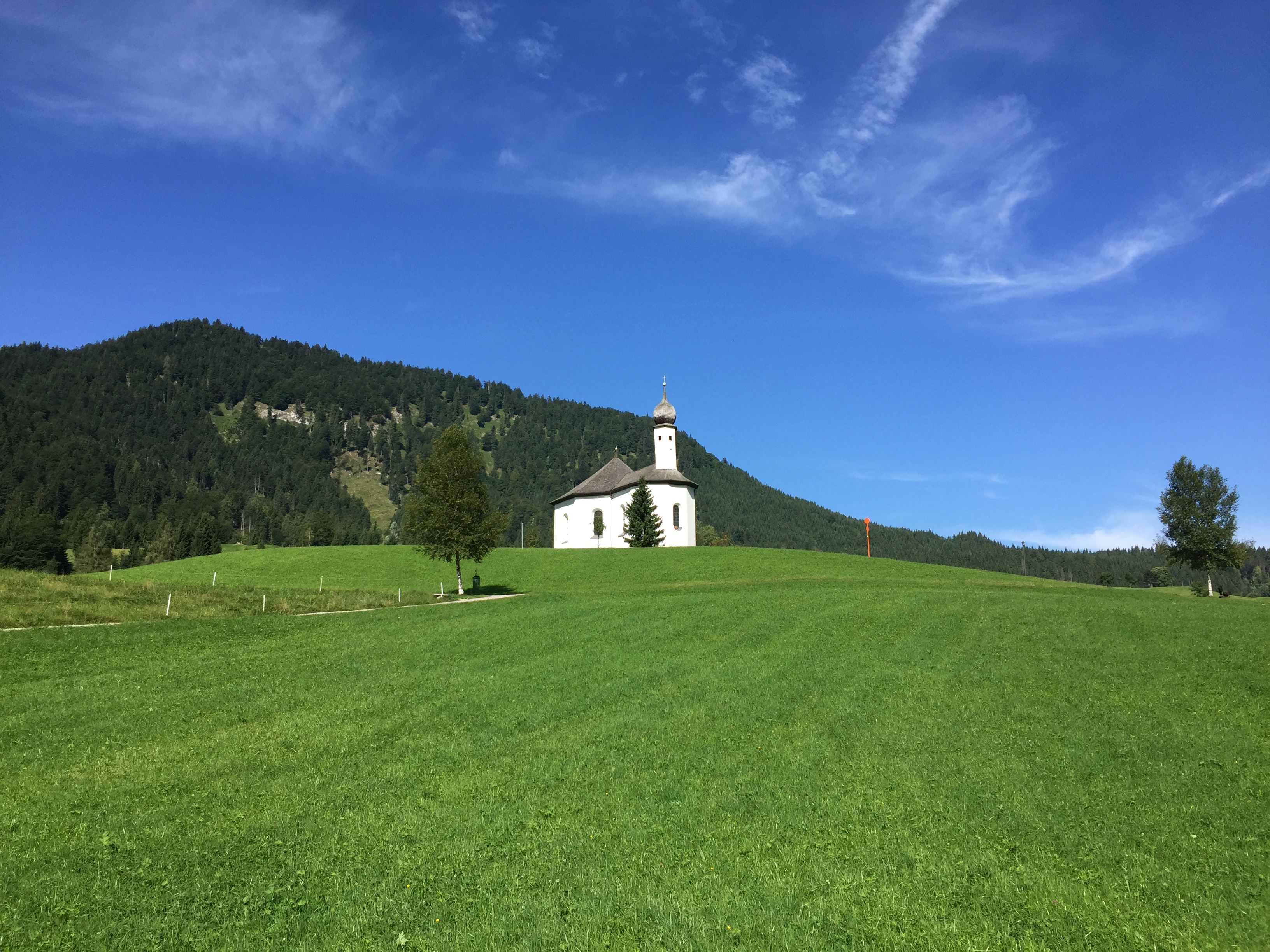
Annakirchl in Achenkirch
The Haggenegg is a summit at 1414 m between Schwyz and Alpthal. The summit played an important role during the “Marchenstreit“: a border conflict starting around the year 1100 between Schwyz and the Einsiedeln Abbey.
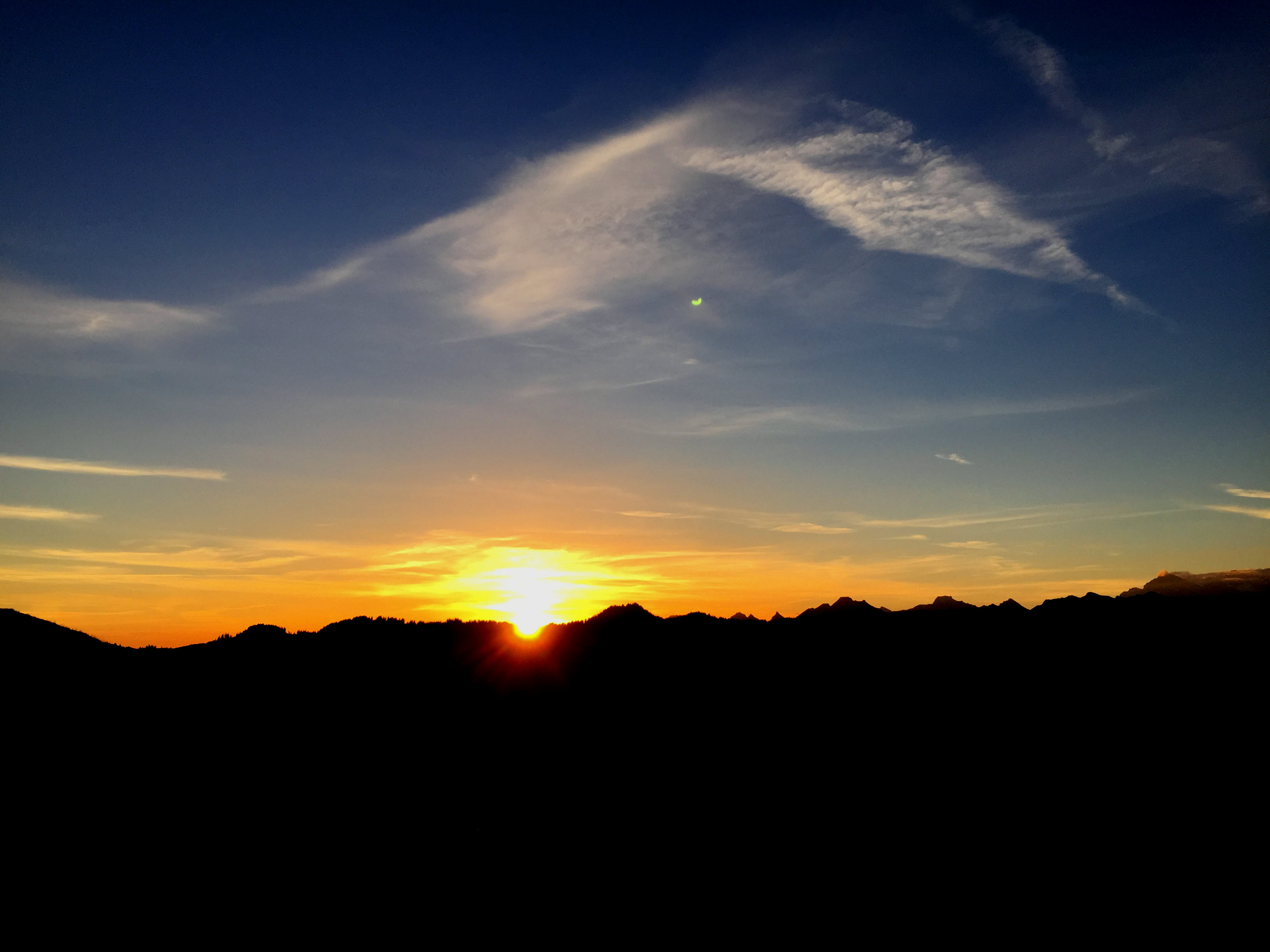
Sunrise from the Haggenegg
The Lilium Martagon (Turk’s Cap Lily, Lily of Istanbul, Sultan Lily or Dragon Lily.) grows up to 2 meters and is one of the most beautiful lily flower in my area. I can find it mostly around 1000-1200 m in the nearby Alps, e.g. on the Rigi mountain range.

Lilium Martagon
 MCU on Eclipse