This article is not about software or an electronics project. It is about a multi-year project transforming a lawn into a home and food for various species. Slugs plus a cat have played a role in this, in one way or another.
The past Lawn
For more than 20 years we had a green lawn in the backyard.
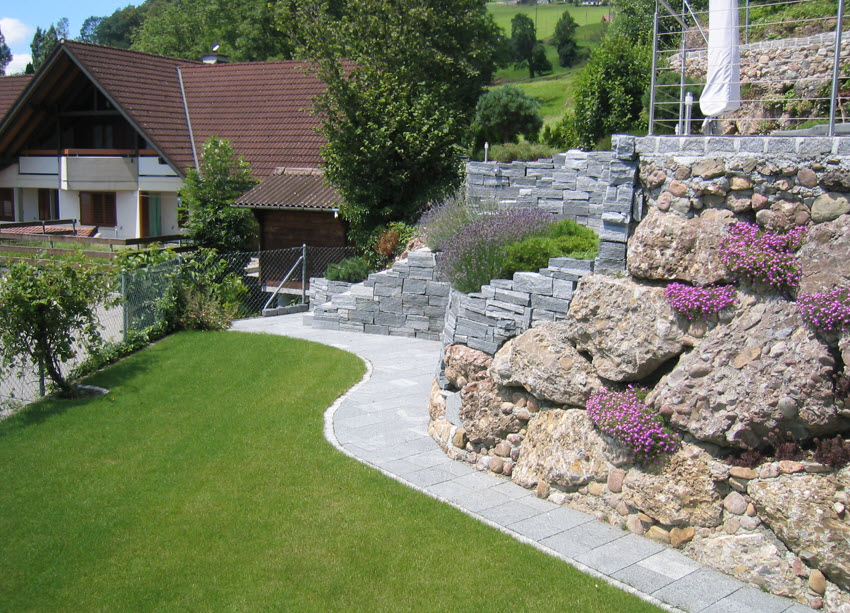
That lawn worked pretty well over the years. The usual weekly lawn mowing. Pulling out the weeds, just the usual things. But increased amount of moss created more work.
2022: Inflection point
Back in 2022 several things came up. With the lawn getting older and harder to keep, a replacement was considered. Laying a new lane with removing the old one and seeding a new one. Additionally, the self-propelled gas lawn mower was getting old too. Still worked after more than 20 years, but started having issues. A robot lawn mower was under consideration. But that one probably won’t last another 20 years.
After long considerations, a different approach has been decided. Getting rid of lawn and mower, and replace everything it with a flower meadow :-).
It was clear for us that this means initially a lot of work. And growing a flower meadow means be patient, as it takes several years.
It started back in September with removing the sod. This took several days, using shovel and hoe. In retrospect, we should have have used a machine for this, as it was hard work.
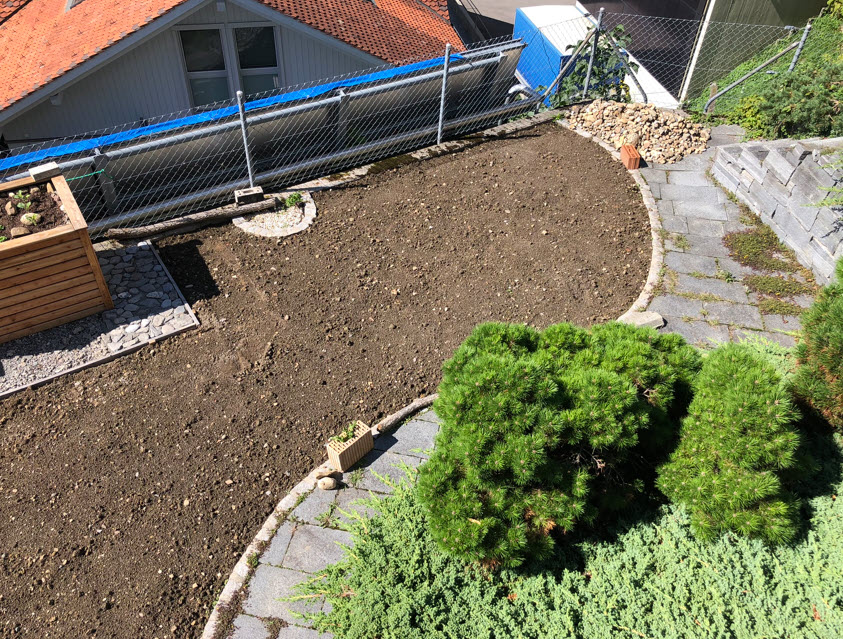
Part of the sod has been used to build three raised beds.
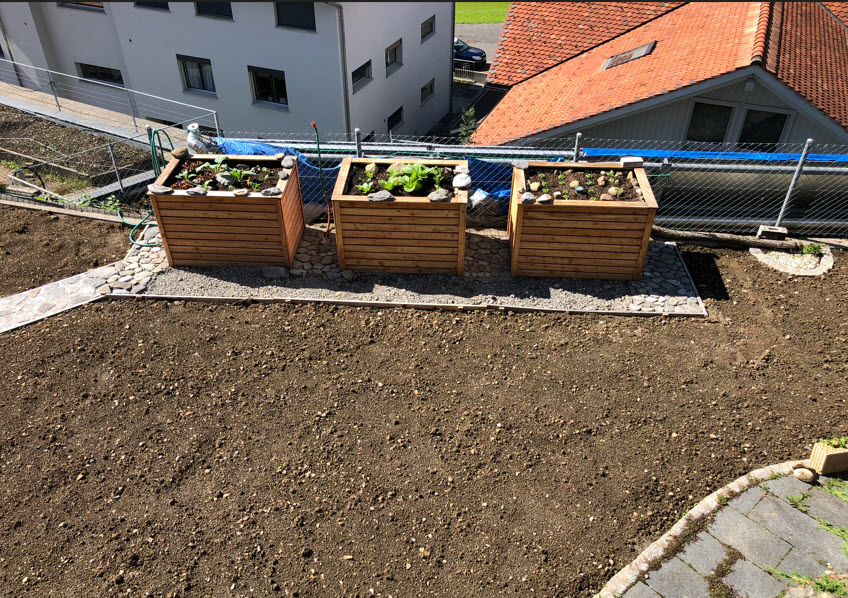
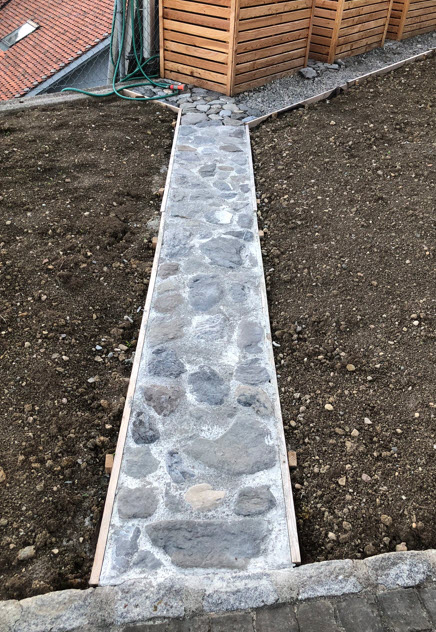
Stones from a nearby river have been used to build a path.
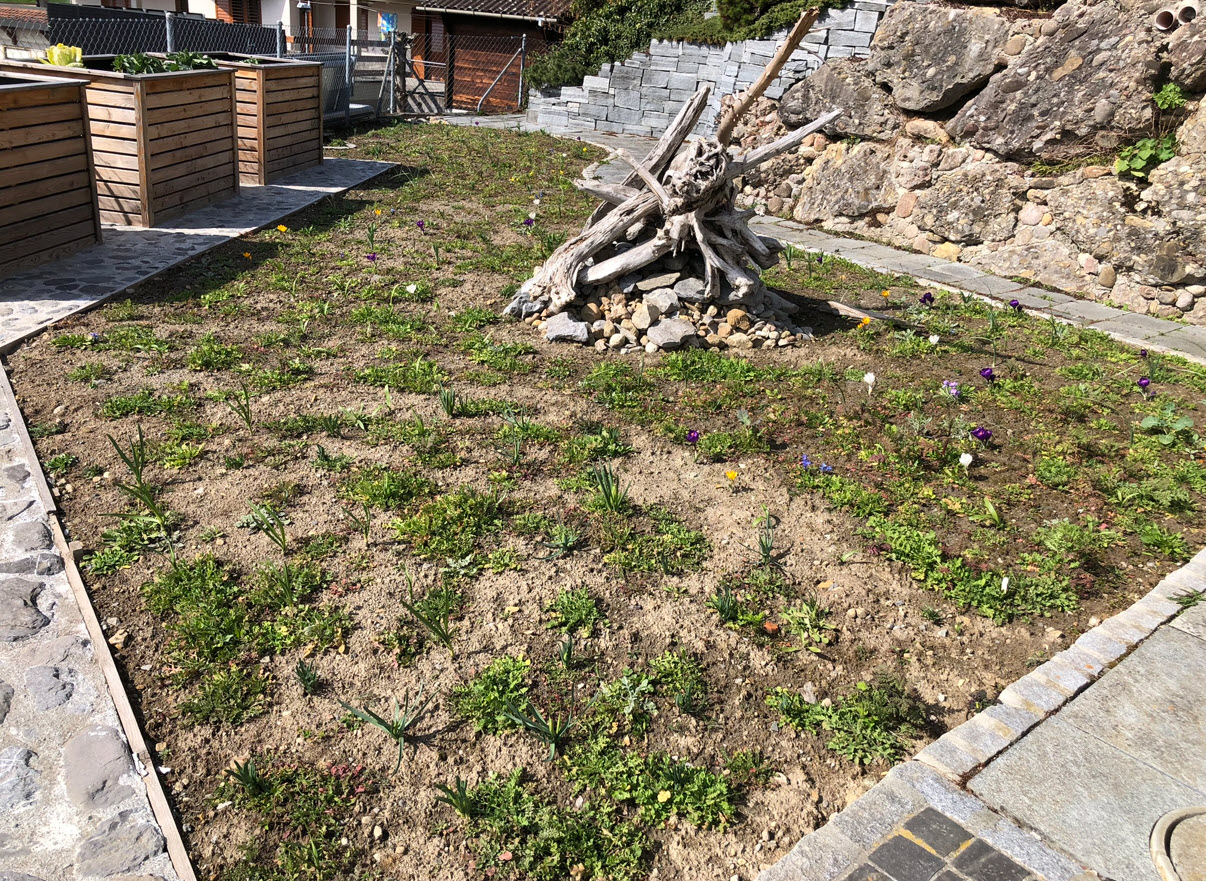
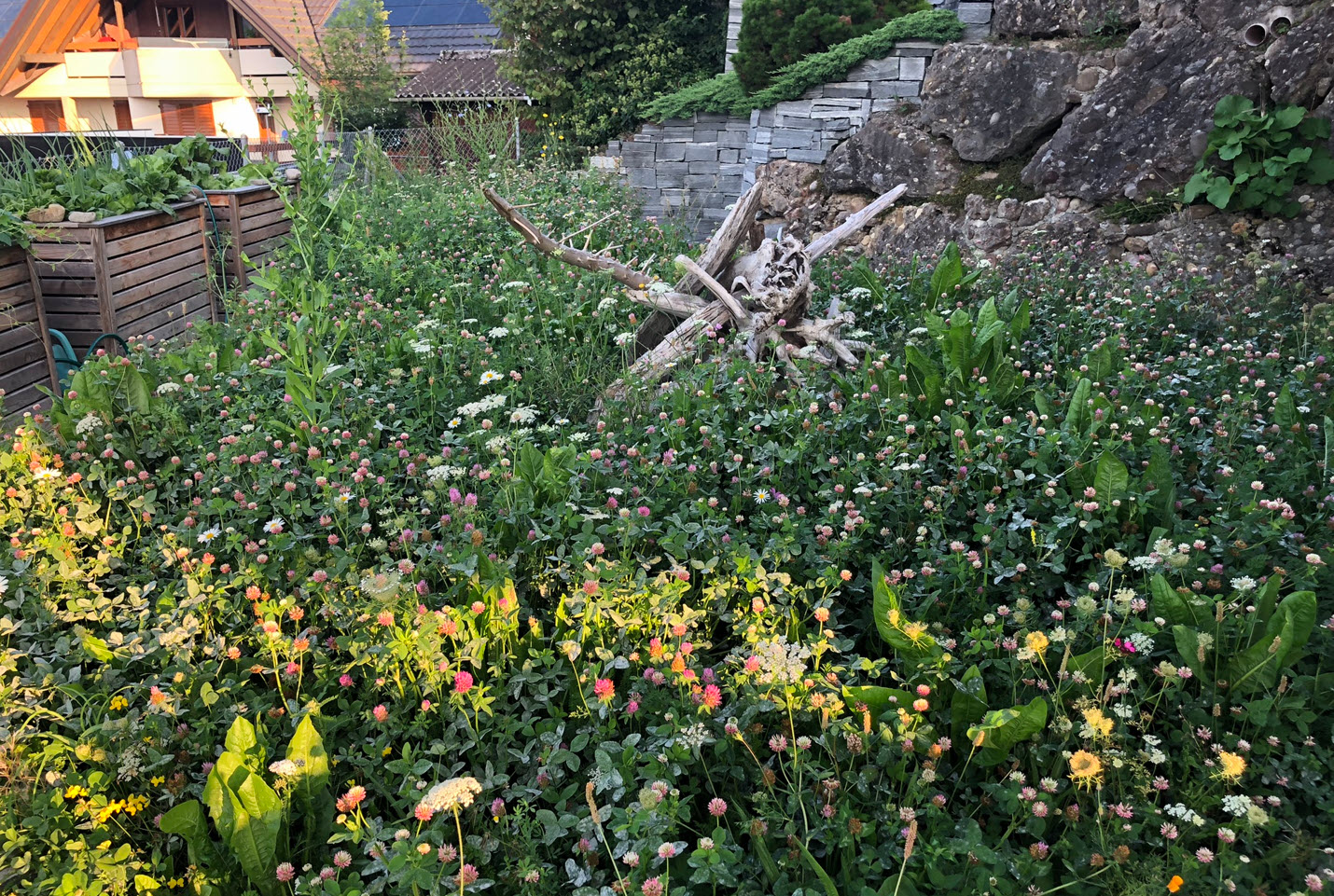
Dug up the ground for about 20 cm. Removed bigger stones and piled them with tree branches. You can see that pile in the next picture on the right. The soil has been degraded with lots of sand to create an unfertilized meadow. In a perfect world, probably the whole soil would have been replaced. But that was not economical, and adding lots of sand was a compromise. Added around 100 kg sand per square meter. Seeded the soil with a special wildflower seed mix and covered it to protect against birds picking them up.
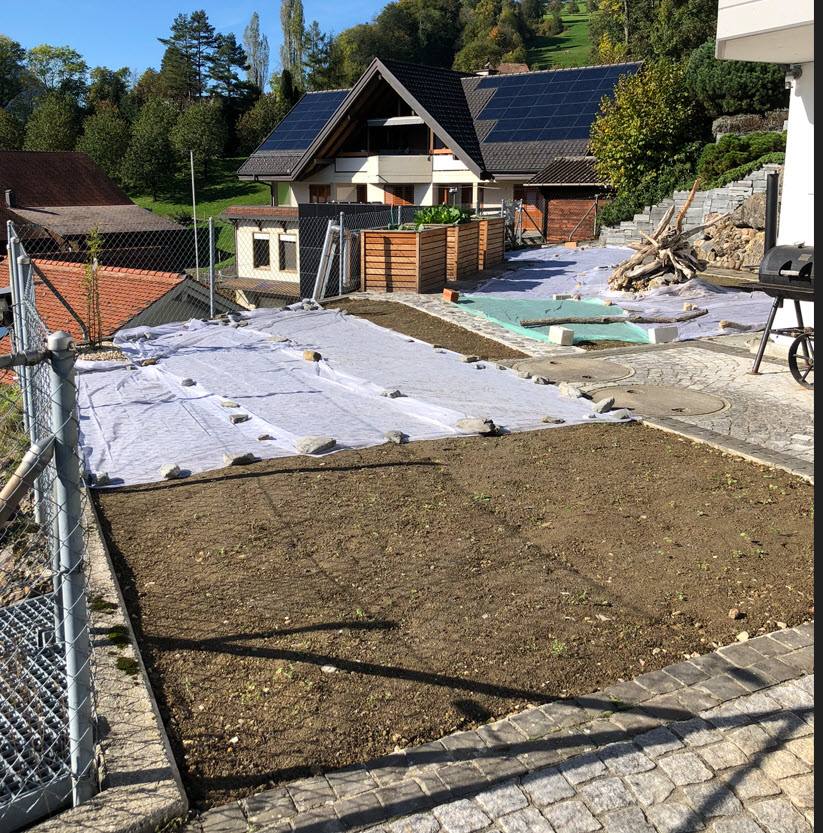
Additionally around 500 local flower bulbs have been planted. Then it was time for winter and to wait. Many of the used seeds need a cold period until they start to sprout.
2023: The red carpet
Early in the year, things started to germinate.
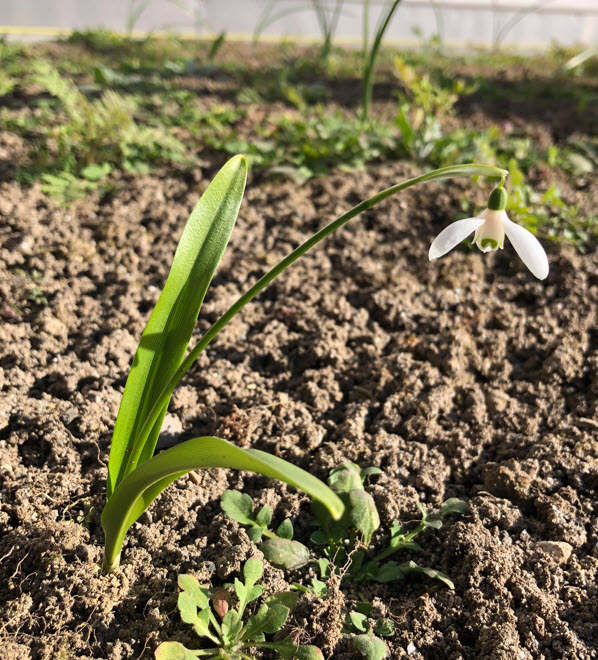
The snowdrop or Galanthus Nivalis is among the earliest flowering plants of the year. It often blooms in late winter or very early spring. It can even bloom through snow. This is how it got its name. “Nivalis” means “of the snow” in Latin.
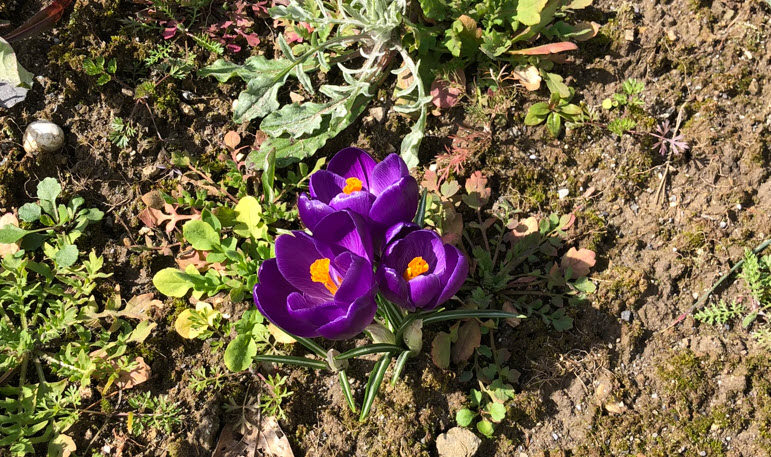
Crocuses are early bloomers and among the first food sources for bees emerging from hibernation. The bright flowers open wide in the sun, making it easy for pollinators to access their pollen and nectar.
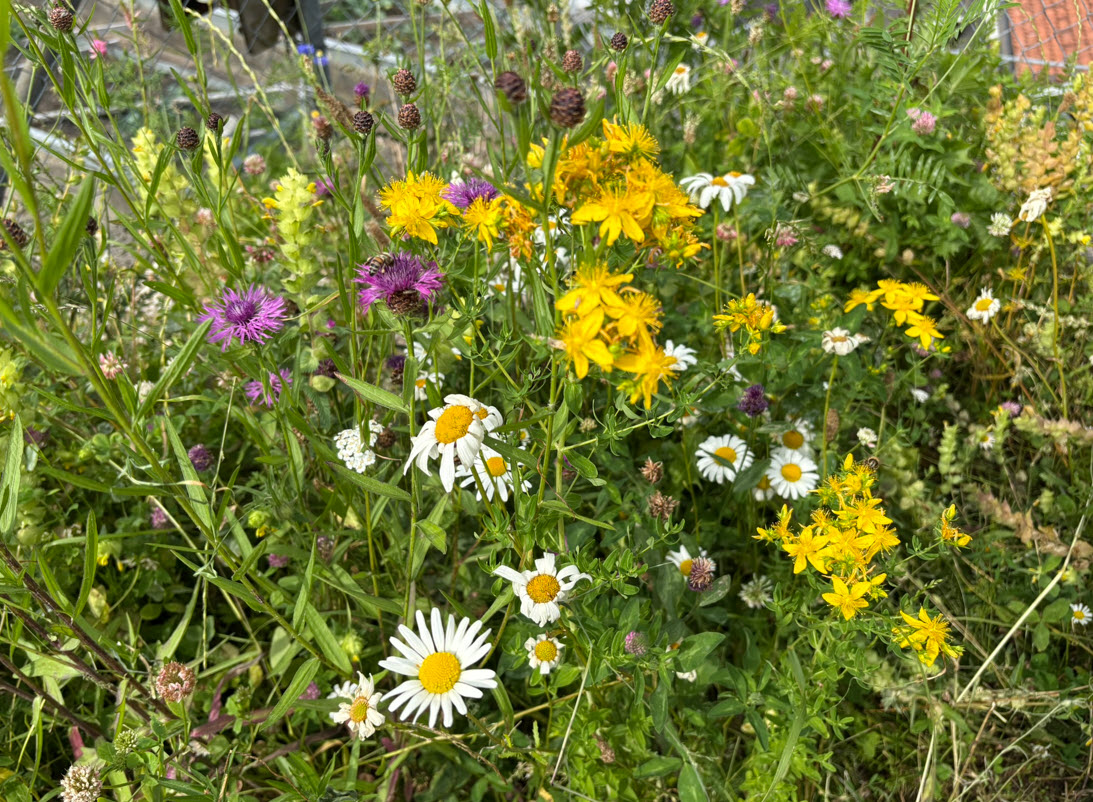
The space filled up with green and flowers.
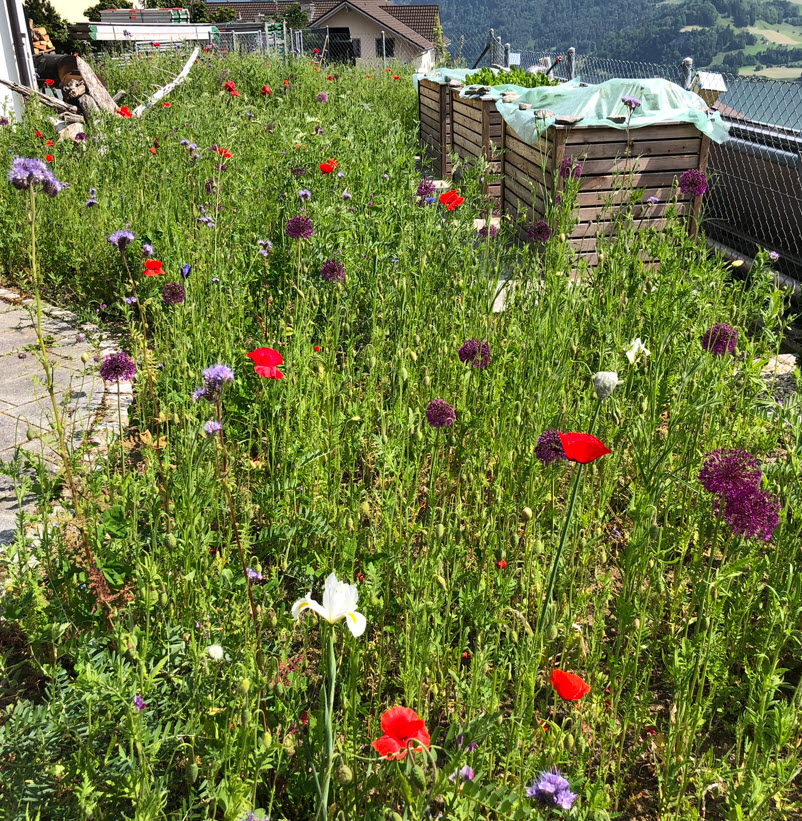
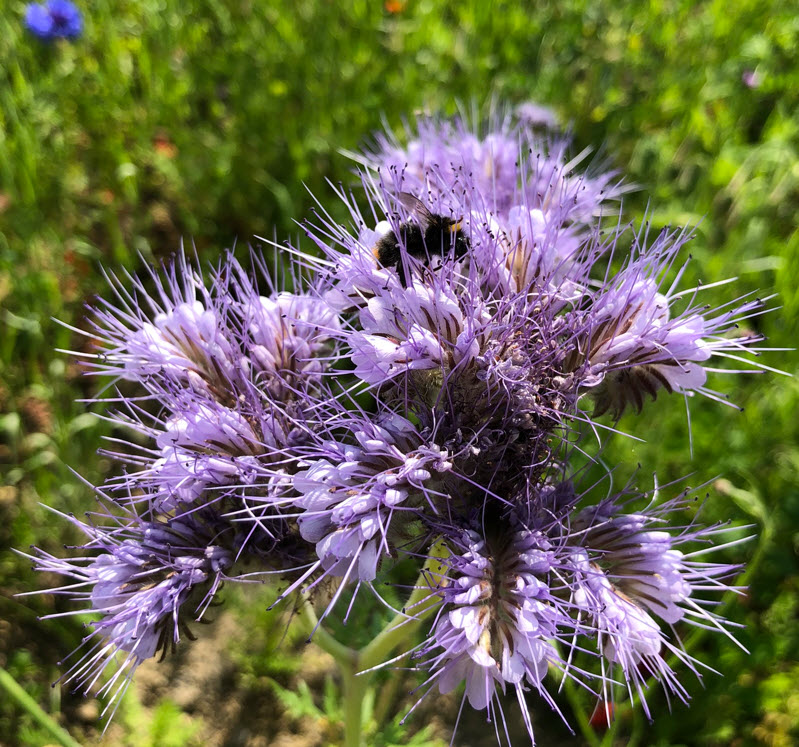
The ‘Scorpion-weed’ is considered as ‘bee magnet’. One of the top nectar-producing plants in the world for honeybees, bumblebees, and other pollinators. Its spiral-shaped flower clusters resemble a scorpion’s tail. Hence the name. They can produce nectar continuously throughout the day. This is unlike many other flowers that produce it only at certain times.
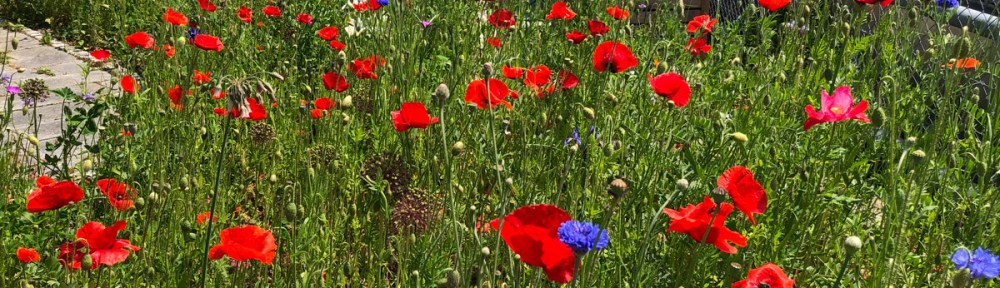
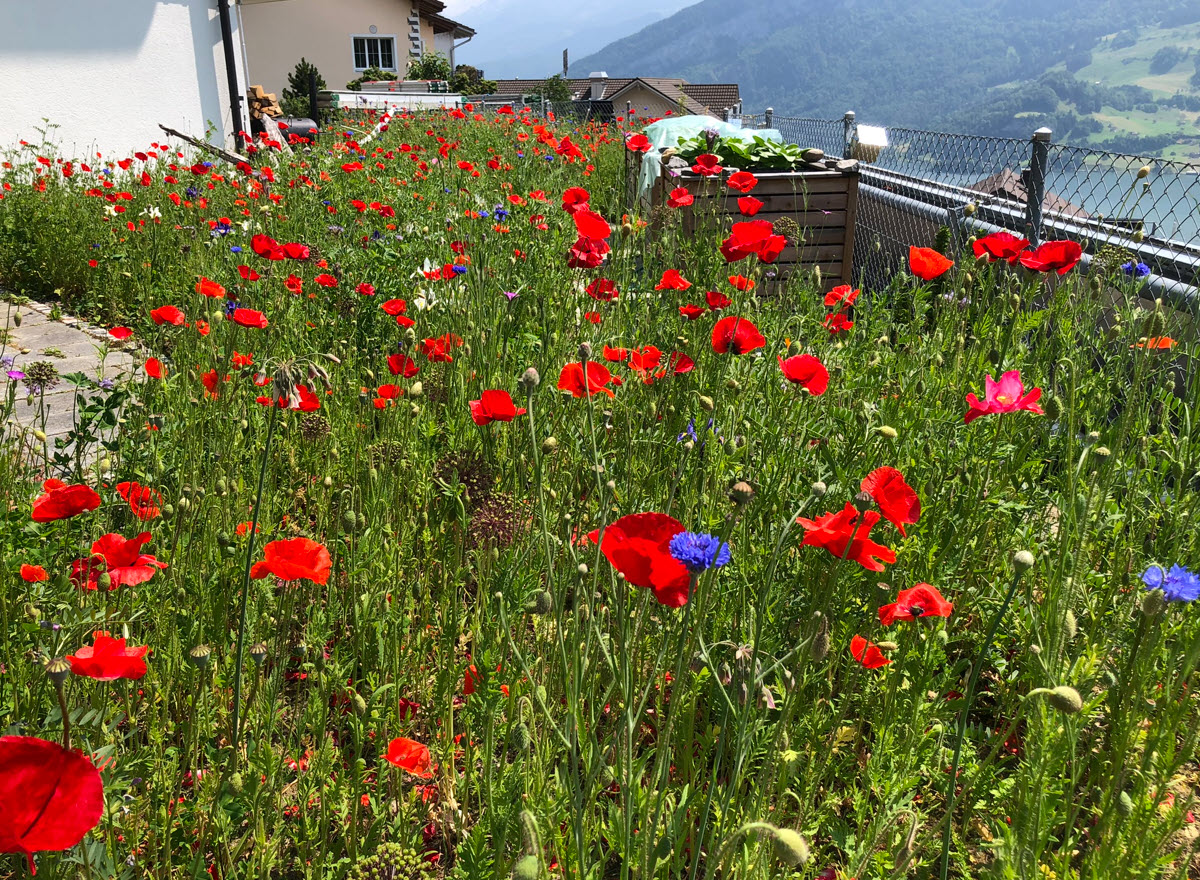
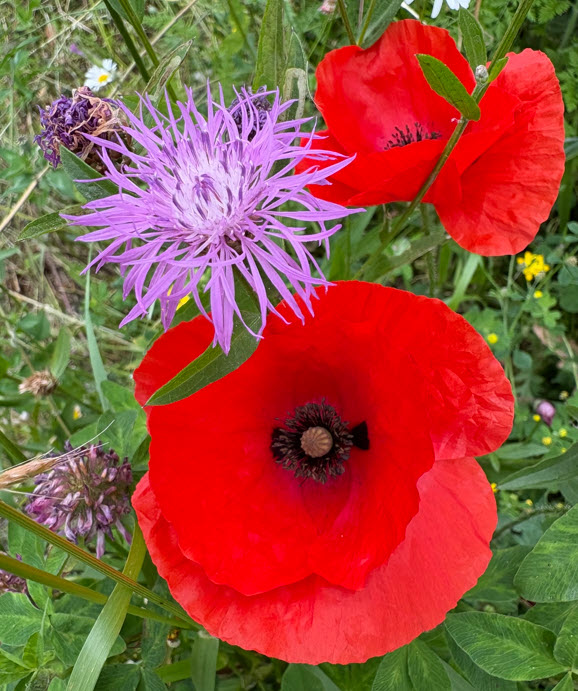
In the first year, corn poppy and corn flowers came up a lot. They are pioneer flowers and will disappear gradually over the next years, as they need open ground to grow. Because of this, corn poppy and corn flowers are not truly ‘wild flowers’ meadows. Ecologically, corn poppies are valuable for pollinator, especially for solitary bees. Although poppies don’t produce nectar, their pollen is highly accessible. It is also nutritious. This makes them an important early food source in wildflower meadows.
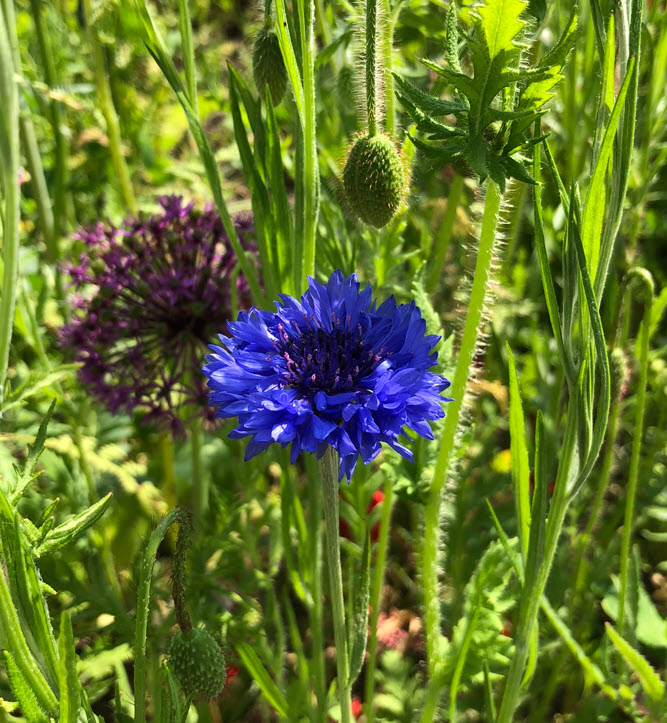
Cornflowers were once common in European corn grain fields. But with the rise of modern herbicides, it became nearly extinct in the wild in many areas.
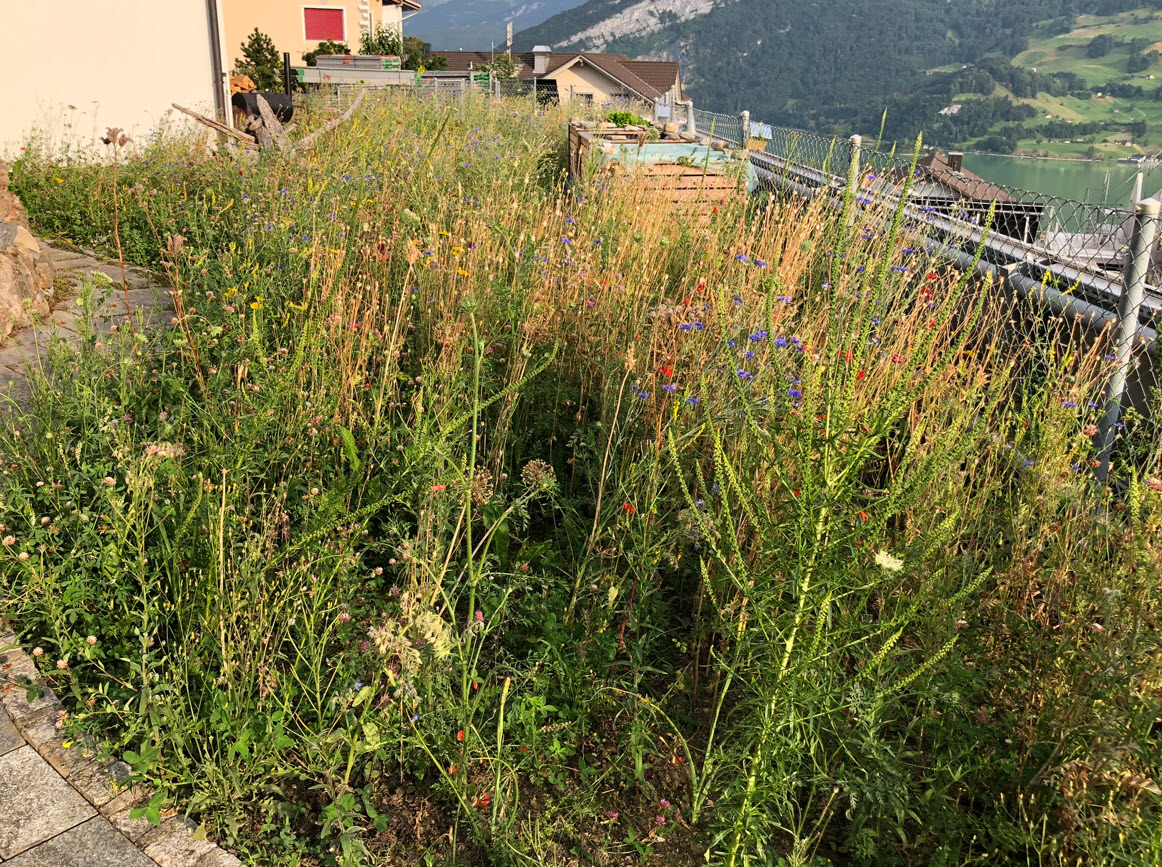
In the first year, the plan was to cut the meadow at the end of July. This was after plants had a chance to drop their seeds. It does not look that nice, but that’s part of the meadow buildup.
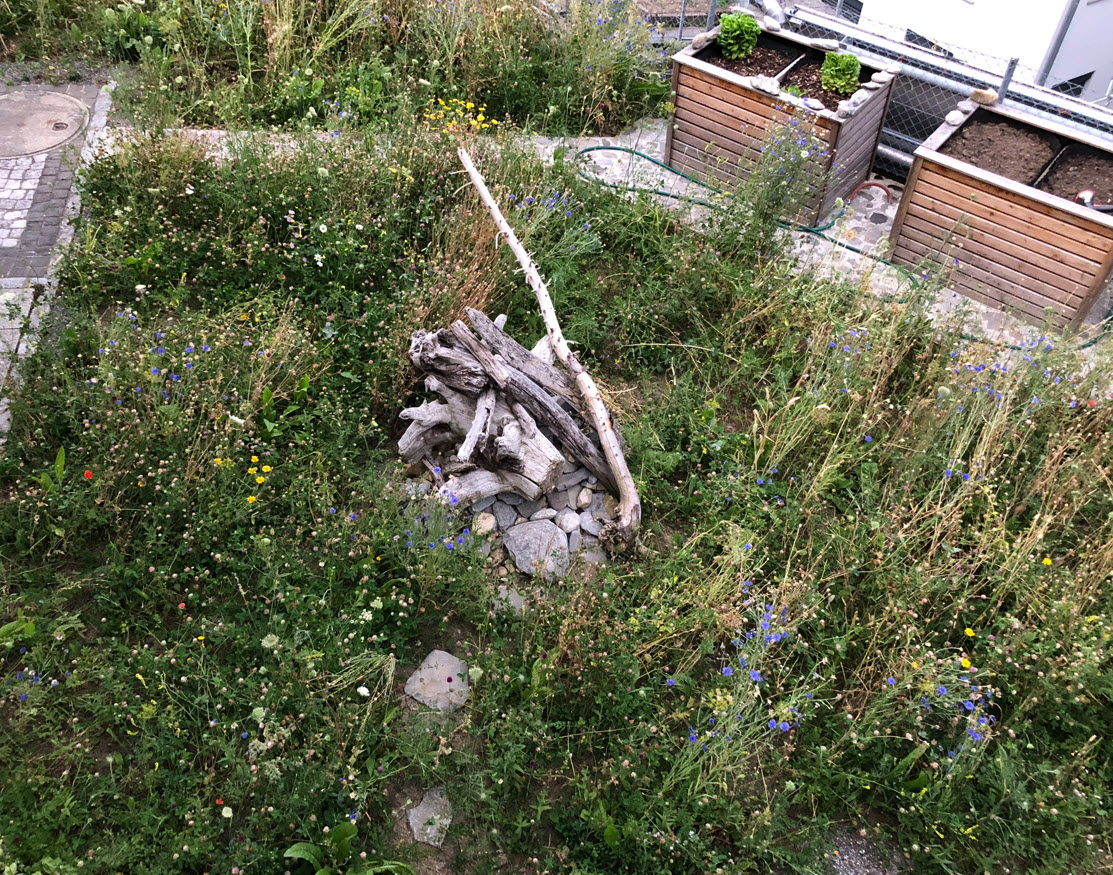
But on July 12th, a heavy hailstorm shredded everything down to the ground.
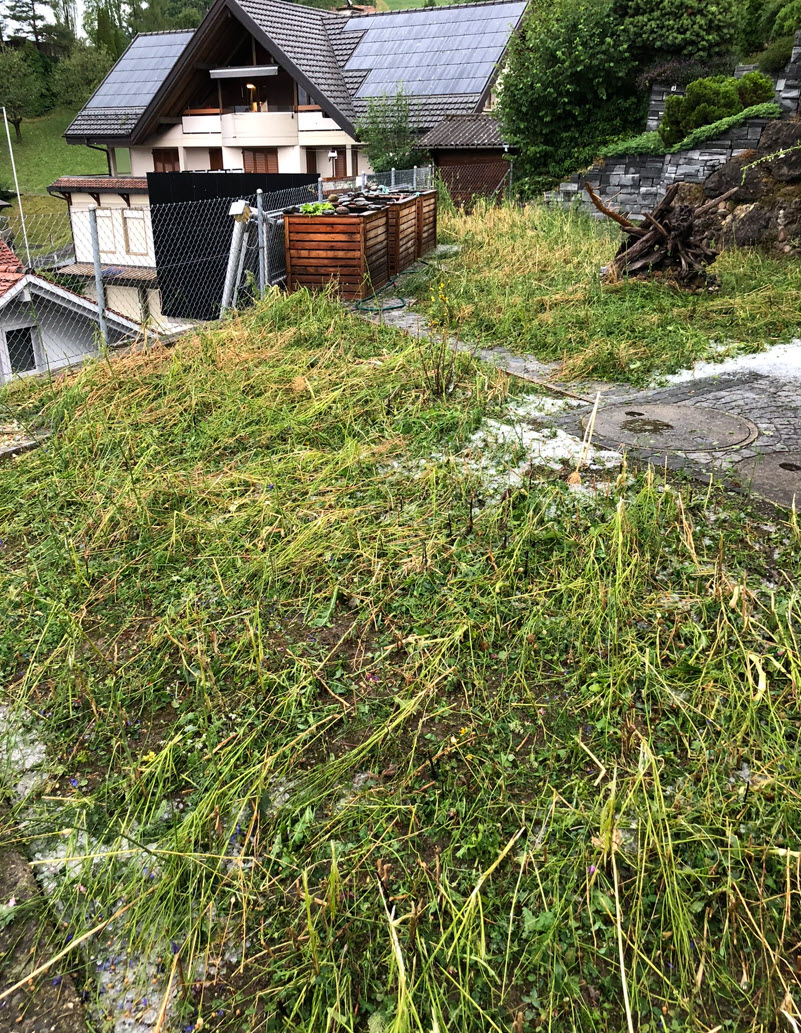
Back end of August, everything recovered:
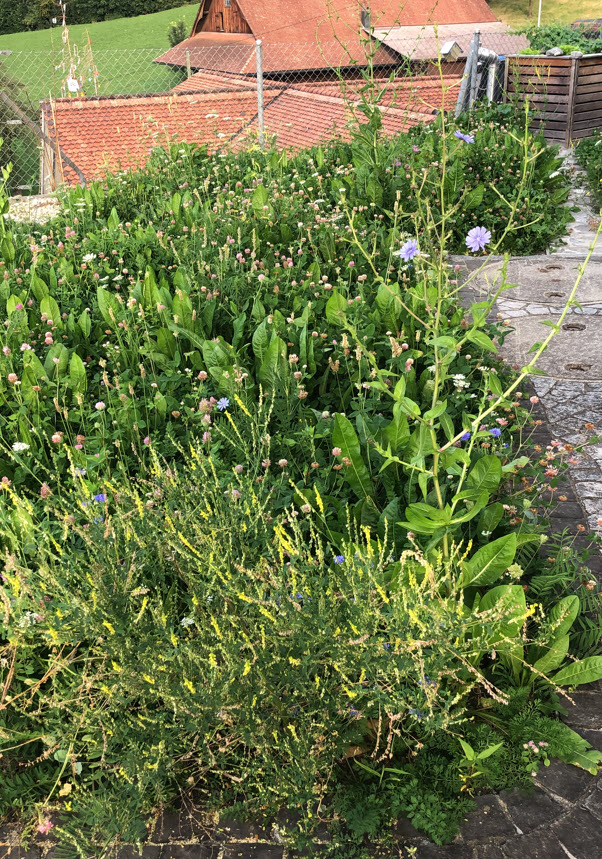
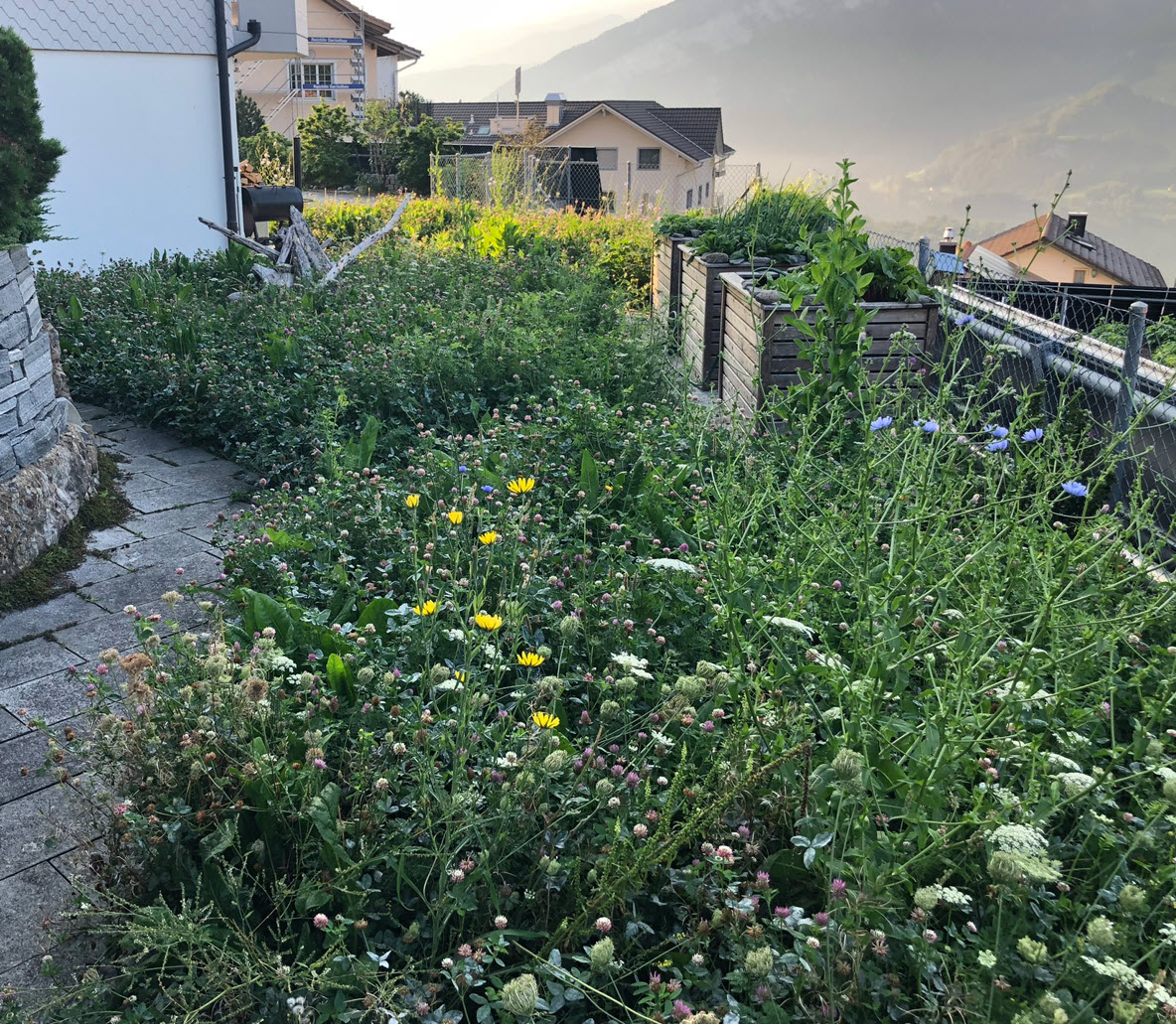
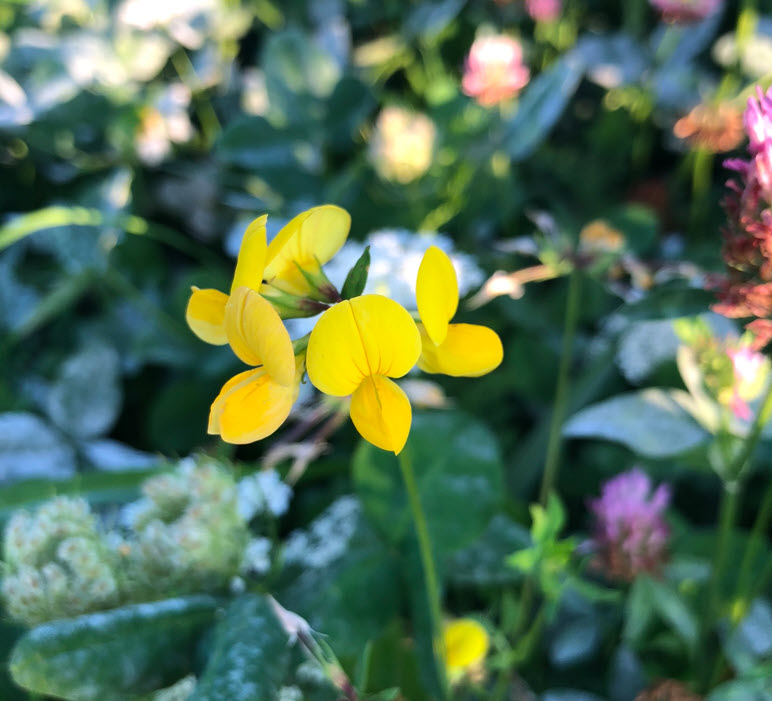
The name “bird’s-foot” comes from the shape of its seed pods, which resemble a bird’s claw. Or it looks like a horn, that’s why the ‘Hornklee’ in German.
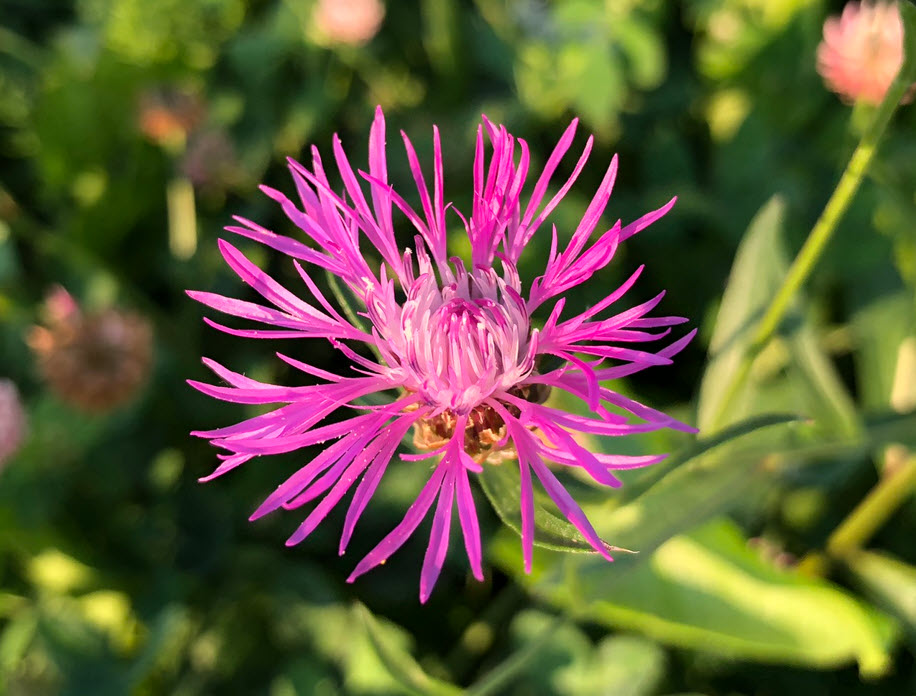
Centaurea montana is unlike its annual cousin, Centaurea cyanus (cornflower). It is perennial, meaning it will come back year after year with minimal care. It tolerates poor soils, light shade, and dry conditions, making it a tough yet beautiful meadow plant.
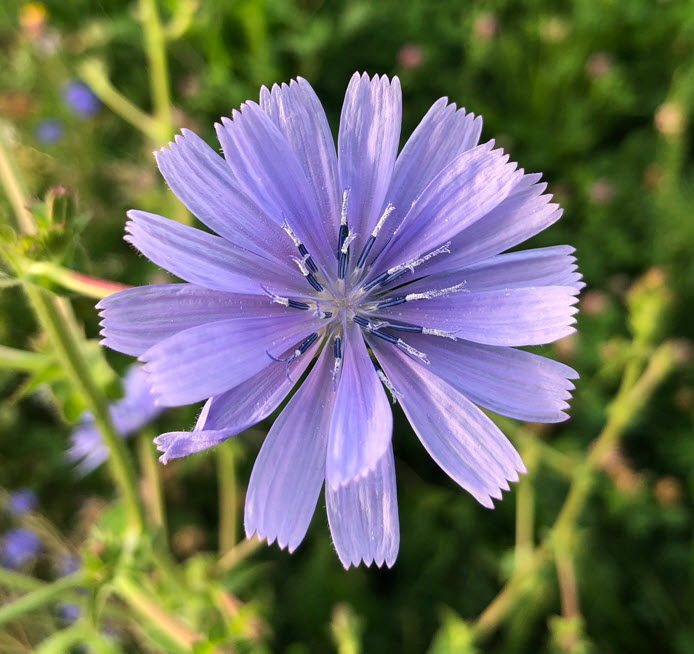
‘Wegwarte” in German means ‘way watcher’. The plant was believed to be a transformed maiden waiting eternally for her lost lover. It is commonly found along roadsides and paths. Its deep root improves soil structure. It’s also used to produce chicory coffee. A caffeine-free option made from roasted roots.
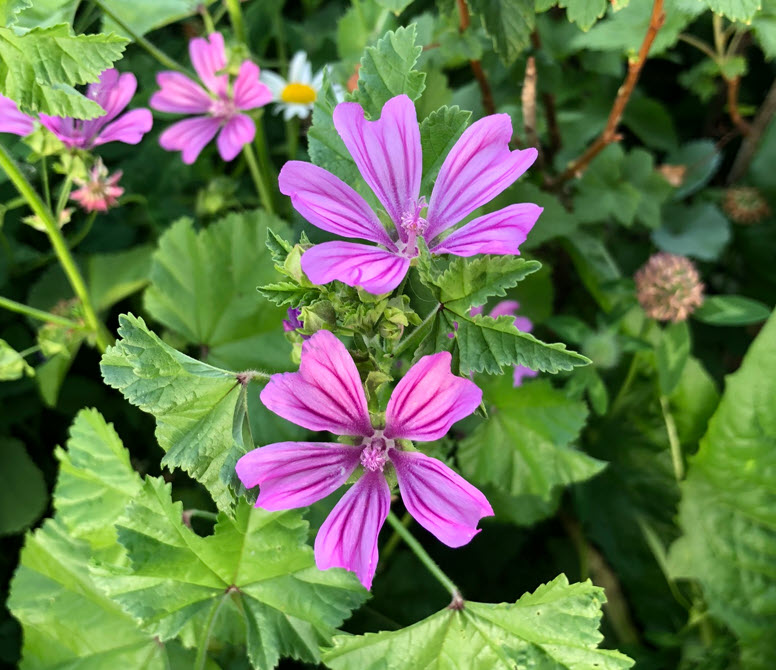
The Wild Mallow has been used for food and medicine. Its leaves and flowers were traditionally used to soothe sore throats and coughs as a natural demulcent.
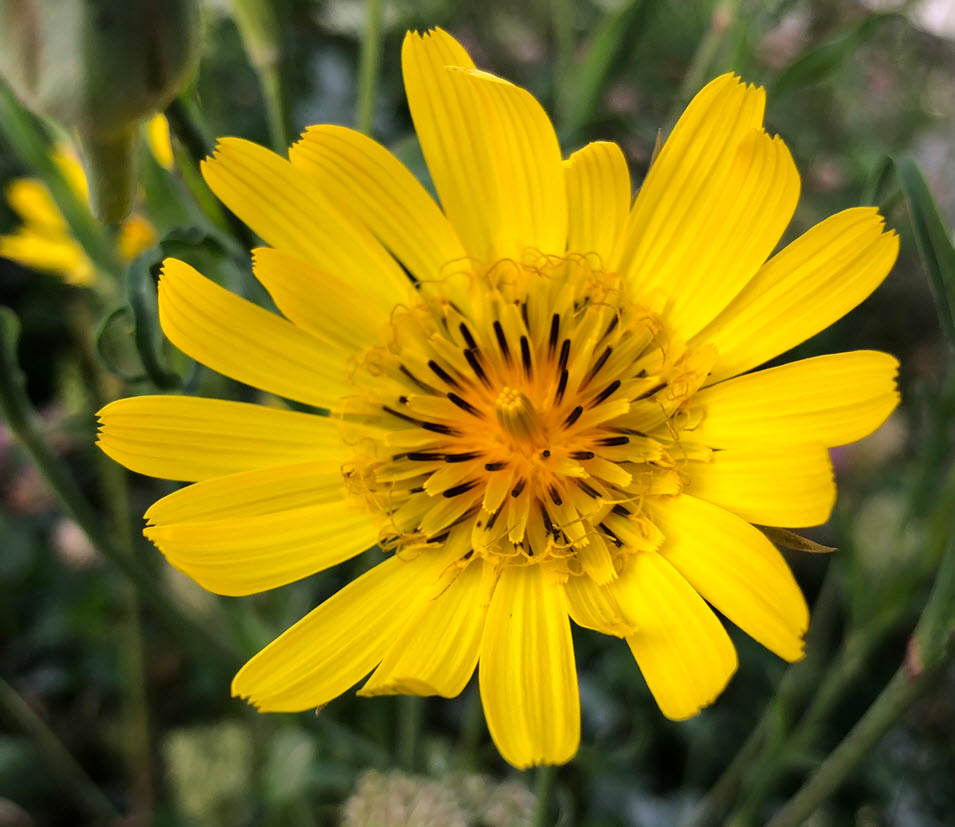
I learned about the Meadow Goat’s Beard that sometimes it is called the “Jack-go-to-bed-at-noon”. Because its large, dandelion-like yellow flowers open in the early morning and close by early afternoon.
2024: The year of daisies
The year started with even more Snowdrops.
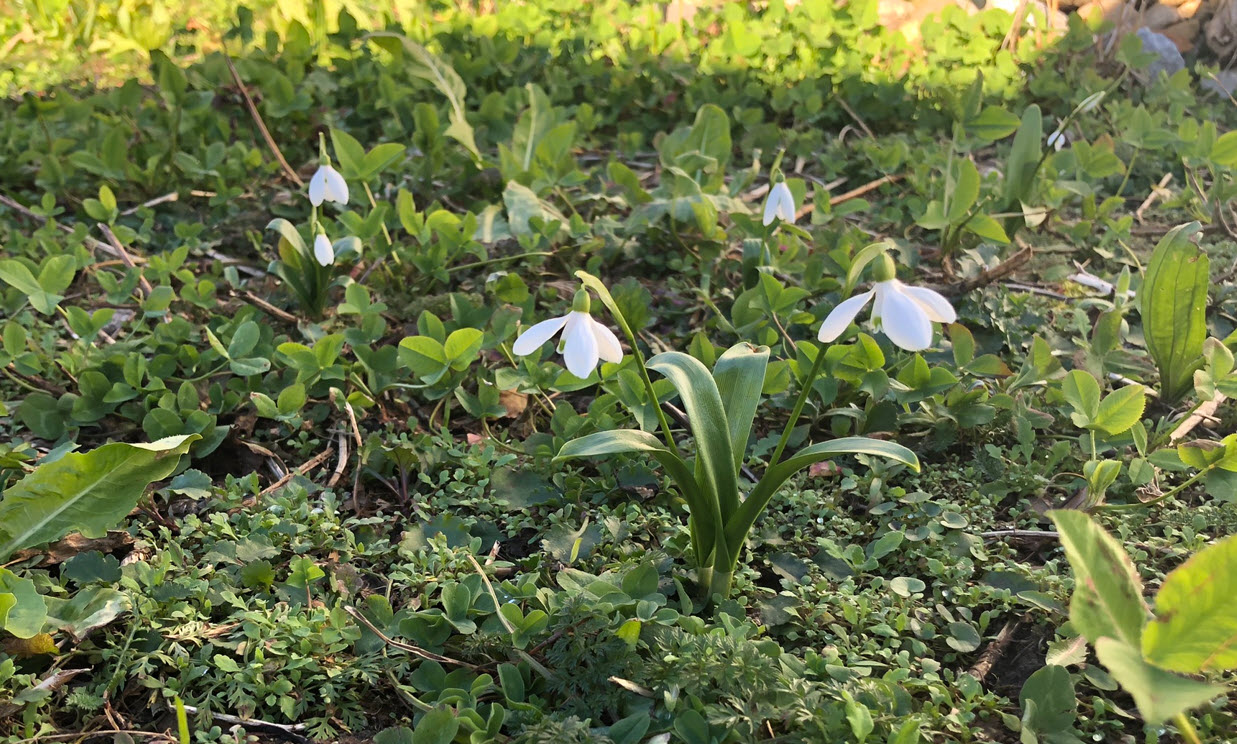
The sod was still not fully covered, leaving space for other plants to grow. Especially Cichorium will grow this year as we see later.
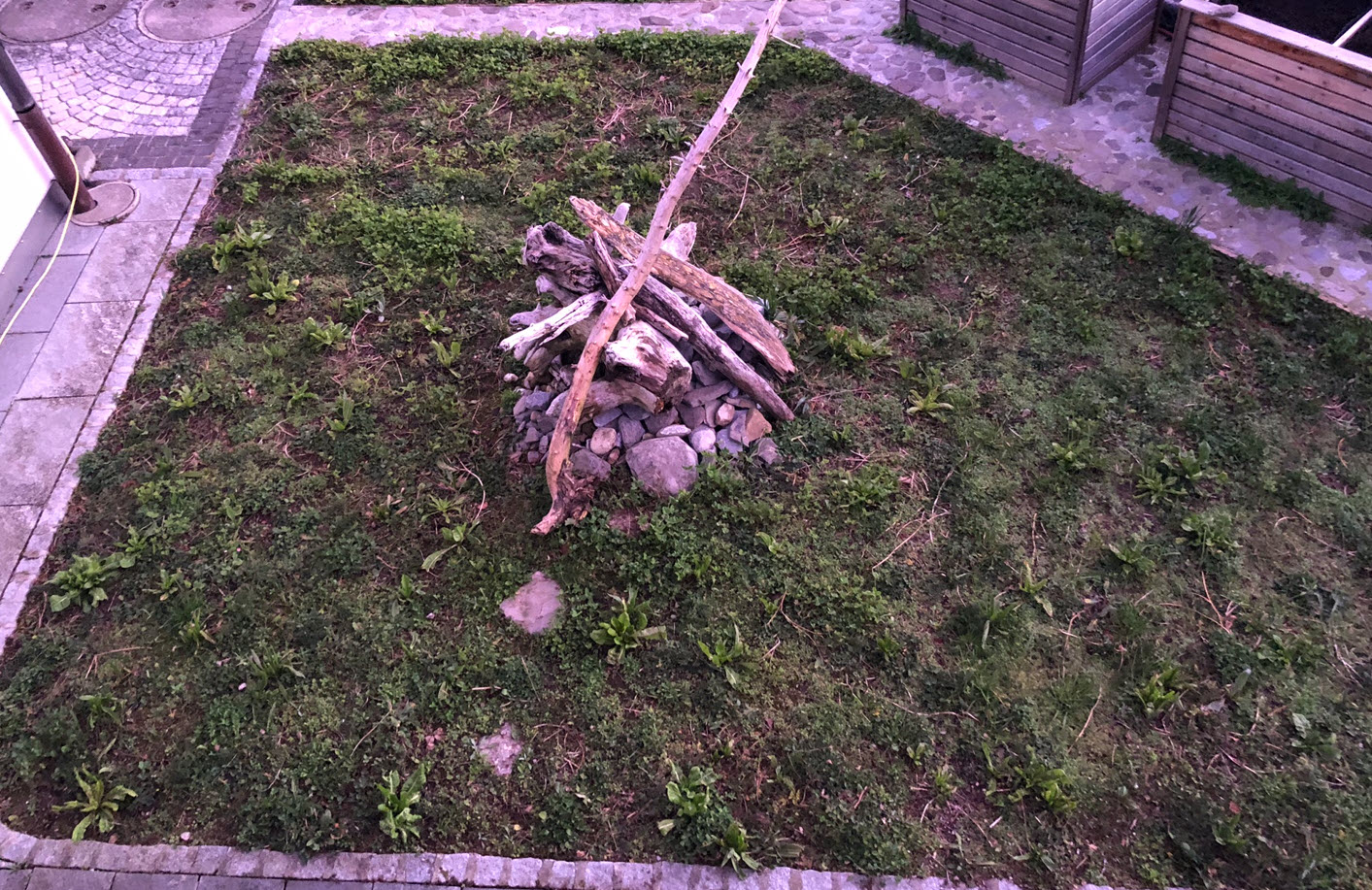
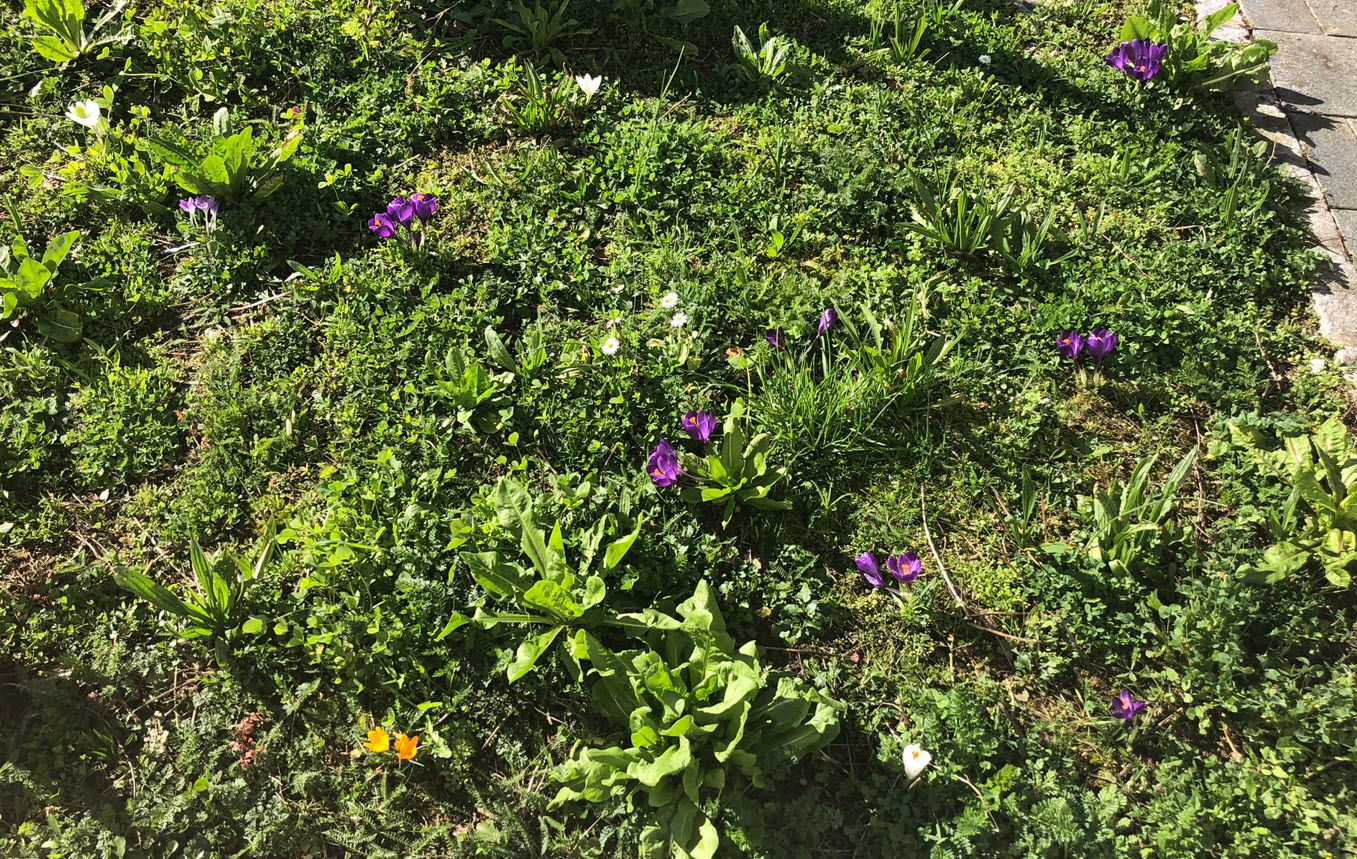
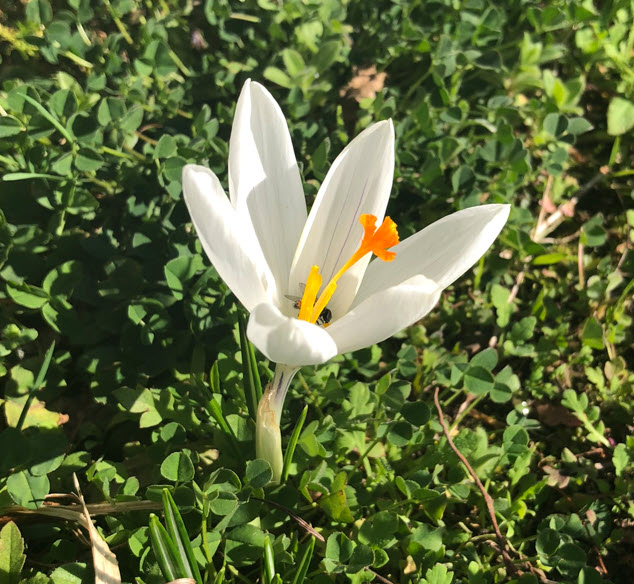
Crocus came out beautifully:
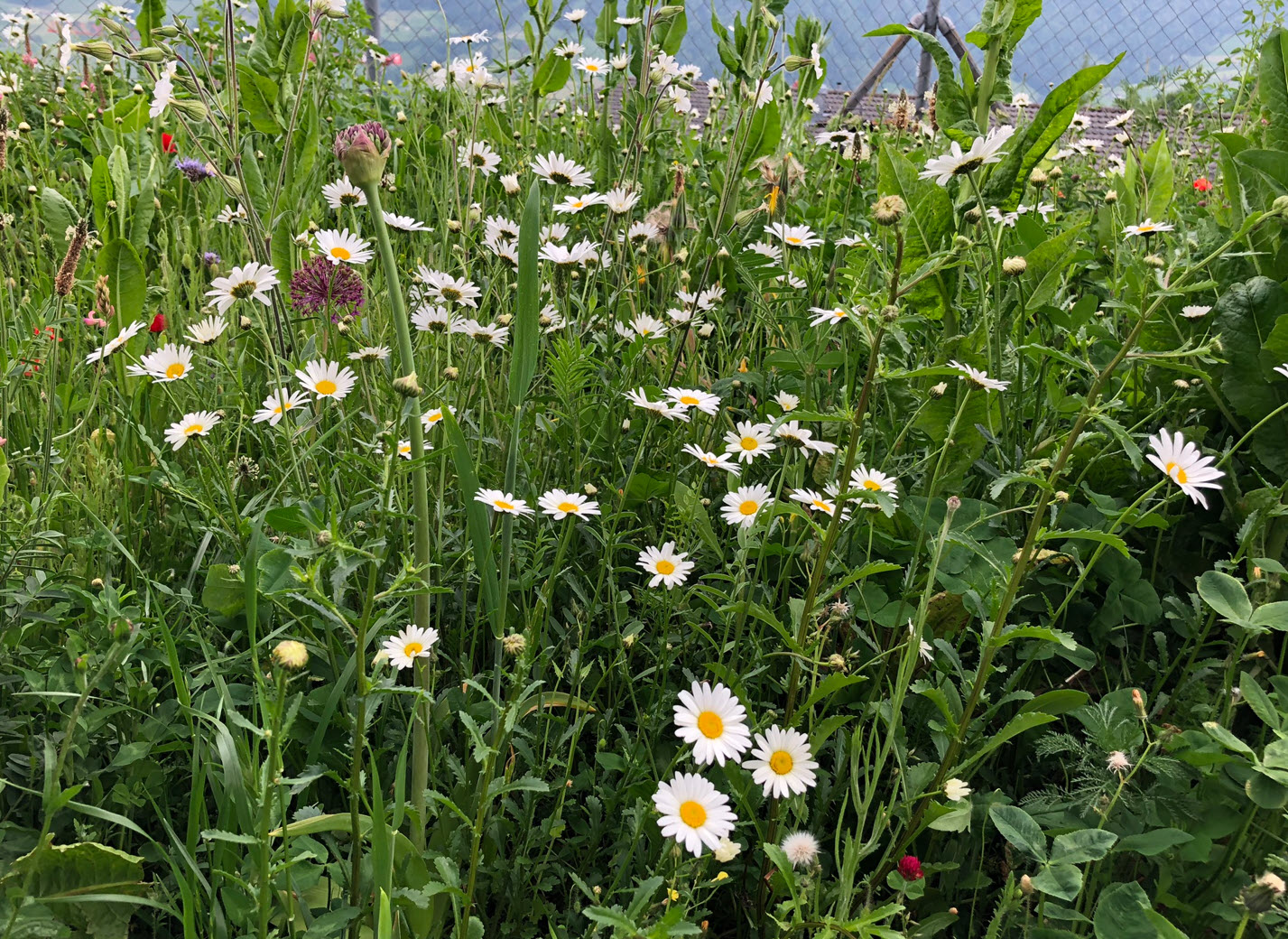
And the first time in larger numbers: daisies.
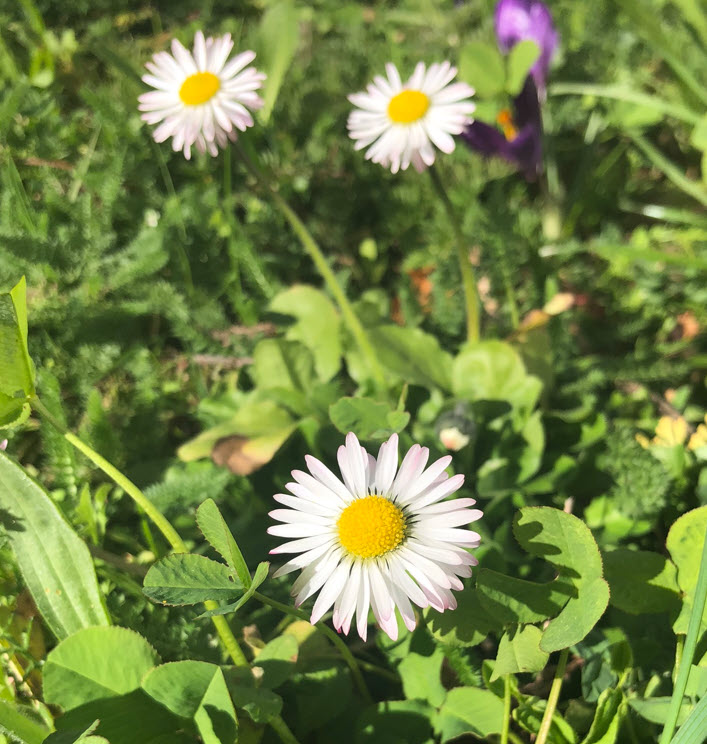
The daisy flower symbolizes innocence and purity. It has been used in healing wounds and skin irritations.
And the first time Borage showed up:
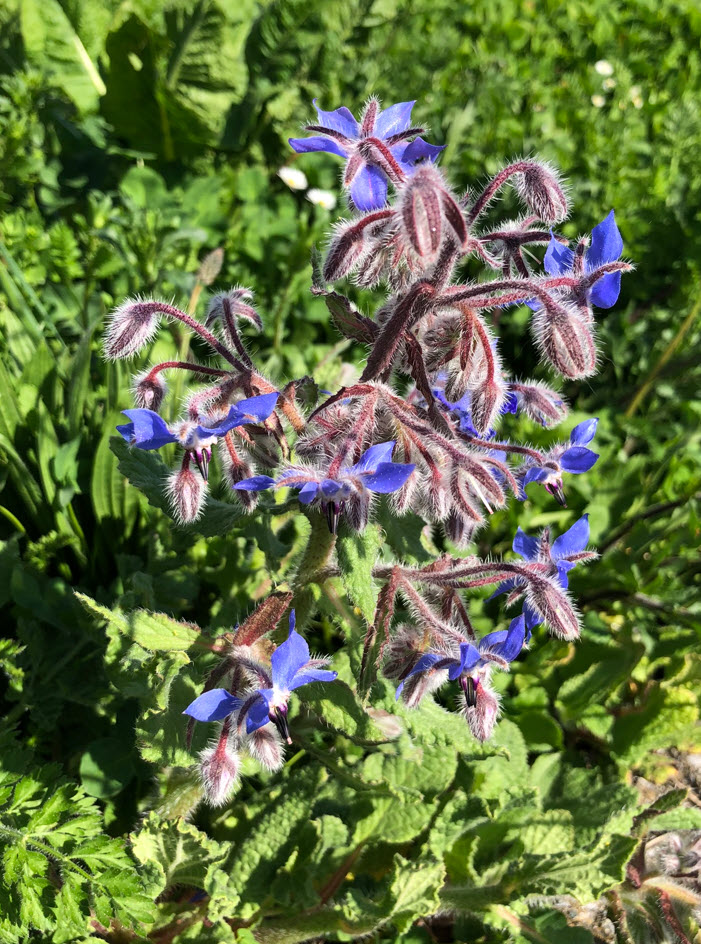
Borage is often called ‘superfood for bees’. Because it produces a large amount of nectar and pollen through its long flowering period. Its flowering period can last from early summer well into autumn. Its leaves and flowers are edible and often added to salads.
More of the buried flower bulbs showed up:
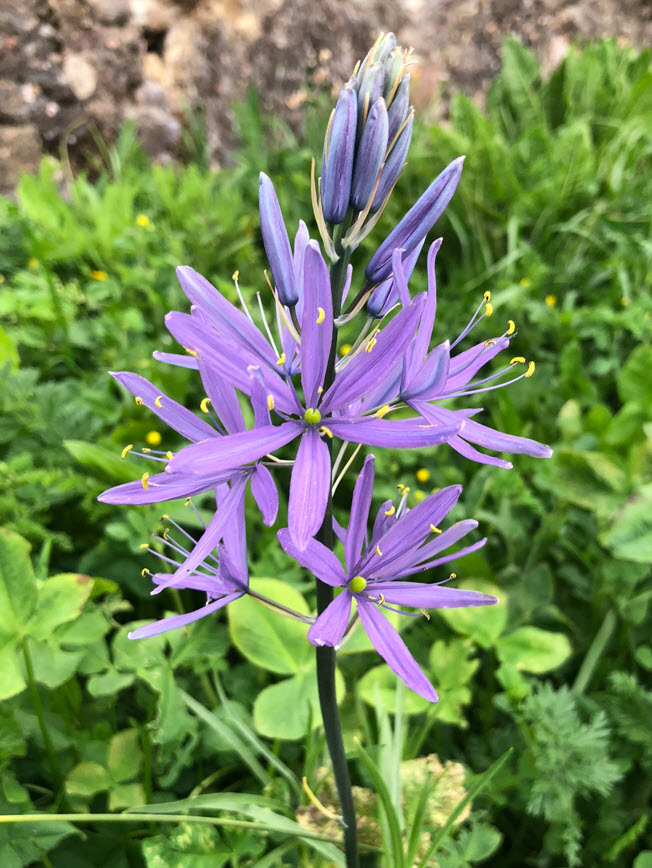
The Camassia is native to the North American prairies and meadows. We wanted to use more local plants and species. I have no idea how we ended up having one (and only one) Camassia. Anyway, it looks awesome, and the bees like it :-).
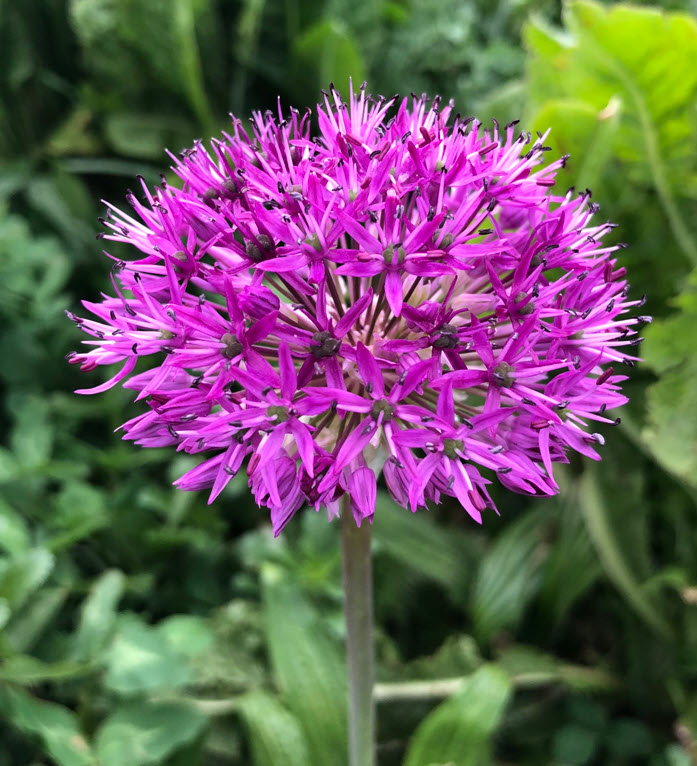
The ‘Ornamental Onion’ have a mild onion scent. Their heads are popular for floral arrangements. Its heads are made up of hundreds of tiny star-shaped flowers. The Allium is a magnet for bees, butterflies and especially bumblebees. They bloom in late spring to early summer. This period provides a vital food source. It occurs when some other flowers are finishing.
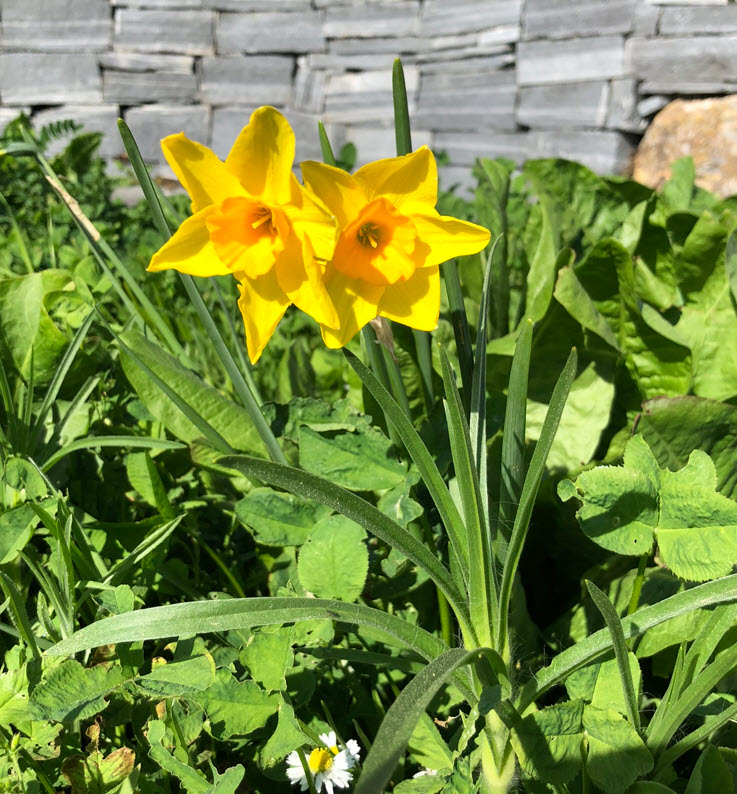
Daffodils in Europe are linked to Easter and are among the first signs that winter is ending.
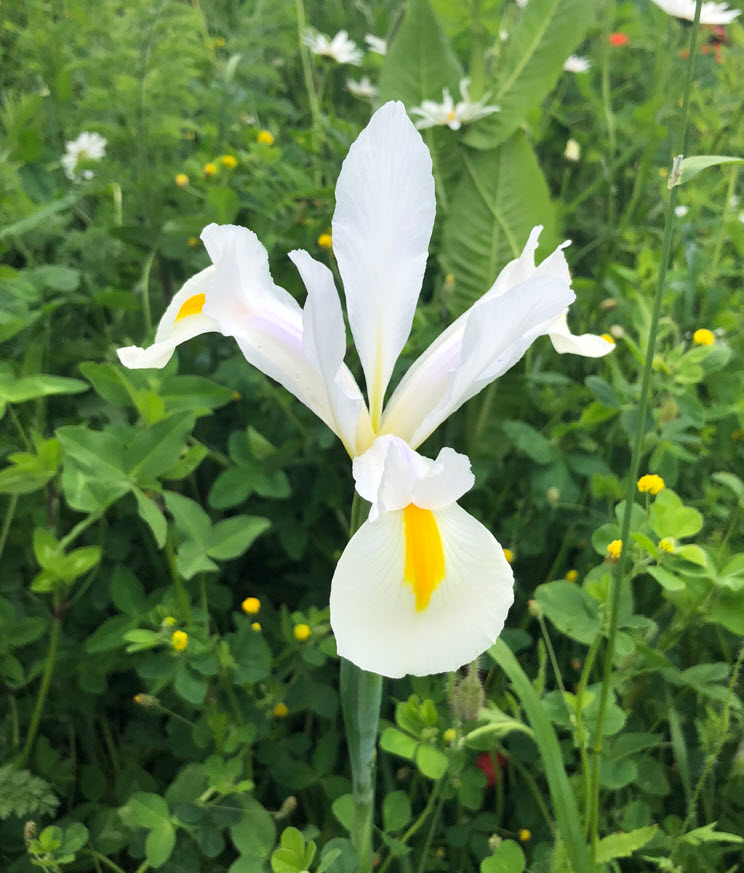
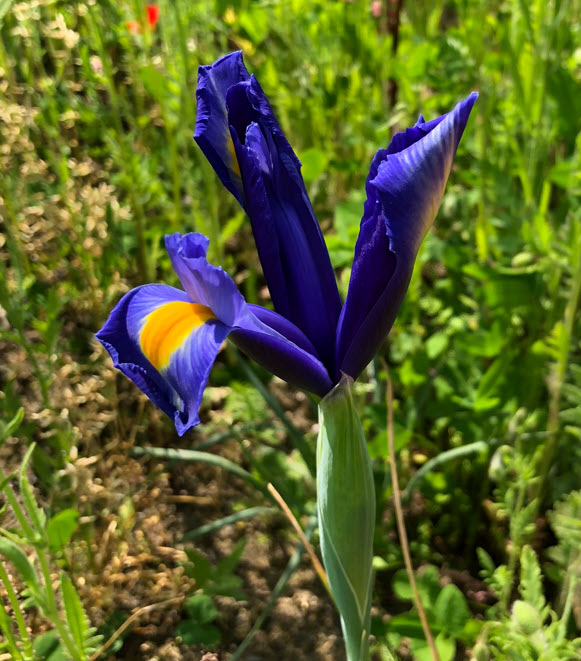
The name “iris” comes from the Greek word for rainbow. Because it can come in many colors. And we have planted white and blue ones:
New species up, for example corncockle.
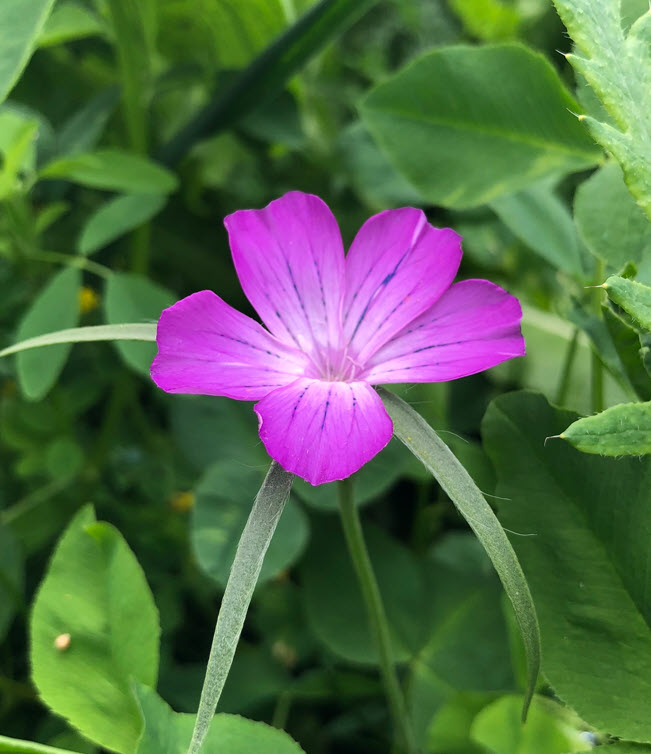
The ‘Kornelke’ was once a common wildflower in European grain fields. Today it is rare in the wild because of seed cleaning and herbicide use. It is a beautiful flower, but all parts are toxic, especially the seeds. That’s why it was important to remove the seeds from the grain harvest. But it is an important flower for bees and other insects.
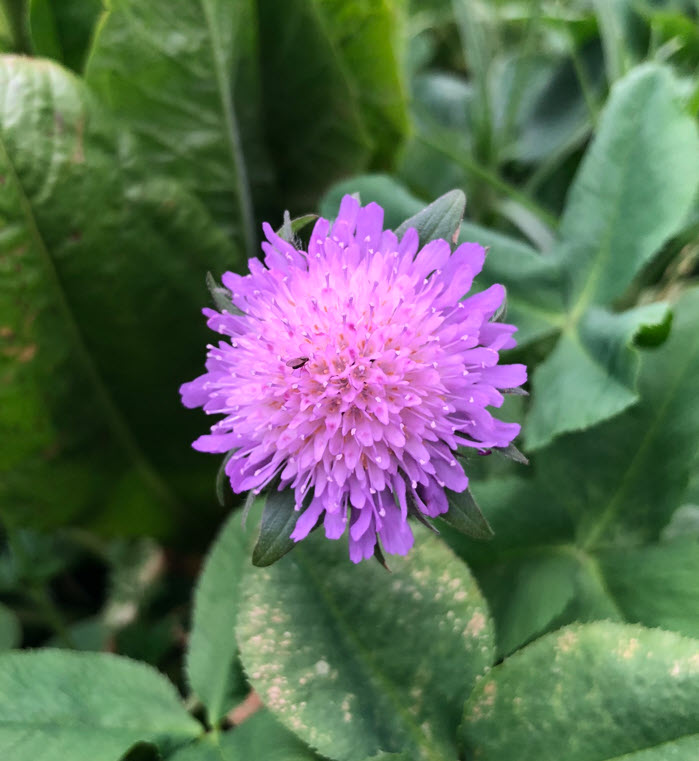
I have no idea why it has that name in German which translates to ‘Widow’s Flower’, maybe someone knows? I like it because its long lasting blooming season from June to September.
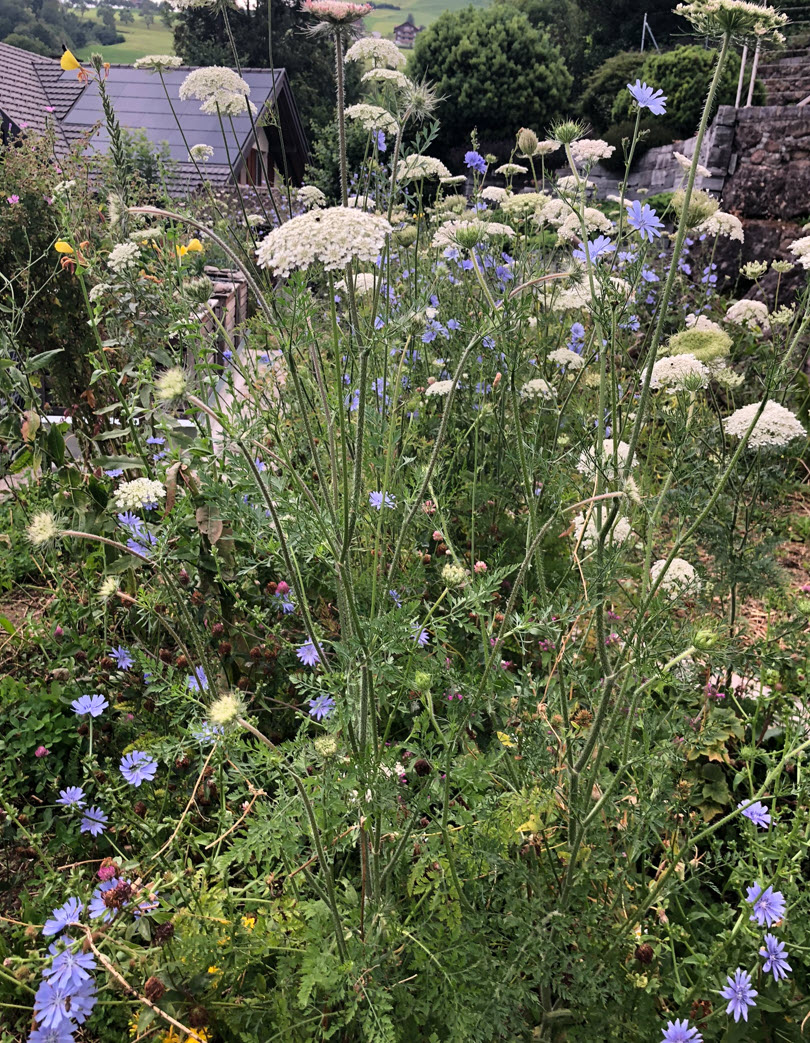
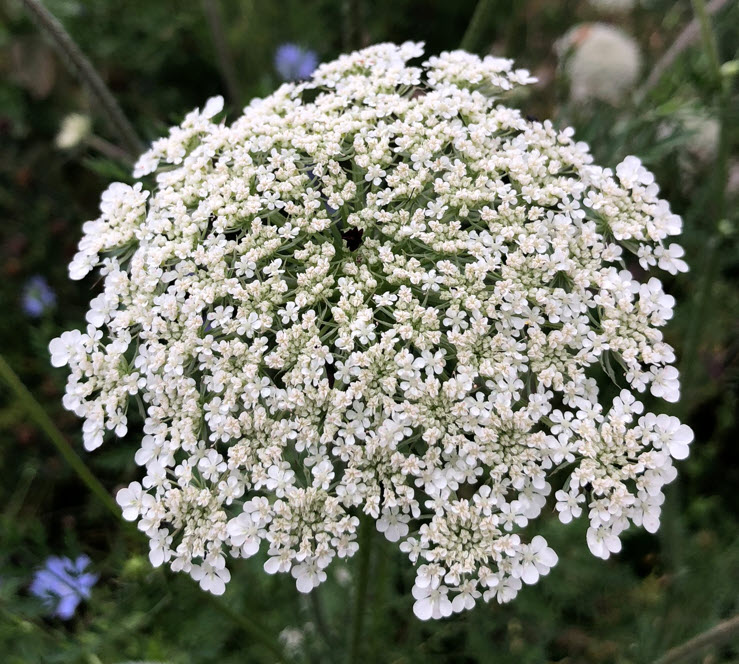
Wild carrot is the ancestor of the modern cultivated carrot. Its flower head often has a black dot right in the center. This mysterious dot is thought to mimic an insect. Which could create the illusion for insects that other insects are already feeding there.
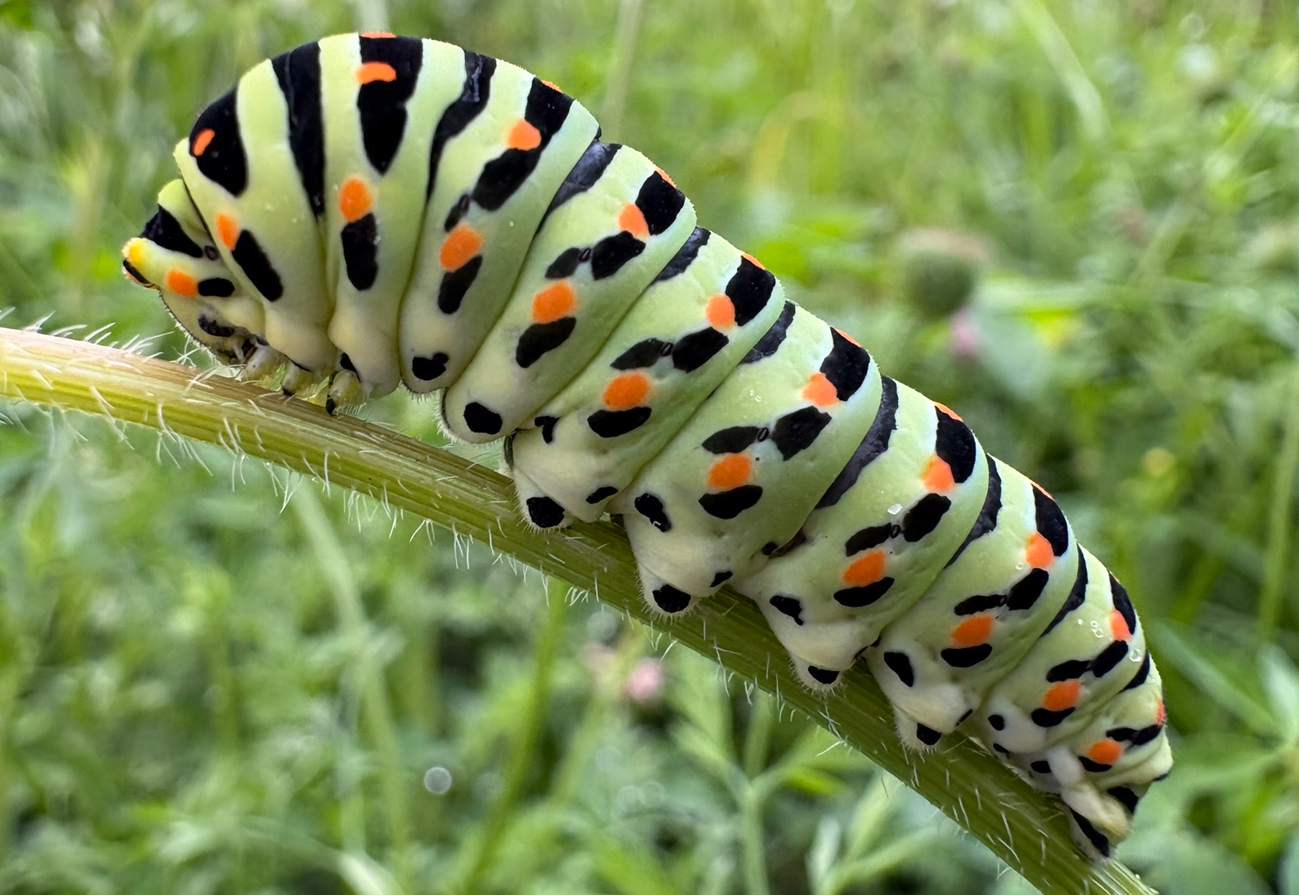
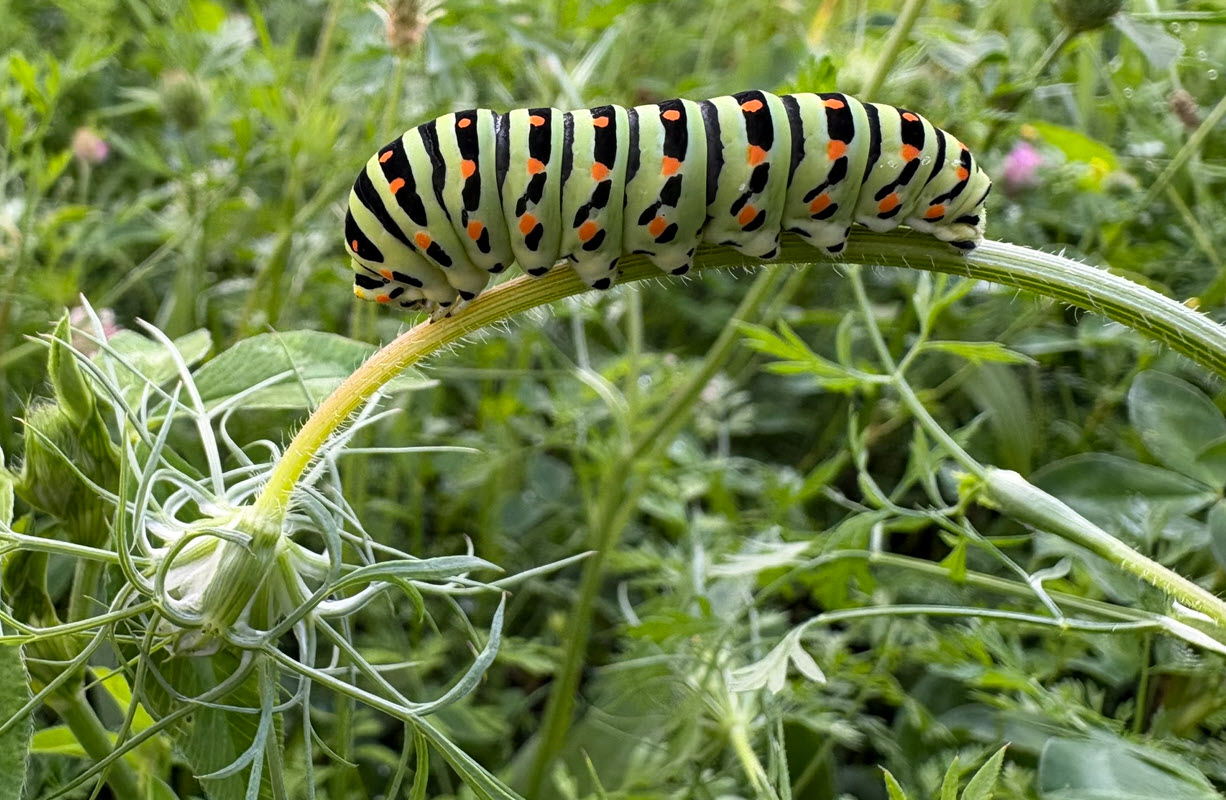
Additionally, it is a host plant for the caterpillars of the swallowtail butterfly:
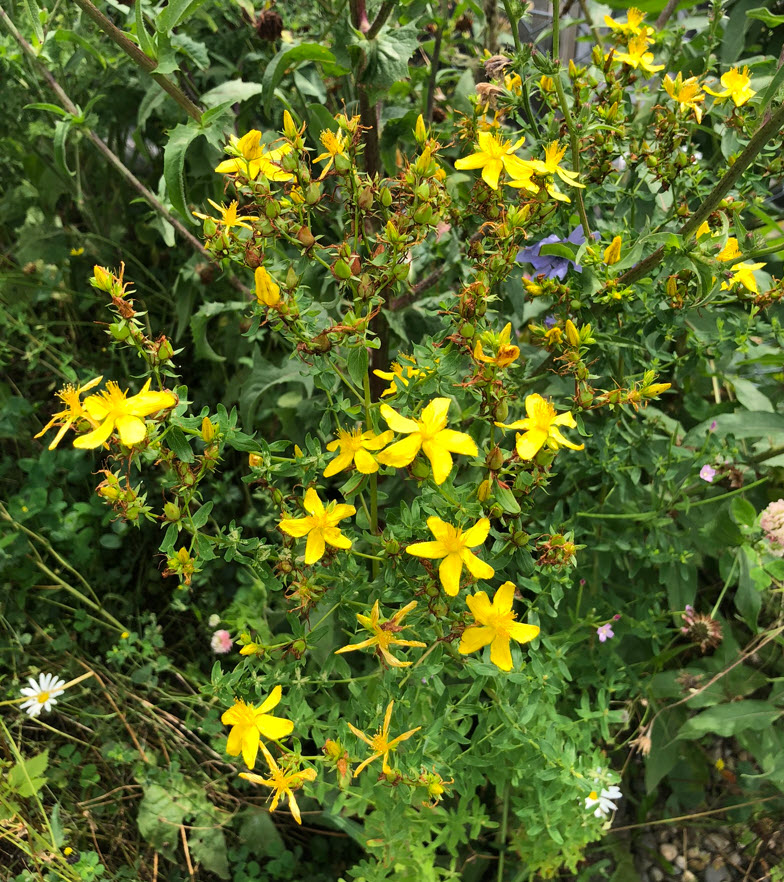
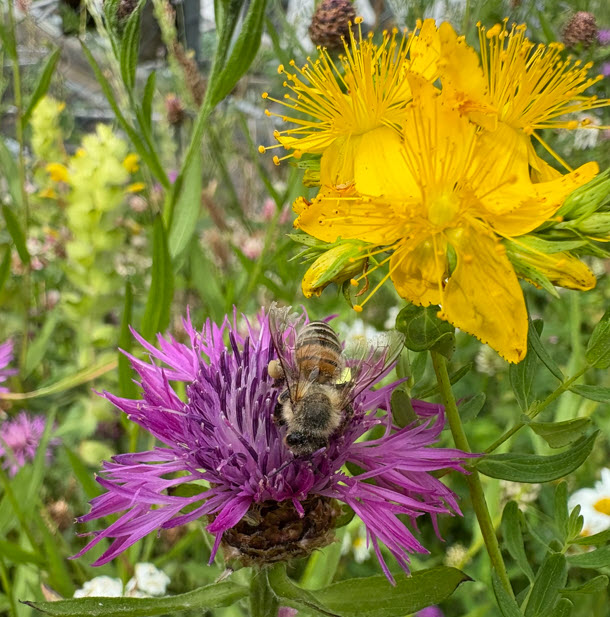
Traditionally, St John’s Wort has been used as a herbal remedy for mild to moderate depression and anxiety. If you hold its leaves up to the light, you can see tiny translucent dots. These are actually oil cells, giving the appearance that the leaf is “perforated”. This is where the perforatum in the name comes from.
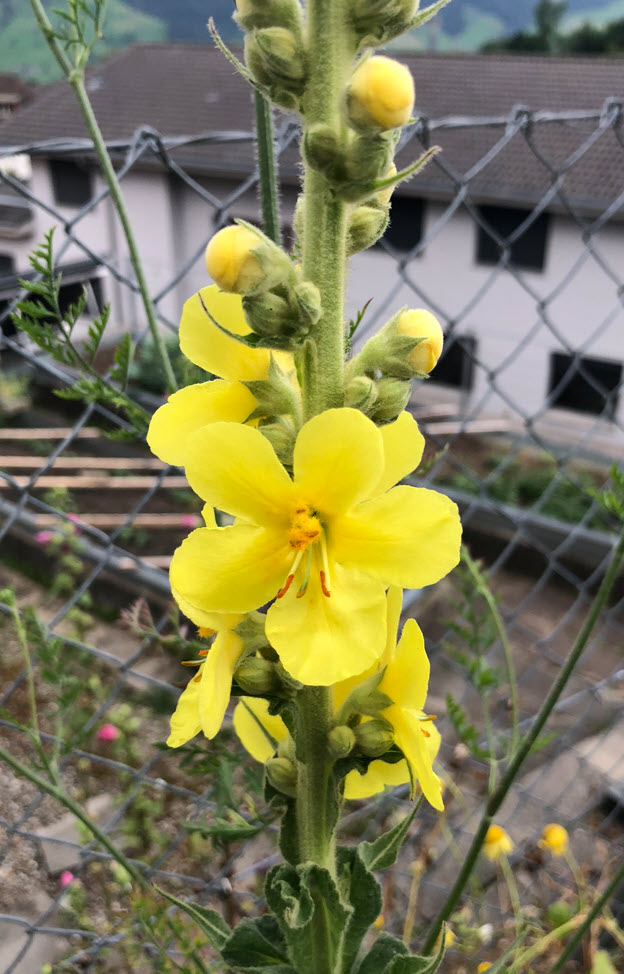
The Mullein or ‘Kings Candle’/Königskerze in German is a tall, candle like flower which can reach up to 2 meters. The name comes from the medieval times, when they dipped the tried plants into fat and used them as torches.
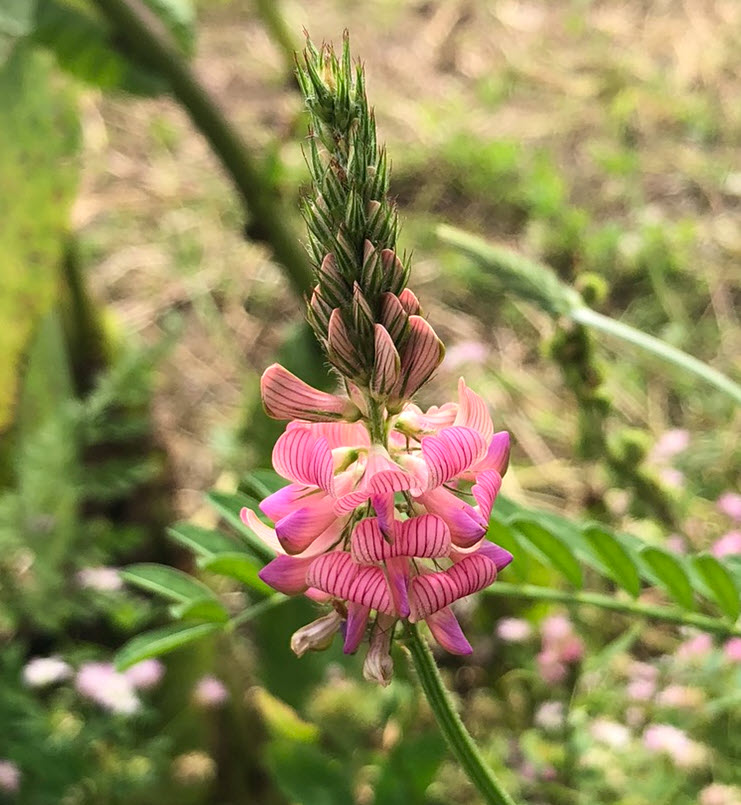
In France the Sainfoin is called ‘healthy hay’, as it has been used as non-bloating crop for livestock. It attacts honeybees and bumblebees so much, that local farmers name it ‘the bee plant’.
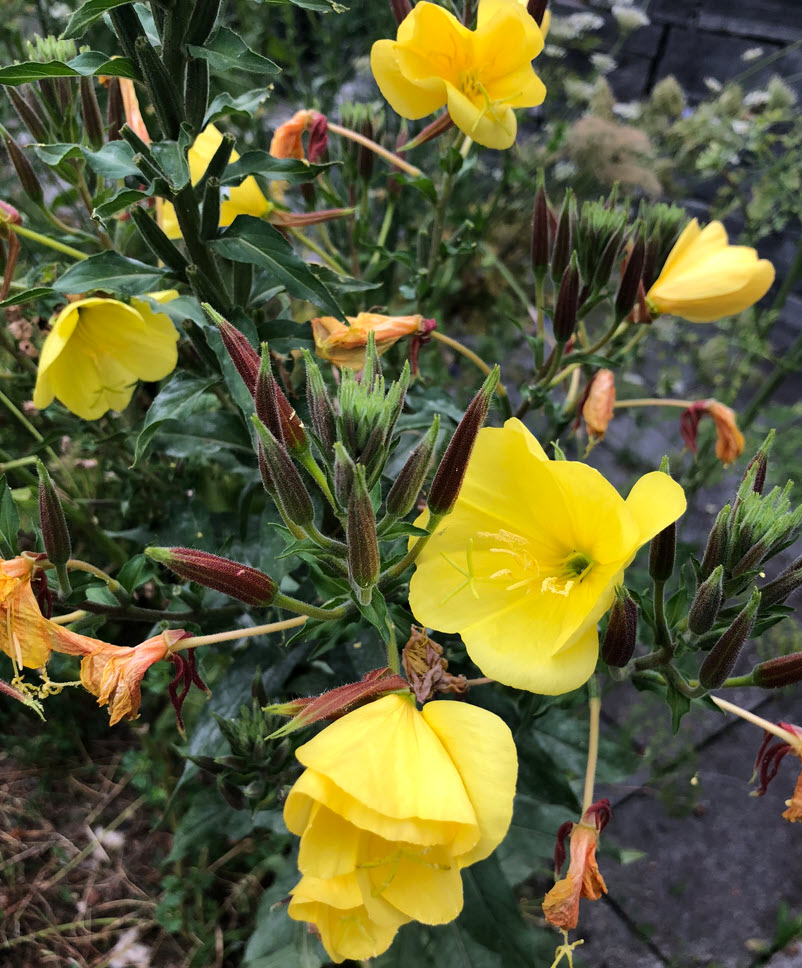
The Evening-Primrose usually opens its flowers at dusk, often in just a few minutes. A spectacle worth watching! During the day, it attracts bees and butterflies. The seeds have anti-inflammatory properties and are used in herbal medicine and skincare products.
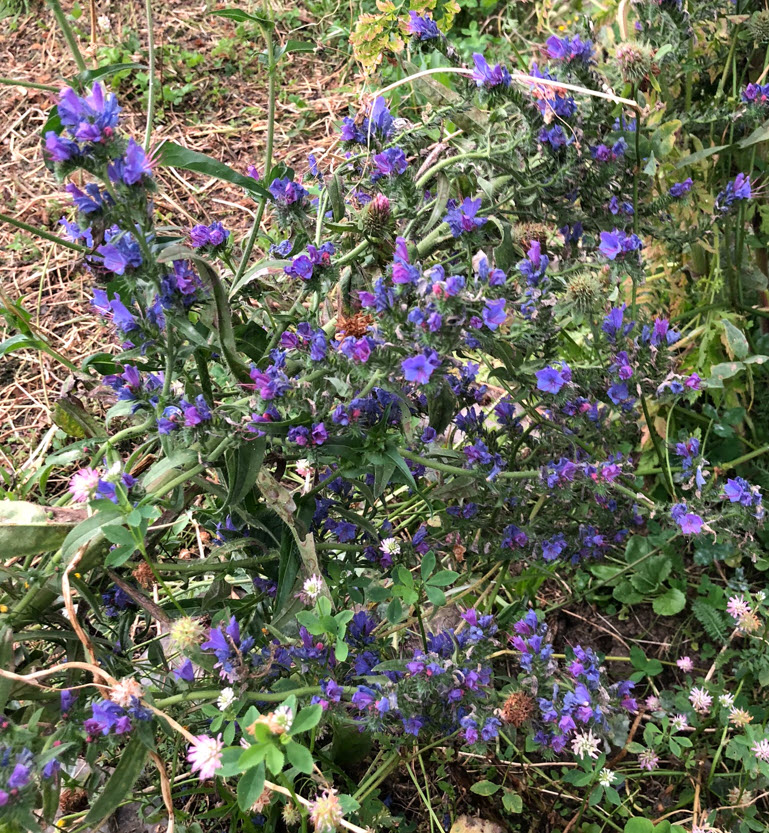
The name “Viper’s Bugloss” comes from the old belief that the flower resembled a viper’s head or tongue. It was once used in medicine to treat snakebites. The Latin name Echium also relates to “viper. I’m always wearing gloves when dealing with the ‘Natternkopf’. Its small an tiny spikes can perforate the skin and cause irritations: in that sense it is really a ‘viper’.
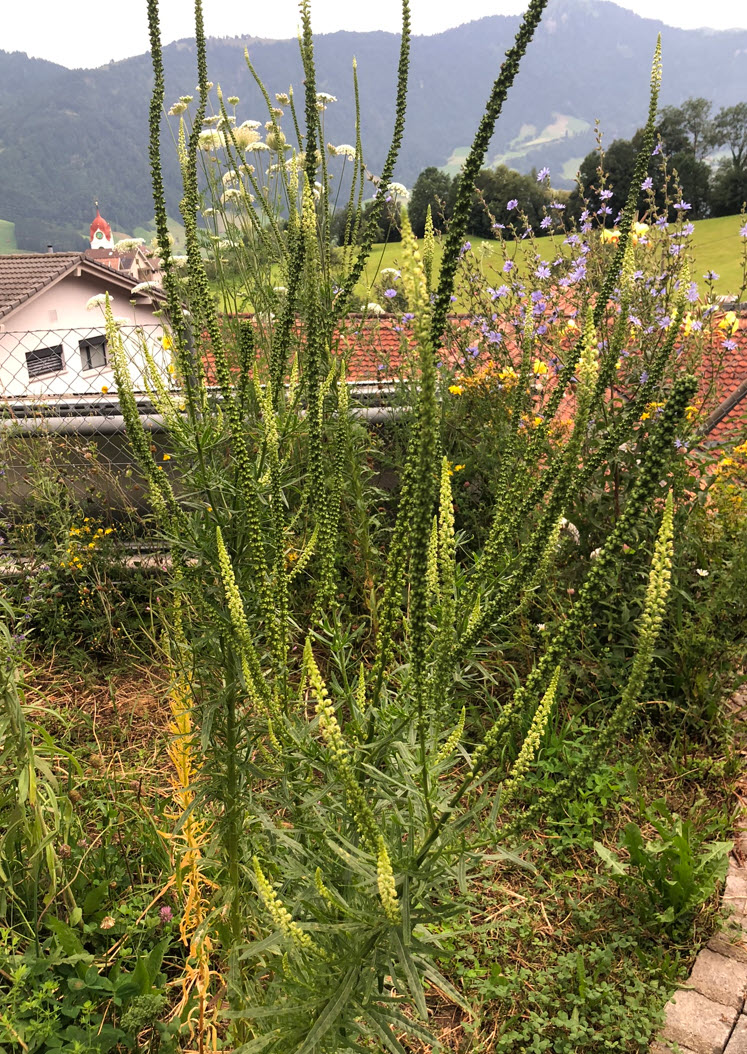
The Dyer’s Weed is one of the oldest known sources of yellow dye in Europe. Its yellow pigment has been used to color textiles even in ancient Egypt and Rome. The name ‘Reseda’ comes from Latin ‘resedare’, meaning ‘take a rest’ or ‘calm down’. This shows the plant’s former medicinal use for wounds and inflammation.
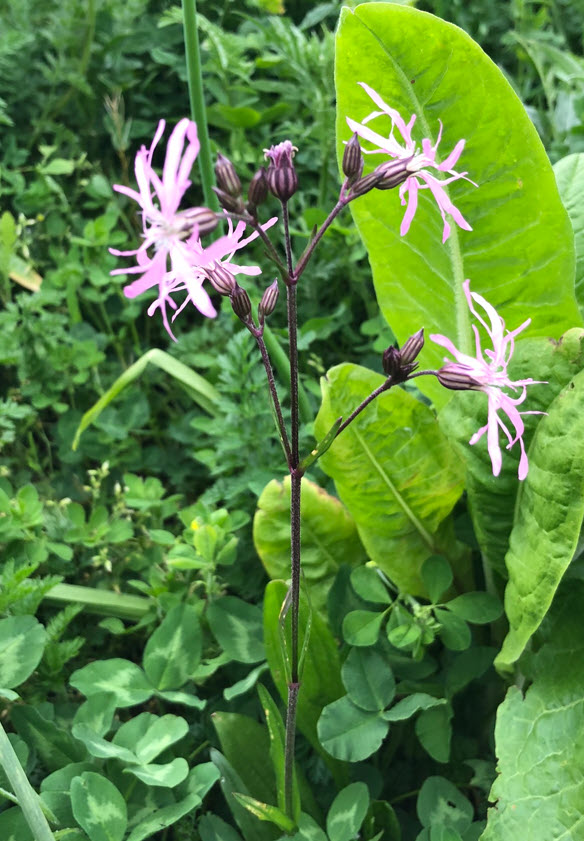
The Ragged-Robin is called ‘Kuckucks-Lichtnelke’ in German. This because its blooming time in spring often coinciding with the cuckoo bird in spring. Its plant fiber has been used as wick for oil lamps. That’s why it is named ‘Lichtnelke’ (Light-Clove).
2024 definitely was the year of daisies and high rising species.
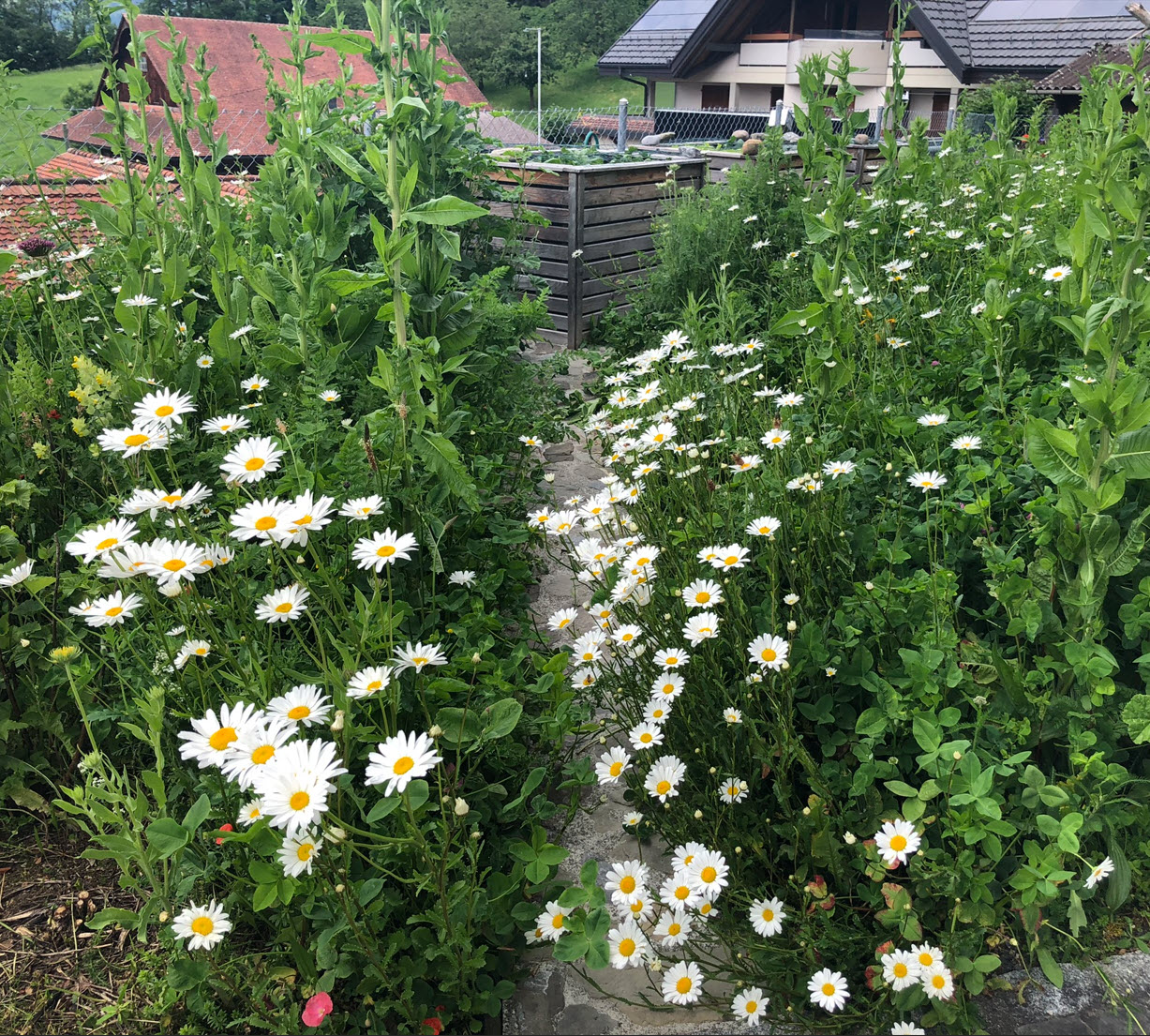
The year 2024 started with lots of rain. This caused an explosion of the slug population.
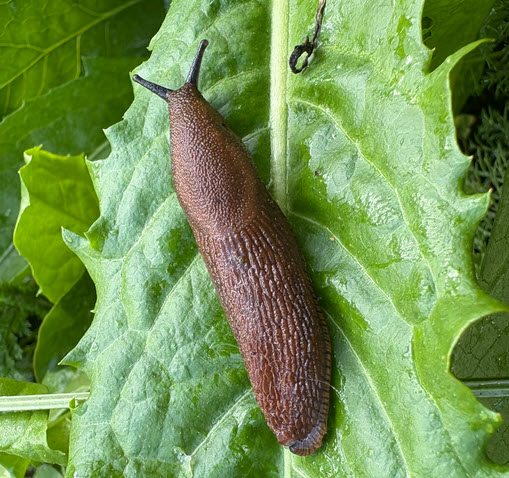
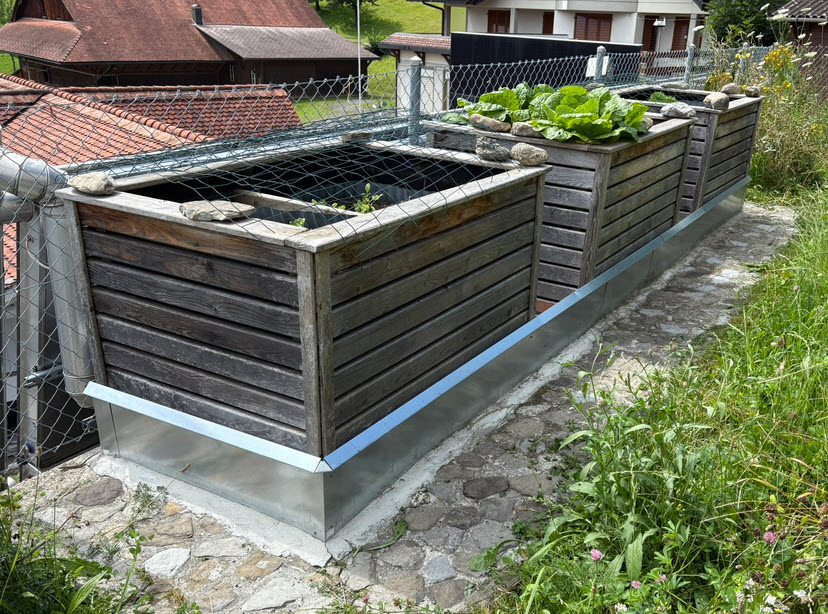
As a result, they invaded the raised beds. Salads and vegetables lost the battle. Because collecting hundreds of slugs did not help, I had to build a slug fence around the beds.
2025: Third year with diversity
In the third year, more grass appeared and closed the sod and ground. Additionally the diversity of different flowers stabilized, with a good mixture of everything. In the last two years, I was cutting the meadows twice a year using a scythe. Usually the first cut in July and the other in October.
Not everything gets cut. Instead, only a part of it, then let dry and loose all the seeds for a week or so.
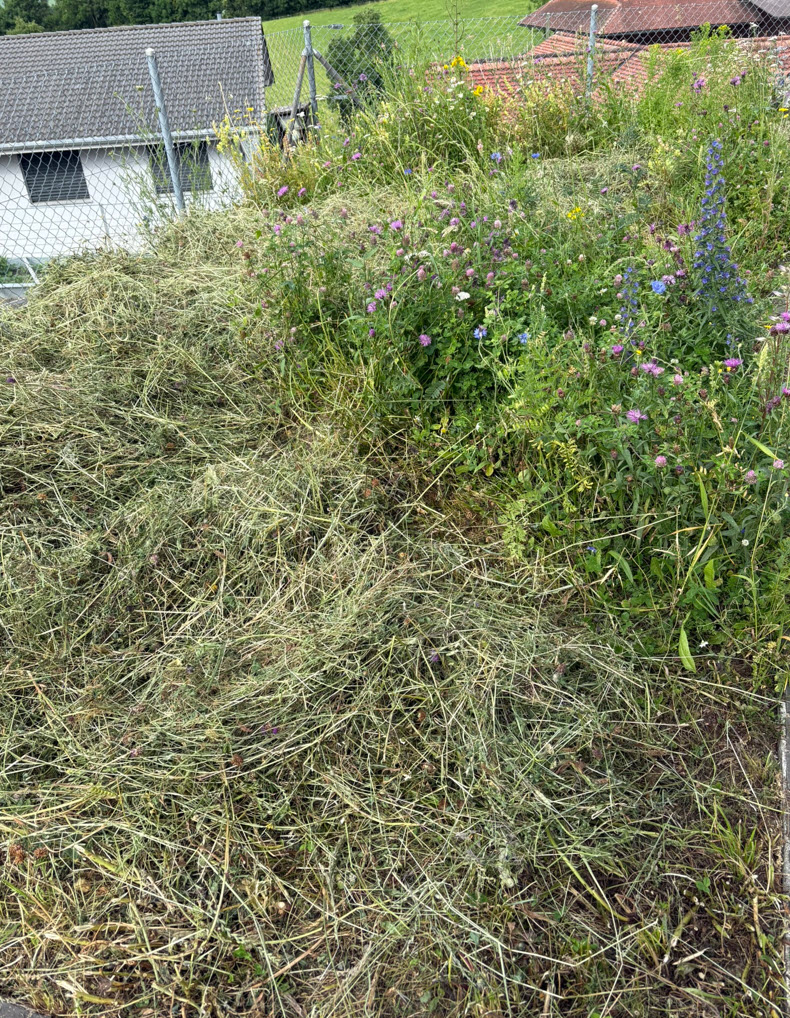
Cutting the meadow revealed another interesting aspects: mice had found a home too. But no sign of recent activity. So that explains why our cat brought home more prey than usual in the last couple of weeks.
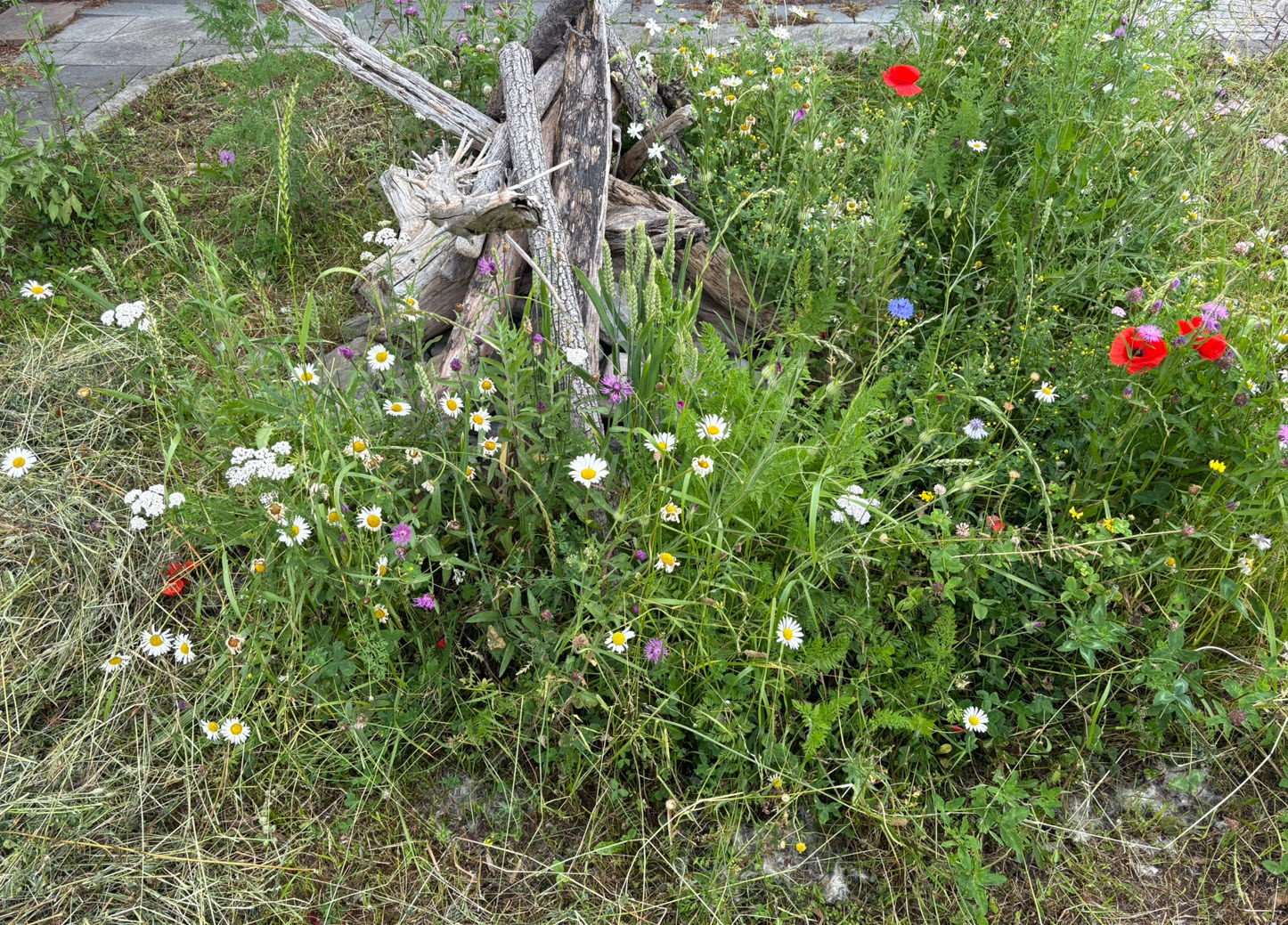
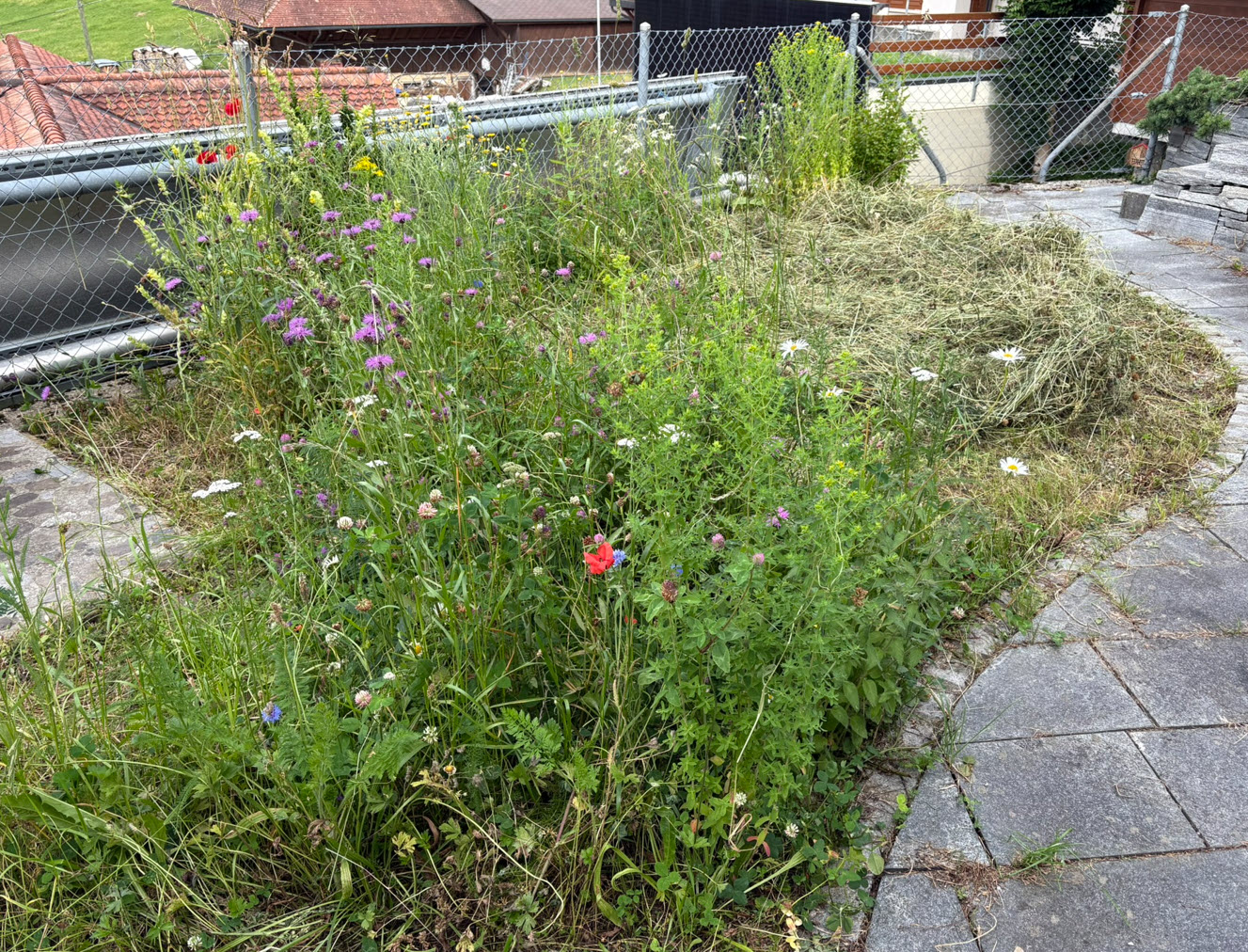
Four weeks later: below a picture of the same area: In the background new flowers and grass. The uncut area from in front still has evolved and added colors.
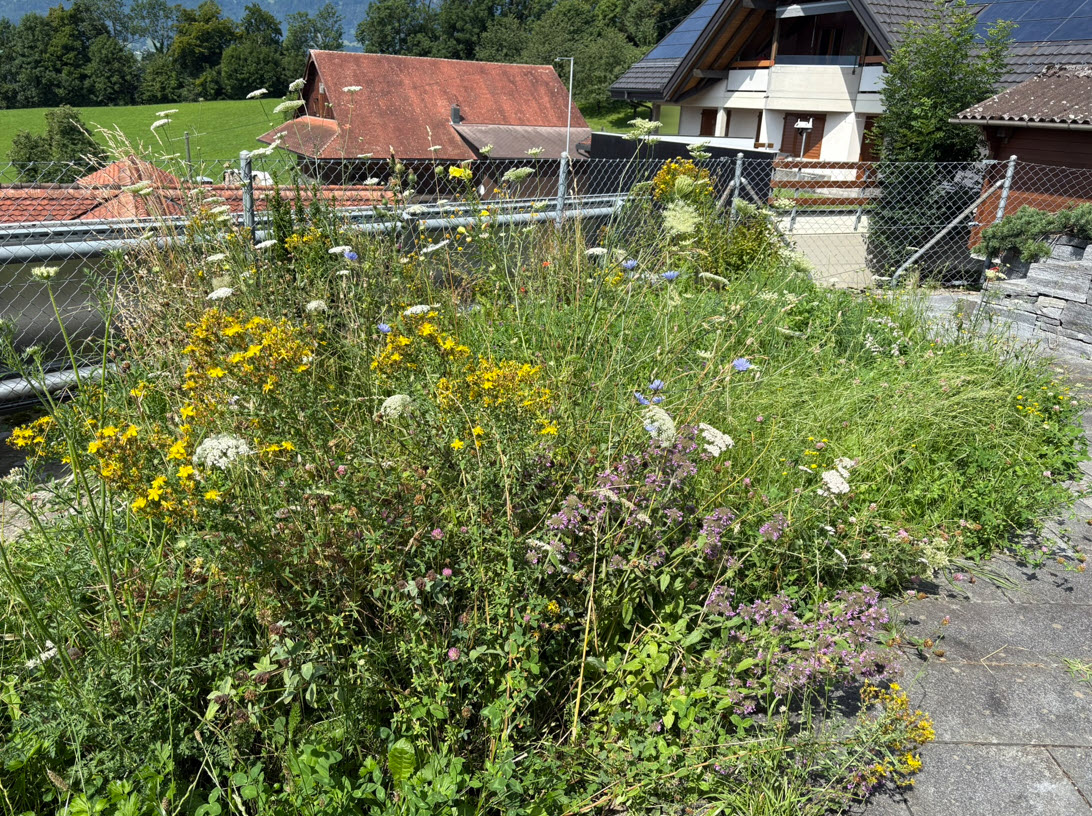
Cutting only a part of it and let dry in place allows small animals to survive. They can move into the uncut areas. And cutting the grass with a scythe does not destroy everything on the ground.
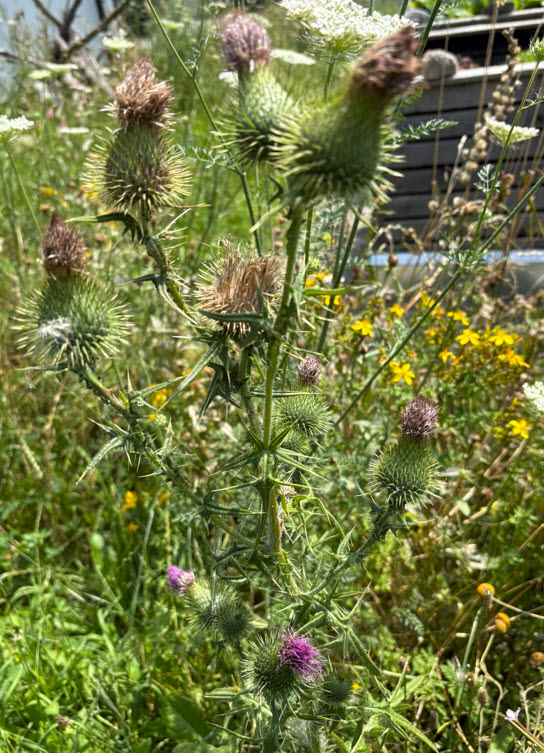
Thistles look uninviting, but they are a valuable plant for pollinators in meadows. Actually we have just one standing and growing. So hopefully next year there will be many more.
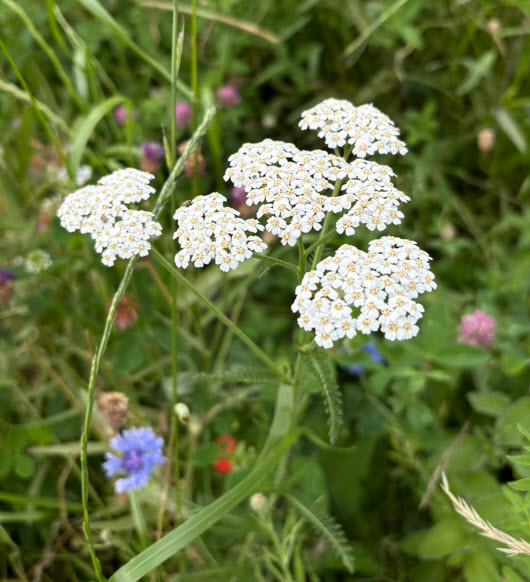
The Yarrow comes in different colors, and we have them in white and pink. In German, “Schafgarbe” means “sheep herb,” as it was traditionally eaten by livestock and believed to aid digestion. The ‘Achillea’ in the name refers to the Greek hero Achilles. According to myth, Achilles treated his soldier’s wound with this plant during the Troyan War.
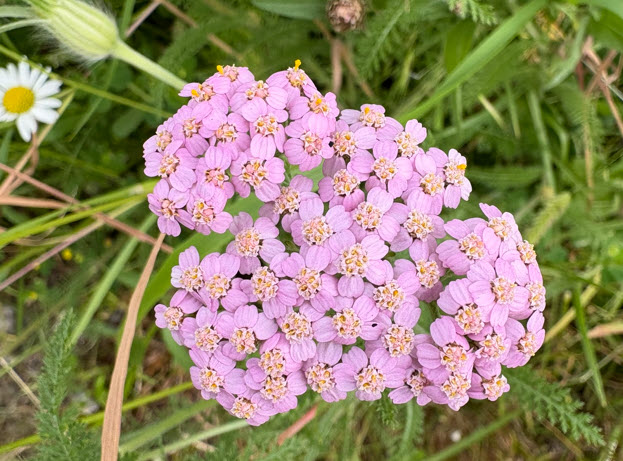
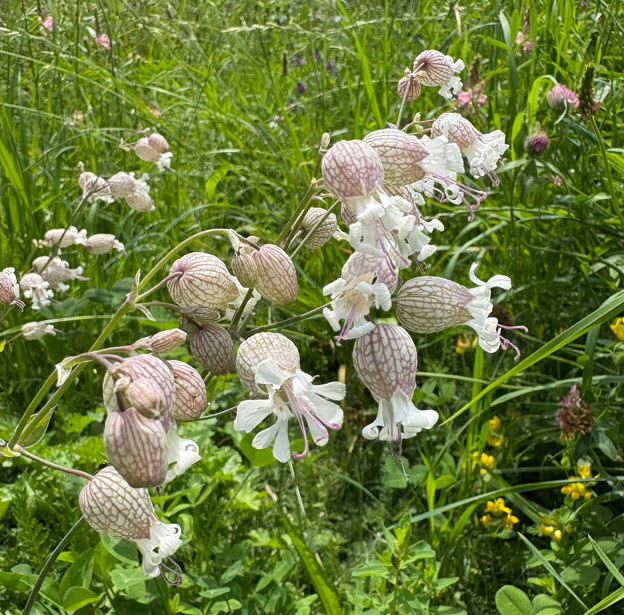
The flower builds a kind of balloon: if you press it, it gives a ‘pop’ sound. That’s where the German Name ‘Klatsch-Nelke’ comes from. ‘Klatschen’ in the sense of ‘clapping’.
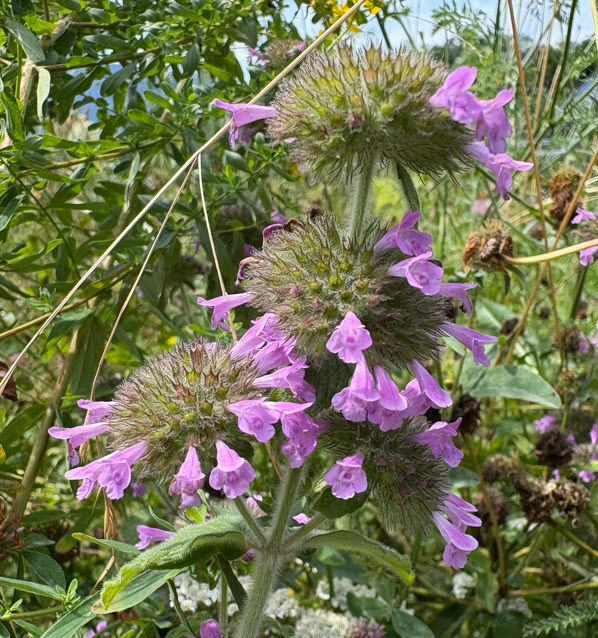
The ‘Wild Basil’ is not true basil. But it shares a similar aromatic scent. Historically, it has been used like the true Basil or as medicinal herb.
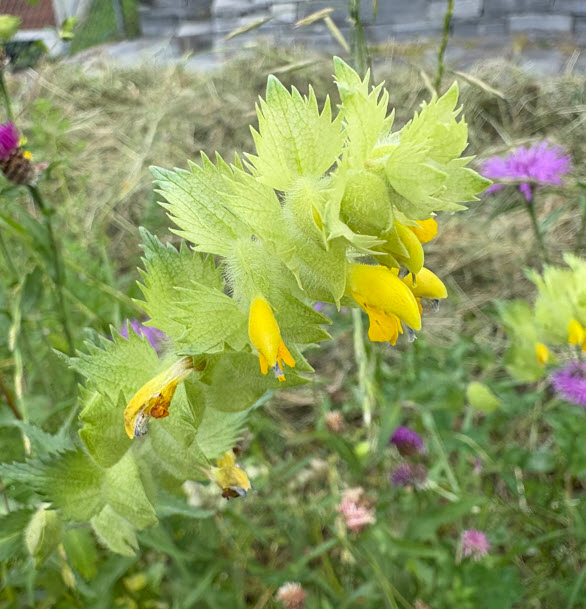
The name ‘rattle’ or ‘klapper’ refers to the rattling sound of its dry seed pots in the wind. This plant is interesting for low nutrient meadows as it is hemiparsitic.It means it draws nutrients from neighboring grasses. That way it helps reducing grass dominance and helps making space for wildflowers.
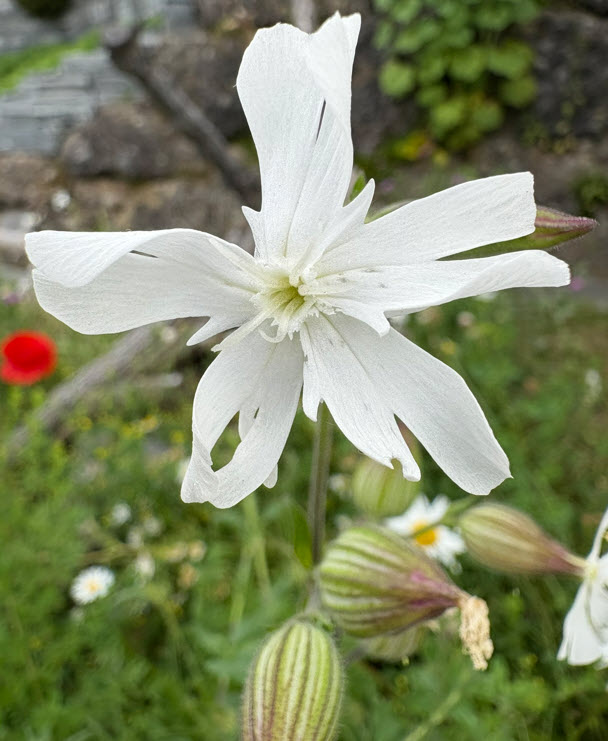
The White Campion gets polinated primarily at night by moths. Its flowers open in the evening and at night time. It has a sweet smell at night. And the white color shines in the moonlight. The German word ‘Licht’ for light reflects that.
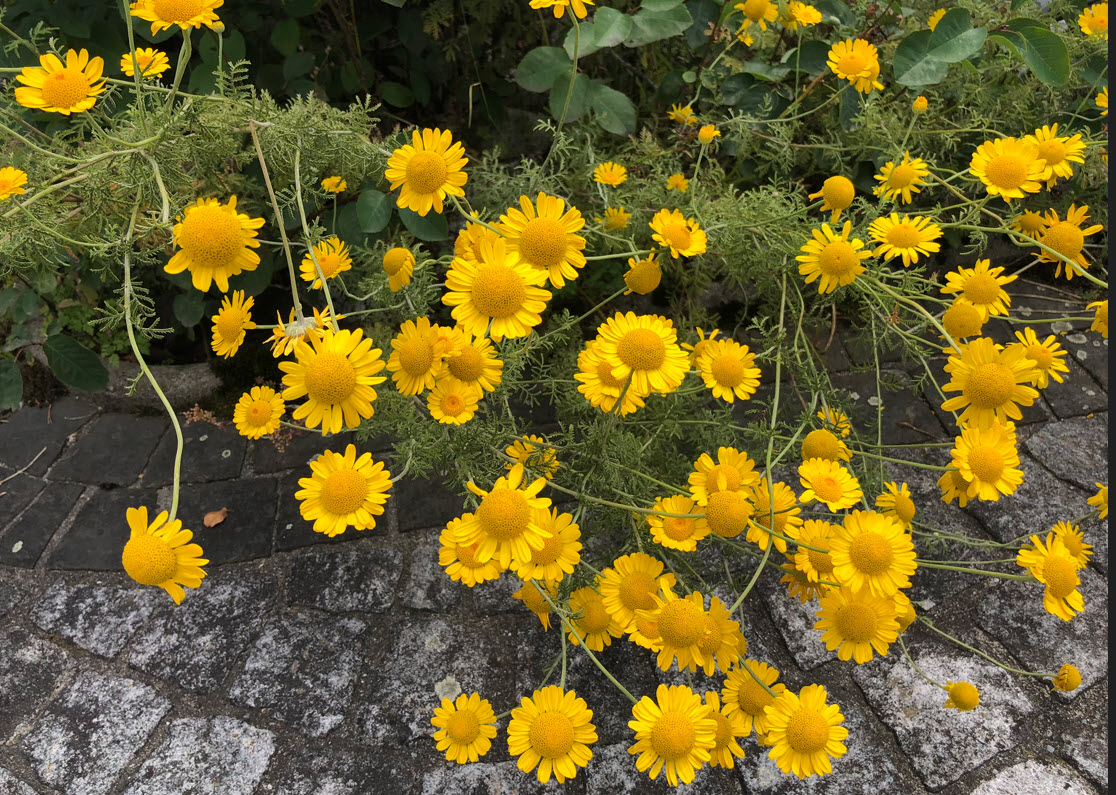
The ‘Golden Marguerite’ is known as ‘Färber-Kamille’ (dyer’s chamomile) in German.This because it was used once a natural yellow dye to color textiles, especially for wool. It is not the same chamomile as used in teas, it has been used to treat minor illness.
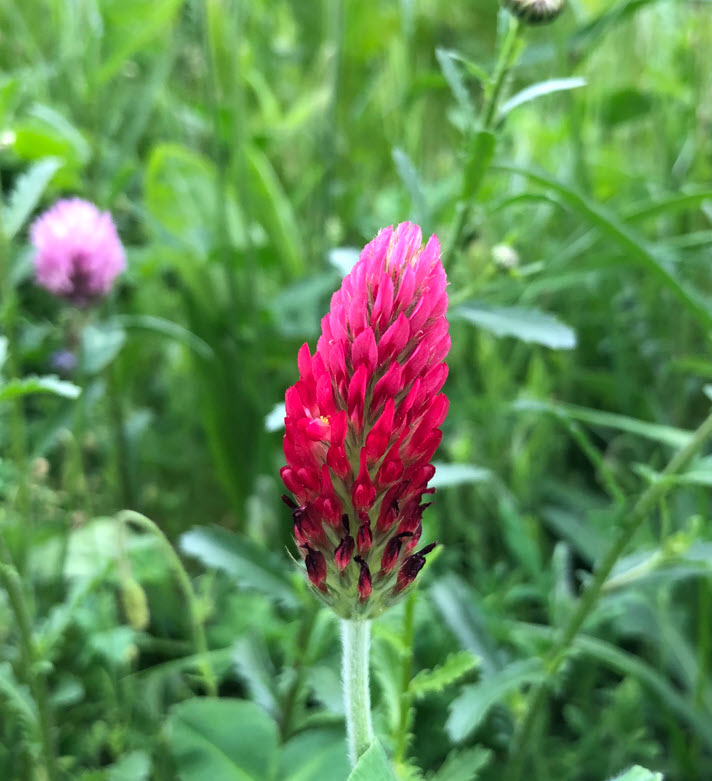
The Crimson Clover has a beautiful red color. As a legume, it can fix nitrogen from the air into the soil. In wildflower meadows it supports both biodiversity and soil health. It especially attracts bees and bumblebees.
Summary
If you are reading this: congratulations! I admit that there is a lot of information with pictures. But this only reflects a small amount of diversity in that ever changing meadow.
That project is running for three years already. And we hope it will continue for many more years. It was a bold move at the beginning with lots of work. But it has been very rewarding every year. Every season is different, with different flowers, insects and species showing up. Sometimes species come in big waves. They unite and merge with the others for the coming years. This project has created a new home for many insects, reptiles and small animals. This includes field mice and slugs, even if I’m not happy about them. The cat takes care of the mice. I have new a slug defense-fence so we can grow vegetables and salads, mostly not eaten up by slugs. Building that wildflower meadow definitely has changed the dynamics around the house. For example the seeds spread out in to the neighborhood, which creates interesting discussion. It is fascinating to see how nature overshoots, only to normalize afterwards. Some seeds sleep for years for the perfect condition. Some plants and species come and go.
Compared to the ‘lawn’ time it is definitely more work. But it is very rewarding, enjoyable, and every week brings something new. The last few days we saw dozens of Swallowtail butterfly every day. In the past we were lucky to see just one in a year. We had no idea from where they are coming. Just today I have found that big fat Swallowtail caterpillar (showed above) at the stone pile in the meadow. I guess that’s the answer :-).
Additionally, I learned a lot about flowers and their important role for insects. Maybe you have learned something new too? Let me know in the comment section.
Happy flowering 🙂
 MCU on Eclipse
Beautiful!
LikeLiked by 1 person
Hi Ian,
thank you! Unfortunately a hailstorm last night caused lots of damage. Have to check at daylight today what the status is.
LikeLike
Great to hear. Nature is the greatest teacher and can of course provide lovely rewards. Where I am 50miles N of San Francisco, Sonoma County there is a very active attempt work with local plants or at least “Mediterranean” drought adapted plants. The summer can be 7months of no rain, and mild wet winters where the plants roots grow. Some flowers are very well adapted and see a flurry of native bees that come out. Regionally too much watering (eg watering concrete next to turf) in the summer results in pollutants flowing to the local creeks. Regional there is a “Qualified Water Efficient Landscaper” program to qualify professionals. I look at home gardening as low cost workout (better rewards than gym fees) and de-stressing checking how the the plants grow – usually with some vino!.
LikeLike
Climate in Switzerland seems to get more extreme too. With more and longer dry periods, then lots of rain again. Or with a hail storm as of last night. When we created the lawn over 20 years ago, we buried some watering pipes ‘just in case’. We never had to use them. But looking at the recent 3-5 years, for having a green lawn they would be necessary, at least for some weeks during summer time. With that flower meadow, we only had to water it for a few days back in 2022, for the time after seeding it, so it does not dry out too much. Since then, no watering was needed. What I like with the meadow is that it seems to adapt to the climate quite well. And as you mention: it very rewarding to see things growing.
LikeLike
Thank you! I am trying to live in harmony with nature a little more too. My children enjoy games on the main lawn too much at the moment (even though that’s 50% moss!), but we have a little meadow, where we see lots of butterlflies and bees. Thanks for your tip on the scythe!
LikeLike
Agreed! Having small kids, a lawn makes absolutely sense too. And using a scythe is definitely the best way to cut it. But requires skills to use it.
LikeLike
Other than your PSoC post years ago… this is by far my favorite.
Alan
LikeLike
Hi Alan,
that’s great to hear! Thank you!
LikeLike
Congratulations. Hard work here is well-rewarded with benefits beyond knowing all.
LikeLike
Thanks! Indeed, it has been a big adventure with many (positive) surprises 🙂
LikeLiked by 1 person